Anal fissure vs hemorrhoids is a common search when you feel sharp pain, see bright red blood, or notice a lump around your anus and want clear answers fast. You might feel worried about cancer, confused by similar symptoms, and unsure when to see a doctor.
To sort it out, you need simple signs, causes, and treatment paths side by side. The next sections break each condition down in plain terms.
Key Takeaways About Hemorrhoids And Anal Fissures, Tell The Difference
- You can often tell anal fissures from hemorrhoids by symptoms. Fissures usually cause sharp, tearing pain with bowel movements, while hemorrhoids more often cause itching, swelling, or a dull ache with possible lumps.
- You might observe varying bleeding patterns. Fissures generally result in tiny streaks of bright red blood on the stool or toilet paper. Hemorrhoids can lead to heavier or repeated bleeding that may even drip into the toilet, occasionally painlessly.
- You can use physical signs and sensations to help you identify what is happening. A fissure feels like burning or stinging at the anal opening, while hemorrhoids feel more like fullness, pressure, or a tender lump around or just inside the anus.
- You reduce your risk of both conditions by addressing the root causes. Focus on soft, regular stools with more fiber, enough water, gentle bathroom habits, and less straining or prolonged sitting to lower anal pressure and trauma.
- You promote proper diagnosis and treatment by consulting a doctor when symptoms are new, severe, or ongoing. A doctor can look you over, employ anoscopy or colonoscopy if necessary, and walk you through home care, medications or surgery if needed.
- You safeguard your body and heart by treating pain and anxiety in tandem. Pair lifestyle changes and treatment with stress management, quality sleep, and social support to stay sane while you recover.
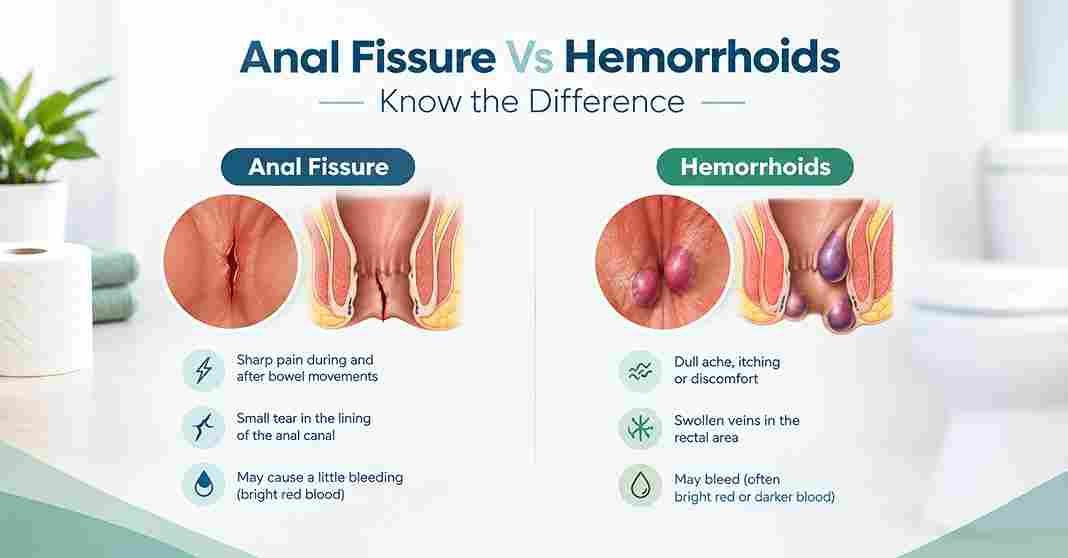
Anal Fissure Vs Hemorrhoids
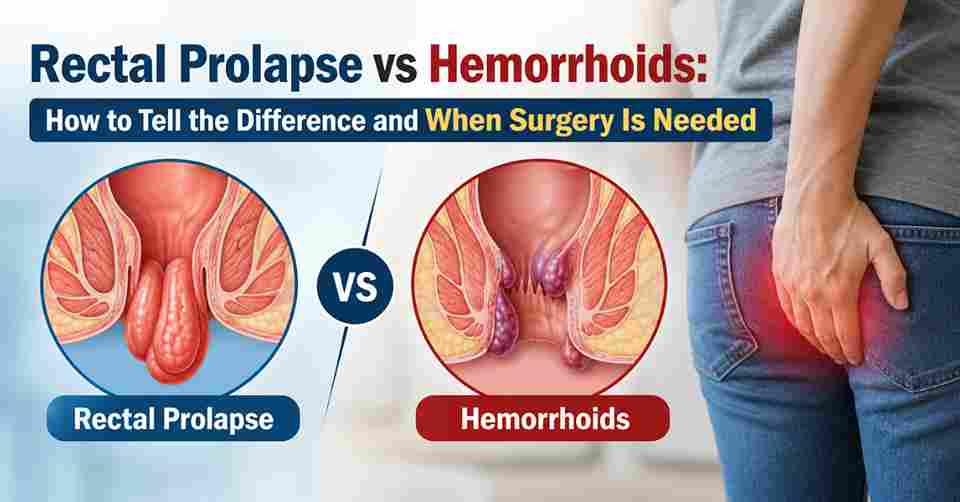
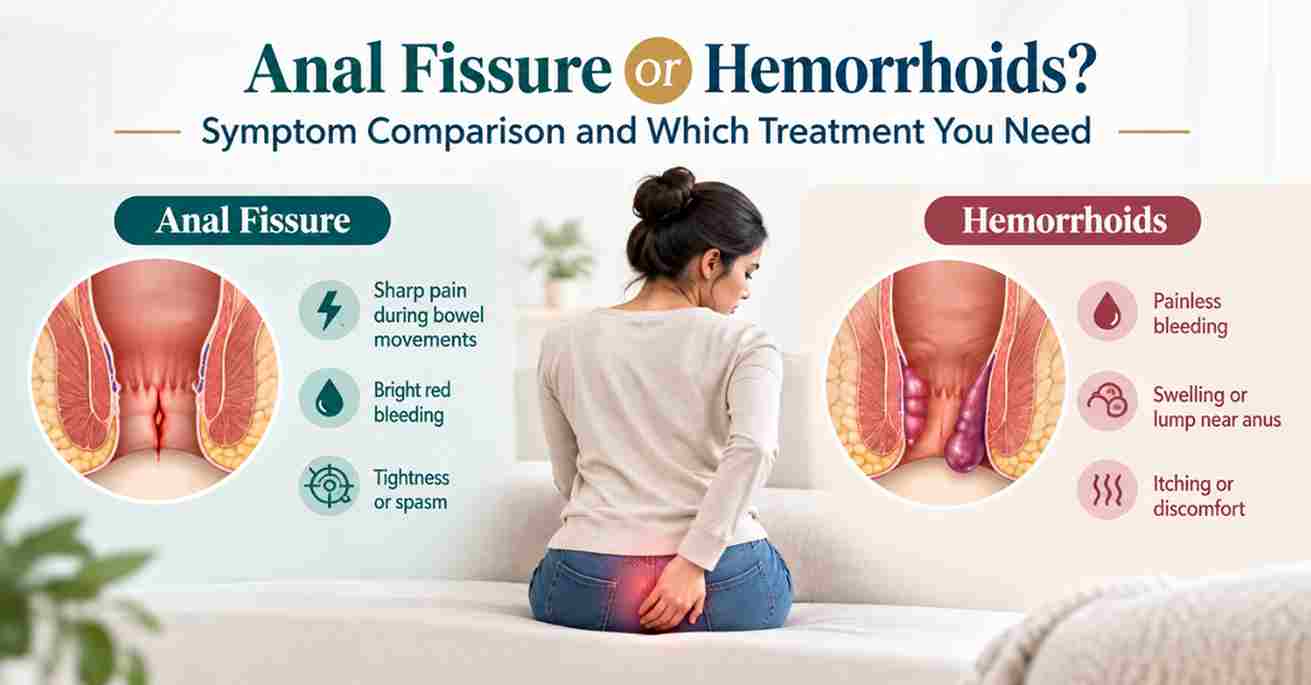
Anal fissures and hemorrhoids both cause anal pain, itching, and bleeding, but they come from different problems and need different care. Anal fissures are small tears in the skin around your anus, while hemorrhoids are swollen veins inside your rectum or around your anus. About 1 in 10 people get a fissure at some point, often between ages 15 and 40.
Hemorrhoids are far more common, affecting up to 50 to 85 percent of people over a lifetime.
Main symptom differences in brief:
- Anal fissure: sharp, cutting pain with bowel movements
- Hemorrhoids: dull ache, pressure, or itching, sometimes no pain
- Anal fissure: Burning or stinging. Pain may last hours after stool.
- Hemorrhoids: feeling of a lump, fullness, or swelling at the anus
- Anal fissure: Small streaks of bright red blood on stool or wipe.
- Hemorrhoids: bleeding that may drip into the toilet bowl
- Anal fissure: pain almost always with bleeding
- Internal hemorrhoids: bleeding can happen without pain
Accurate diagnosis matters because a fissure may need treatments that relax the anal muscle or even surgery if it becomes chronic, which is more than six weeks. On the other hand, hemorrhoids may respond better to procedures that shrink veins, like rubber-band ligation or injections.
Both conditions often improve with self-care you can start on your own: more fiber, including fruits, vegetables, and whole grains; at least 1.5 to 2 liters of water per day unless your doctor says otherwise; warm sitz baths; and simple topical creams or ointments to ease pain and itching.
You should see a clinician if symptoms last more than a few weeks, get worse, or include heavy bleeding, severe pain, or trouble passing stool. This is important so you do not miss other causes like inflammatory bowel disease, infection, or cancer.
1. Pain Profile
Anal fissures usually hit you with sharp, intense pain during a bowel movement and for some time afterward. Many people describe it as passing “glass” or feeling a clear tearing sensation as stool moves through the anal opening. The pain can last for minutes to hours after you finish, which may make you afraid to go to the bathroom and then worsen constipation, creating a cycle.
Hemorrhoids often cause a dull ache, pressure, or sense of heaviness around your anus, rather than a cutting pain. Internal hemorrhoids may not hurt at all, especially if they only bleed. External hemorrhoids can be more painful, but the pain is usually more like soreness or throbbing than sharp tearing.
If a clot forms in an external hemorrhoid, you may feel sudden, strong pain and notice a tender lump, though even that pain tends to be more of a deep ache than the knife-like pain of a fissure.
Location helps you tell them apart. Fissure pain is very focused at the anal opening, exactly where the skin is torn. Hemorrhoid-related pain can feel slightly deeper inside the rectum or spread around the anus, especially if several veins are swollen. If wiping or gently touching the edge of the anus feels like touching a cut, that points more toward a fissure than a hemorrhoid.
2. Bleeding Pattern
Anal fissures usually cause bright red blood in small amounts. You may see a fine streak on the surface of your stool, a few spots on toilet paper, or a light smear on the bowl. The bleeding tends to match the timing of pain. It shows up during or right after a bowel movement and then stops.
Hemorrhoids can bleed more freely since it’s a swollen vein. You might observe blood dripping into the toilet, lining the stool, or as a splash of red in the water. Internal hemorrhoids usually bleed but don’t hurt at all, which can be confusing since the appearance of blood is dramatic yet you don’t experience much pain.
External hemorrhoids can bleed if the skin over them breaks from wiping or strain, but this is less typical.
Here is a quick comparison:
| Feature | Anal Fissure | Hemorrhoids |
| Blood color | Bright red | Bright red |
| Amount | Small streaks or spots | Can be small to clearly heavier, may drip |
| Pain with bleeding | Almost always painful | Internal often painless, external may be sore |
| Timing | With/after hard stool | With stool, straining, or even at random |
If you have heavy bleeding, bleeding between bowel movements, or dark, tar-like stool, you should get medical care promptly as that pattern is not consistent with a simple fissure or typical hemorrhoids.
3. Physical Sensation
With an anal fissure, the main feeling is sharp pain and burning or stinging when stool passes over the tear. After the movement, you may feel a raw, open-sore type of pain. Some people feel mild itching, but it is usually overshadowed by pain. If the fissure becomes chronic, you may notice spasms in the anal muscle, which tighten the area and keep the pain going.
Hemorrhoids often feel more like something is “there” rather than like a cut. Internal hemorrhoids can create a sense of fullness or pressure inside your rectum, especially when you sit for long periods or strain. External hemorrhoids may feel like a soft or firm bump at the anal edge that you can touch.
If a clot forms, that lump can feel hard, tender, and swollen. It may be hard to sit comfortably.
Itching and irritation occur much more frequently in hemorrhoids than in fissures. Mucus discharge from internal hemorrhoids can soil the skin and cause persistent itching or a sense of dampness. Repeated wiping to deal with that itch can make the skin even more inflamed, which contributes to the discomfort, even on non-bleeding days.
4. Underlying Cause
Anal fissures usually start with trauma to the anal lining. The most common trigger is a hard, bulky stool that stretches the anal opening too far, too fast. Chronic constipation, long straining on the toilet, or pushing through pain all raise that risk.
Less often, fissures come from chronic diarrhea, anal intercourse, childbirth, or inflammatory conditions that weaken the tissue. Fissures are labeled “acute” if they last less than six weeks. When they go beyond that, they are “chronic” and may need more than simple home care.
Hemorrhoids come from swollen veins that sit in and around your anal canal. Anything that increases pressure in this area can enlarge them. That includes straining with constipation, frequent heavy lifting, pregnancy, obesity, long hours of sitting (for example, at a desk or driving), and sometimes long-term coughing.
Aging weakens the support tissue around these veins, which is one reason hemorrhoids are so common in older adults. They are much more frequent than fissures, with more than half of all adults dealing with them at some point.
Both issues have some common triggers. A low-fiber diet, not drinking enough water, and chronic diarrhea can all cause irritation and strain that feed into both fissures and hemorrhoids. When you know what is driving your symptoms, you can target changes that help both: eating more fiber-rich foods, moving your body during the day, and not delaying bowel movements when you feel the urge.
That way you’re not just treating a present flare but reducing your risk of recurrences.
5. Visual Appearance Hemorrhoids And Anal Fissures, Key Differences
If you or a clinician inspect the area, an anal fissure usually looks like a small, narrow cut or crack in the anal lining. Most fissures sit in the posterior midline, which means straight down toward your tailbone. In newer fissures, the skin around it may look fresh and red.
In chronic fissures, you might see a small extra skin tag at the outer end and a tiny thickened bump just inside. These are signs that the tear has been there for a while.
External hemorrhoids look very different. They appear as swollen lumps or bumps at the rim of your anus. The color can be skin-toned, purple, or bluish, especially if there is a clot inside. A single large lump may be a thrombosed hemorrhoid, while several smaller folds can be long-standing external hemorrhoids that puff up during flare-ups.
These lumps can be tender when you sit, wipe, or touch them.
Internal hemorrhoids are usually not visible unless they prolapse, meaning they slide out of the anal canal, often during a bowel movement. When they do, you may see soft, moist, pinkish or purplish tissue that bulges through the opening.
It may slip back inside on its own or need gentle pressure to push back with a clean finger or moist tissue. Because internal hemorrhoids sit higher up, you cannot see them from the outside unless they reach this prolapsed stage.
You can attempt to inspect yourself with a hand mirror in adequate lighting, but it’s not always simple to discern what you’re looking at, particularly if you’re experiencing discomfort.
A physical exam by a clinician, sometimes with a quick scope of the lower rectum, is the most reliable way to distinguish fissures from hemorrhoids and exclude other causes like infections, polyps, or growths that can bleed. When in doubt, particularly if self-care with fiber, water, warm baths, and OTC creams doesn’t make a dent after a couple of weeks, having that exam is a reasonable next step.
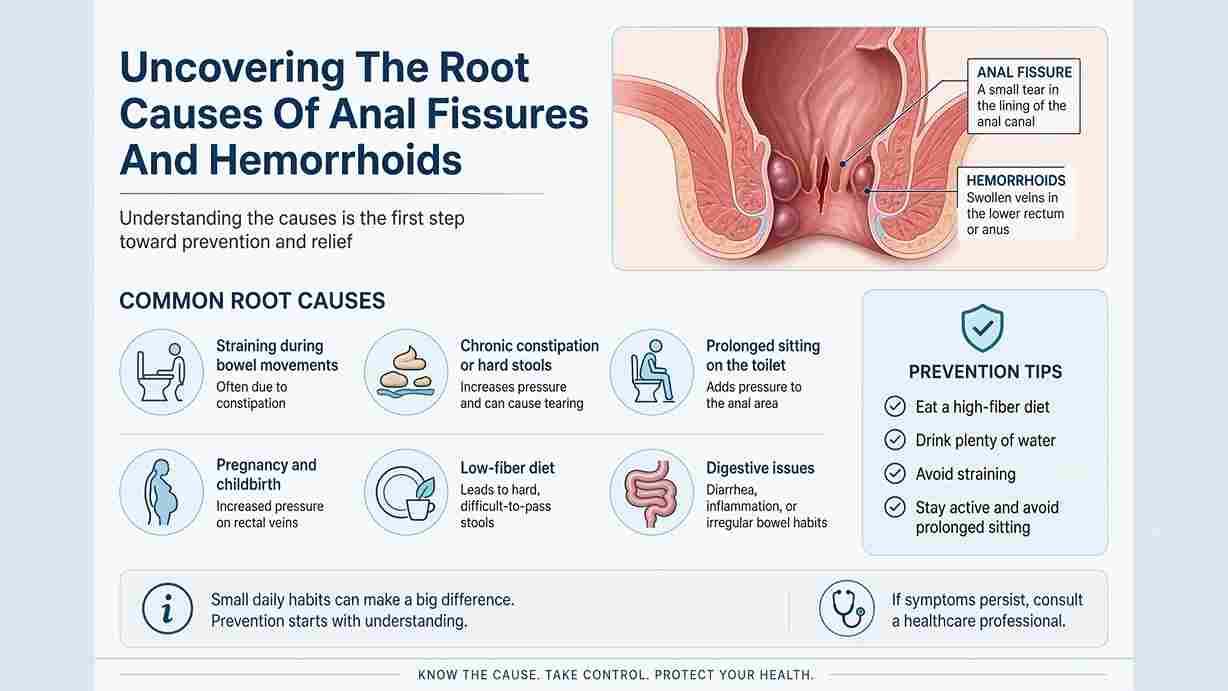
Uncovering The Root Causes Of Anal Fissures And Hemorrhoids
You see similar symptoms with anal fissures and hemorrhoids, but the causes are not exactly the same. Understanding what is pushing your body in this direction helps you pick the right fix, not just mask the pain.
- Chronic constipation
Hard, dry stool that moves slowly through your bowel makes you push harder on the toilet. That strain raises pressure in the anal veins, which can lead to hemorrhoids and stretches the anal skin so much that it can crack, causing a fissure. If you often go fewer than three times a week or need to force your stool out, constipation is likely part of the root problem.
- Frequent diarrhea
Loose, frequent stools can scrape and irritate the anal lining again and again. This can set off small tears that turn into anal fissures. Diarrhea can swell and inflame hemorrhoidal tissue over time. People with inflammatory bowel disease, such as Crohn’s disease or ulcerative colitis, face this risk more because of repeated bouts of diarrhea and inflammation.
- Straining and high anal pressure
Straining to “force” a bowel movement is one of the most direct causes of anal fissures. The anal sphincter tightens, pressure spikes, and the lining can split. The same high pressure presses on anal veins and makes hemorrhoids more likely. Reducing strain and letting the skin rest is a key part of fissure treatment.
- Poor blood flow, age, and body changes
Weaker blood flow to the anal area can slow healing of tiny tears and keep fissures from closing. Age, obesity, and pregnancy all raise pressure in the pelvic veins and are linked with hemorrhoids. The exact cause is still not fully clear.
A simple chart can help you compare risk factors side by side. For example, constipation, diarrhea, low-fiber diet, obesity, age, pregnancy, and inflammatory bowel disease can be organized in separate columns for “more linked to fissures,” “more linked to hemorrhoids,” or “both.
You can then visualize where your personal habits fit in. A low-fiber, processed food diet, low water intake, and long sitting time often make an appearance in the ‘both’ column. Shifting daily habits, such as more fiber, more fluids, and less straining on the toilet, can decrease risk for both conditions and point you and your clinician in the direction of the optimal course.
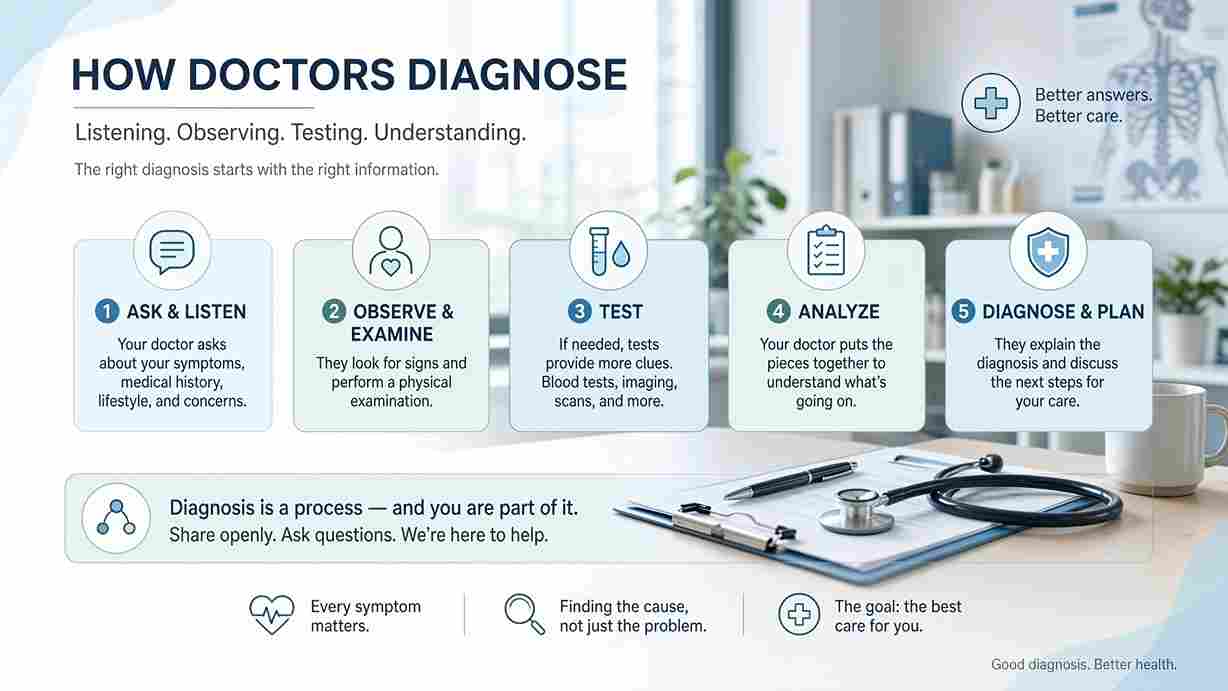
How Doctors Diagnose
You usually get a clear answer only when a doctor steps back and looks at the full picture: your story, your symptoms, and a hands-on exam. Even though anal fissures and hemorrhoids can look and feel similar, they have different causes and risk factors. A careful workup matters.
Diagnosis usually begins with a history. Your physician will inquire as to when the pain and bleeding originated, what the blood appears like, its frequency, and if there is any itching, swelling, or a lump you feel. They might inquire about your bowel habits, straining, time on the toilet, pregnancy, recent childbirth, heavy lifting, and any prior gut issues.
If your pain has persisted for more than eight weeks, your doctor may designate a fissure as chronic, which can alter treatment protocols. This history helps separate if your symptoms are more consistent with a fissure, which causes stabbing pain with each stool, or hemorrhoids, which cause pressure, itching, or a lump, even before the physical exam.
Next comes the physical exam. Many times, a doctor can diagnose a hemorrhoid or an anal fissure during this step alone. They gently inspect the outside of your anus, looking for a small tear that lines up with your pain or swollen veins that match hemorrhoids.
A digital rectal exam, where a gloved, lubricated finger goes into the rectum, checks for internal hemorrhoids, muscle tone, and other masses. If a fissure is very painful, your doctor may limit this part or delay it.
If bleeding is unexplained or symptoms are strong, your doctor may add tests. Anoscopy looks at the anus and lower rectum, sigmoidoscopy checks the sigmoid colon, and colonoscopy views the whole colon.
These tests help rule out polyps, inflammatory bowel disease, or cancer, especially if symptoms last more than a week, keep getting worse, or disrupt your daily life. Even people younger than 45, with no clear risk factors, may need at least one of these tests when bleeding does not match a simple hemorrhoid or fissure.

Navigating Treatment Paths
Something as simple as at-home steps to surgery, you have a vast range of treatment paths. What you require hinges on whether you have a fissure or hemorrhoids, your level of severity, duration, and response to initial treatment. To keep things clear, it helps to think in three layers: at-home relief, medical options, and surgical solutions.
At-Home Relief
For both fissures and hemorrhoids, primary care at home seeks to relieve pain, soothe inflammation, and maintain soft stools so that the region can mend rather than being re-injured with every trip to the toilet.
Warm sitz baths (sitting in a basin or tub with 8 to 10 centimeters of warm water for about 10 to 15 minutes, several times a day) can relax the anal muscles, reduce spasm from fissures, and soothe swollen hemorrhoidal tissue. Many people find baths most helpful after a bowel movement.
Over-the-counter creams and ointments, such as low-dose hydrocortisone or products like Preparation H, may reduce itching, burning, and swelling, though you should not use steroid creams for longer than the package or your doctor advises.
Diet changes are significant. Increasing your fiber intake to about 25 to 30 grams per day with fruits, vegetables, whole grains, and possibly a fiber supplement, by itself, along with drinking more water, enables you to pass soft, formed stools that move without strain. This is crucial for allowing a fissure to heal and for diminishing hemorrhoid flare-ups.
Some folks do well with home care alone, but don’t disregard frequent bleeding, a lump that won’t subside, or pain that won’t quit in a week or two.
- Warm sitz baths (several times daily)
- High-fiber diet and 1.5–2 L water per day
- Gentle cleaning (unscented wipes or water, no harsh rubbing)
- Short-term topical pain and itch creams or suppositories.
- Avoid excessive straining and prolonged time sitting on the toilet.
Medical Options
If home care is not enough, your doctor may add prescription medicines or minor procedures. For anal fissures, prescription topical nitroglycerin or calcium channel blockers, like diltiazem or nifedipine creams, help relax the anal sphincter, improve blood flow, and speed healing, especially when a fissure has lasted more than a few weeks.
For hemorrhoids, prescription-strength corticosteroid creams or suppositories can provide stronger anti-inflammatory relief, but should be used for limited periods. Stool softeners and mild laxatives frequently have an unsung role in both. They reduce the incidence of hard stools and straining, which decreases your chance of re-tearing a fissure or causing hemorrhoids to swell once more.
For hemorrhoids that stay bothersome despite these steps, minimally invasive office procedures may be suggested: rubber band ligation, which involves placing bands to cut blood flow to internal hemorrhoids; sclerotherapy, which involves injecting a solution to shrink them; or infrared coagulation, which uses heat to seal off hemorrhoidal vessels. These typically require minimal downtime and are repeatable.
If your symptoms persist or bleeding is frequent or heavy, you need to progress to specialist care with a colorectal surgeon or proctologist instead of rehashing the same rudimentary treatments.
Surgical Solutions
Surgery is usually the last step, used when symptoms are severe, keep coming back, or have not improved after weeks of good conservative care. For chronic anal fissures that have not healed within about six to eight weeks, or where you have a visible skin tag or exposed muscle, options include lateral internal sphincterotomy, which is a small cut in a portion of the sphincter muscle to reduce spasm and allow healing, and fissurectomy, which is the removal of the fissure and any scar tissue.
Some doctors may offer Botox injections into the anal sphincter as a less invasive way to relax the muscle, though effects can be temporary. For hemorrhoids, surgery ranges from traditional hemorrhoidectomy, which involves cutting out internal or external hemorrhoids, to stapled hemorrhoidopexy, which lifts and staples internal hemorrhoids higher in the anal canal, and hemorrhoidal artery ligation, where the arteries feeding the hemorrhoid are tied off using ultrasound guidance.
A sudden, very painful lump from a thrombosed external hemorrhoid may need a small procedure under local anesthesia to remove the clot, which can provide fast relief if done early. While many anal fissures heal on their own in a few weeks and hemorrhoids often settle within about a week of careful home treatment, delaying proper medical care when pain, bleeding, or swelling persist can allow both problems to turn chronic and harder to treat.

The Lifestyle Connection
Daily habits shape how often you deal with anal fissures or hemorrhoids, how long they last, and how fast they heal. You cannot control every flare, but you can tilt the odds in your favor.
Diet is the foundation. When you eat more fiber and drink more water, your stool is soft and glides right on out. That translates into less push, less pain and less tearing. Strive to construct your plate around fruits, vegetables, beans and whole grains such as oats or brown rice. If you frequently push out hard stool or miss days, this change counts big time.
Constipation is among the top triggers for both fissures and hemorrhoids. If food changes don’t cut it, your doctor might recommend a fiber supplement, but you still require sufficient water, around 1.5 to 2 liters daily, unless you have fluid restrictions for some other conditions.
Movement has a silent but powerful part to play as well. Exercise, even just a 20 to 30 minute walk on most days, keeps your bowels moving on a regular schedule and reduces pressure on the rectal veins. Extended desk and car time keep that pressure high, too.
Stand and stroll a few minutes every hour, if your work keeps you glued to a chair. If you plop down on the toilet and scroll your phone, that additional time adds stress. You want poops brief and easy, not extended and strained.
Bathroom habits count for more than you think. Go when you have to or when the urge strikes rather than gripping it for hours on end. Sit on the toilet with your feet flat or on a small stool, lean forward a little, and breathe. Don’t “power push” to hurry things.
If it doesn’t work in a few minutes, get up and try later. Warm or sitz baths can relax the area and ease pain after a flare.
A quick journal will let you notice patterns you can miss from day to day. You can record what you ate, how much water you consumed, whether you exercised, the duration of your sitting, and the nature of your bowel movements, such as hard, soft, painful, bleeding, or normal.
Over a couple of weeks, this log reveals what habits alleviate your symptoms and what days tend to be problematic. It provides your physician specific, objective information to direct therapy.
The Emotional Toll
Living with anal fissures or hemorrhoids can wear you down in quiet ways that are easy to hide but hard to carry. Pain, burning, and bleeding around your anus may look like a “small” medical problem from the outside. Yet, the daily stress, worry about the next bowel movement, and constant body awareness can spill into your mood, sleep, work, and relationships.
Mental Health
Chronic anorectal pain from a fissure or hemorrhoids tends to be associated with increased prevalence of anxiety and depression. You might fear using the john, scope out bathroom proximity everywhere you walk or ruminate worst-case scenarios. That always-on, alert, ready-to-pounce mentality over time can leave you tense and on edge or numb.
Others become frustrated or even mad at their own body when symptoms linger or flare unexpectedly. Stress-reduction methods can provide you with at least a little bit of control. Simple practices like slow breathing, short guided meditations, or a few minutes of muscle relaxation before bed can tone down your nervous system.
They don’t substitute for medical treatment, but they can reduce the ambient anxiety that accumulates around pain and bleeding. Sleep is usually one of the first things sacrificed. Pain after a bowel movement, throbbing at night, or fear of needing the toilet can disrupt your sleep, which then drives fatigue, irritability, and emotional roller coasters the following day.
Setting realistic expectations for recovery helps here: healing can be slow, with good and bad days. Once you allow that the path is incremental, you tend to be less hard on yourself and less inclined to beat yourself up when it’s time to “snap out of it.
Social Impact
Anal symptoms tend to be very private, and the mix of blood, itching, and the risk of staining your underwear can make you feel exposed even when no one else knows. You might avoid long meetings, long commutes, or any task that keeps you seated because the pain makes it hard to focus. Work quality can slip, not because you do not care, but because part of your attention is stuck on your body.
Social life can shrink for similar reasons. You may turn down dinners, long trips, or events where bathrooms are hard to reach or where you fear a sudden flare of pain. Over time, this can look like “pulling away” to friends and family when in fact you are trying to avoid shame.
The stigma around bowel movements and anal health often makes it harder to explain what you are going through in plain words. Intimacy can take a hit. If you live with a partner, you may fear that sex will trigger pain or bleeding, or you may feel less confident about your body in general.
This can cause tension or confusion if you do not talk about it, since your partner might only see distance, not the fear behind it. Sharing the basics of what you feel and what you need, like more time, different positions, or a full pause on anal play, can lower stress for both of you.
A support plan can really help. That may mean a single confidant to whom you can be truthful, a counselor familiar with chronic pain, or an online forum where folks ruminate candidly about fissures and hemorrhoids.
When you hear others identify the same shame, fear of accidents, or frustration with slow healing, you tend to feel less alone and more open to seeking appropriate care instead of silently suffering.
Conclusion
It feels like rough pain. It tugs on your attention, your rest, your temperament. You don’t peacock. Your body demands care.
You now see how anal fissures and hemorrhoids differ. You know the main signs, the usual causes, and how doctors sort them out. You know that early help can cut pain and lower the chance of long-term trouble.
Even little steps add up. Softer stool, more fiber, more water, less strain, and short breaks from long sits. These sound like mundane changes, but they can frequently ease your worst days.
You don’t have to guess alone. Contact a reliable physician, tell them your entire history, and obtain a personalized plan.
Frequently Asked Questions
How can I tell if I have an anal fissure or hemorrhoids?
Anal fissures usually cause sharp, burning pain during and after bowel movements, often with a small streak of bright red blood. Hemorrhoids more often cause itching, pressure, swelling, and bleeding without intense tearing pain. A doctor’s exam is the safest way to know.
What causes anal fissures and hemorrhoids in the first place?
Both often come from straining on the toilet, chronic constipation, or frequent diarrhea. Pregnancy, heavy lifting, and low-fiber diets increase your risk. Fissures are small tears in the anal lining. Hemorrhoids are swollen blood vessels in the anal area.
When should you see a doctor for anal pain or rectal bleeding?
See a doctor if pain is strong, bleeding happens more than once, or symptoms last longer than a few days. Seek urgent care if bleeding is heavy, you feel dizzy, or you have fever with anal pain. Early diagnosis protects you from serious conditions.
Can anal fissures and hemorrhoids heal on their own?
Mild cases often improve with home care: more fiber, more water, warm sitz baths, and avoiding straining. Some fissures and larger hemorrhoids require prescription medicines or procedures. If you’re not better in 1 to 2 weeks, visit a doctor.
What are the main medical treatments for fissures and hemorrhoids?
For fissure, physicians can employ medicated creams, stool softeners, botulinum injections or surgery (lateral internal sphincterotomy). For hemorrhoids, you have the choice of rubber band ligation, infrared coagulation, sclerotherapy or a hemorrhoidectomy. Your physician customizes therapy to your symptoms and examination results.
How can lifestyle changes prevent anal fissures and hemorrhoids from coming back?
You protect yourself by keeping stools soft and regular. Eat high-fiber foods, drink enough water, and stay active. Do not strain or sit long on the toilet. Respond to the urge to pass stool. These habits lower pressure on the anal tissues.
Are these conditions dangerous or linked to cancer?
Anal fissures and hemorrhoids are not cancer and do not turn into cancer. Rectal bleeding can come from other diseases, including cancer. That is why you should always have new, ongoing, or unexplained bleeding checked by a healthcare professional.