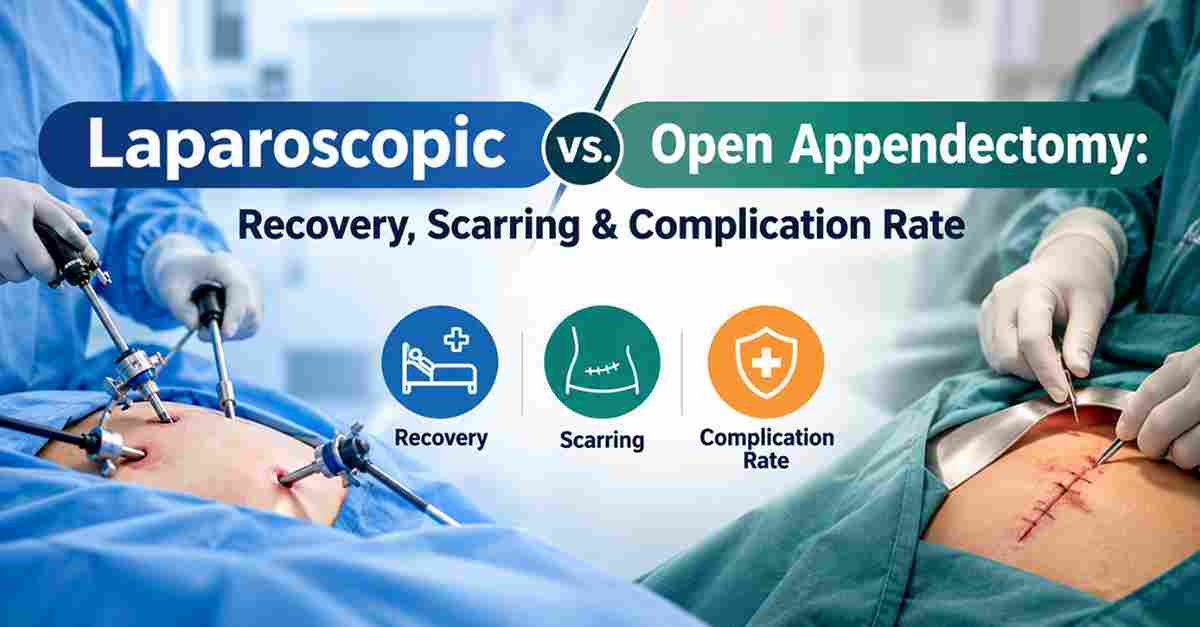
Laparoscopic vs open appendectomy details the basic options your surgeon has to remove an inflamed appendix.
Either they make a few little incisions and stick a camera-guided tool inside, or they do one big slice in your lower right belly.
They each present obvious trade-offs in terms of pain, scar size, risk of wound-related complications, expense, and time to recovery.
To sift through these options, you require first simple truths, which the following sections detail.
Key Takeaways Of Open And Laparoscopic Appendectomy
- You can get your appendix out via an open appendectomy with a larger incision or a laparoscopic appendectomy with a few small incisions. Both aim to safely treat appendicitis and avoid dangerous complications. If surgery is done promptly, it often decreases your risk for complications and reduces your hospital stay.
- You’re more likely to recover faster and have less postoperative pain with laparoscopic appendectomy, which often translates into smaller scars and earlier return to work or school. Open surgery might still be favored if your appendicitis is complicated or there is extensive infection.
- You could be more prone to wound infection, bigger scars and lengthier healing time after open appendectomy surgery, while laparoscopic surgery is associated with less wound complications and reduced risk of incisional hernias. Both approaches offer excellent cure rates when done properly.
- The initial equipment costs for laparoscopic surgery may be higher, but they could be offset by the shorter hospital stays and reduced complications. Open surgery may seem less expensive initially, but it can result in greater overall expenses if convalescence is extended or complications arise.
- You and your healthcare team will take into account your age, general health, body weight, prior abdominal surgeries, and the condition of your appendix when deciding between open and laparoscopic options. Hospital facilities and access to experienced laparoscopic surgeons factor heavily into the ultimate decision.
- You gain the most when your surgeon employs the technique they know best and are most comfortable with and can convert between procedures if your situation changes while you’re under the knife. Routine post-appendectomy care identifies unusual complications and facilitates complete recovery.
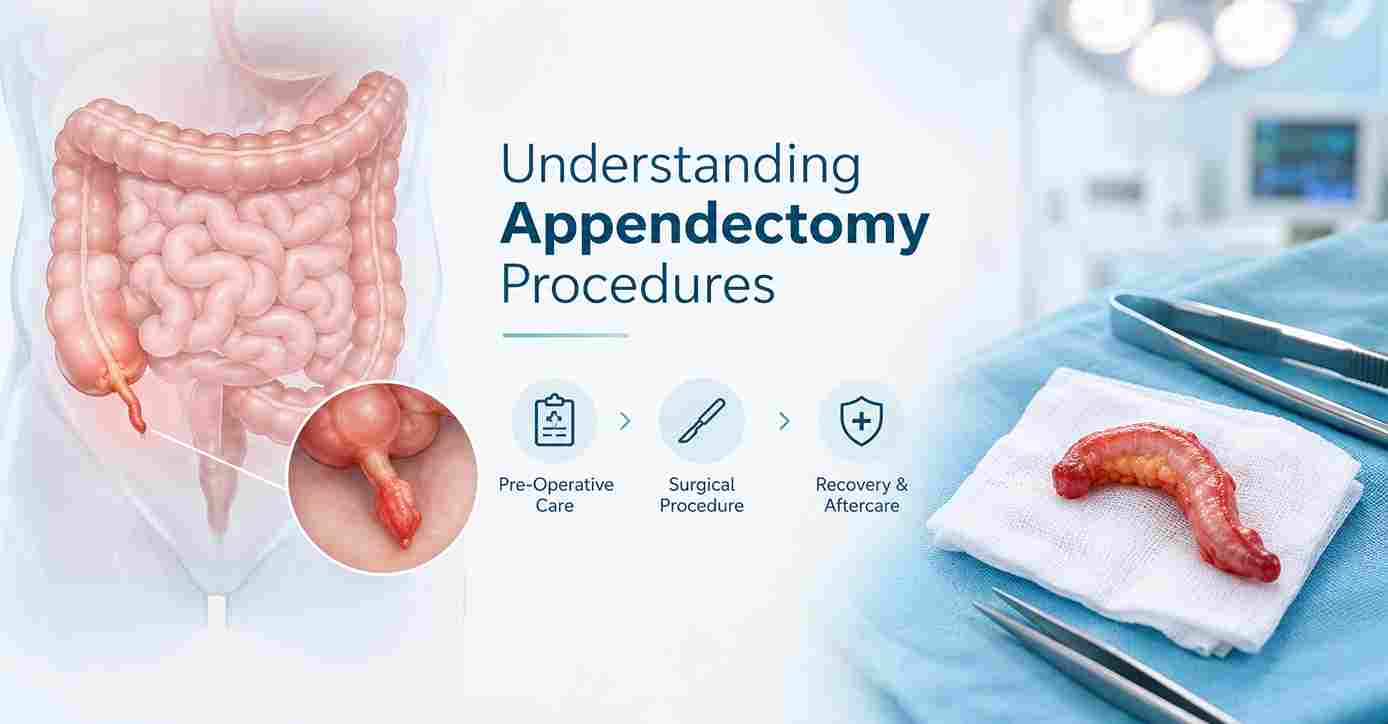
Understanding Appendectomy Procedures
Appendectomy is the removal of your appendix, typically in cases of acute appendicitis, when the appendix is inflamed, obstructed, or in danger of rupturing. You usually face one of two main options: an open appendectomy or a laparoscopic appendectomy. Both try to extract the appendix before it bursts and results in peritonitis, which is an infection of the lining of your abdomen.
A timely surgery reduces your risk of complications, reduces your hospital stay, and makes it easier to restore normalcy to your life.
The Open Method
During an open appendectomy, your surgeon makes a single larger incision, typically 5 to 10 centimeters long, on the lower right side of your abdomen, usually at McBurney’s point. Through this one incision, the surgeon accesses the appendix, ligates it with sutures or clips, and excises it. In most cases, the appendix is transected and ligated.
In fewer cases, about 15 percent, a stapler device is used to close the appendix stump instead. Since the surgeon can view and handle the organs directly, this technique can be helpful if your appendix has already ruptured, if the infection is widespread, or if dense scar tissue impedes keyhole access.
In these complicated cases, open surgery may provide more control if your status is unstable. You should be aware that open surgery tends to have a longer recovery. Hospital stays are about 7.86 days on average and you might require 3 to 4 weeks before you’re up for full activity.
Compared to laparoscopic surgery, open appendectomy has higher wound infection rates, more pain, and a higher mortality rate of about 2.8%, although the absolute risk remains low in the general population of otherwise healthy adults.
The Laparoscopic Method And Advantages Of Laparoscopic Appendectomy
For a laparoscopic appendectomy, your surgeon makes several small incisions, typically 0.5 to 1 cm each, and inserts a camera and thin instruments into your abdomen. Carbon dioxide gas softly inflates the belly so the camera can display your organs on a monitor. The appendix is subsequently divided and extracted through one of the small ports.
Approximately 39 percent of appendices are tied off with ligatures, a stapling device used in a lesser number of cases, as with open surgery. This “keyhole” method is typically less risky for the majority of patients. You suffer less post-operative pain, require less narcotics, and experience an improved short-term quality of life.
The average hospital stay is shorter, close to 4 days, and you tend to get back to normal daily activities within 1 to 2 weeks, approximately 5 days earlier than after open surgery. Most are up and walking the same day and can manage light chores at home within a few days.
Laparoscopy provides your surgeon a broad perspective of the entire abdomen. That can help if your symptoms are ambiguous, as they can rule out other causes of pain, like ovarian issues or inflammation elsewhere along the bowels. Meanwhile, this approach requires sophisticated technology and a staff experienced in minimally invasive surgery, which is not an option at every hospital or every emergency shift.
One more detail that often surprises people: laparoscopic surgery lowers the risk of wound infections but slightly raises the risk of intra-abdominal abscesses, which are deeper collections of pus that sometimes need drainage. Even with that trade-off, total mortality is lower, around 0.9%, and recovery is generally easier for patients.
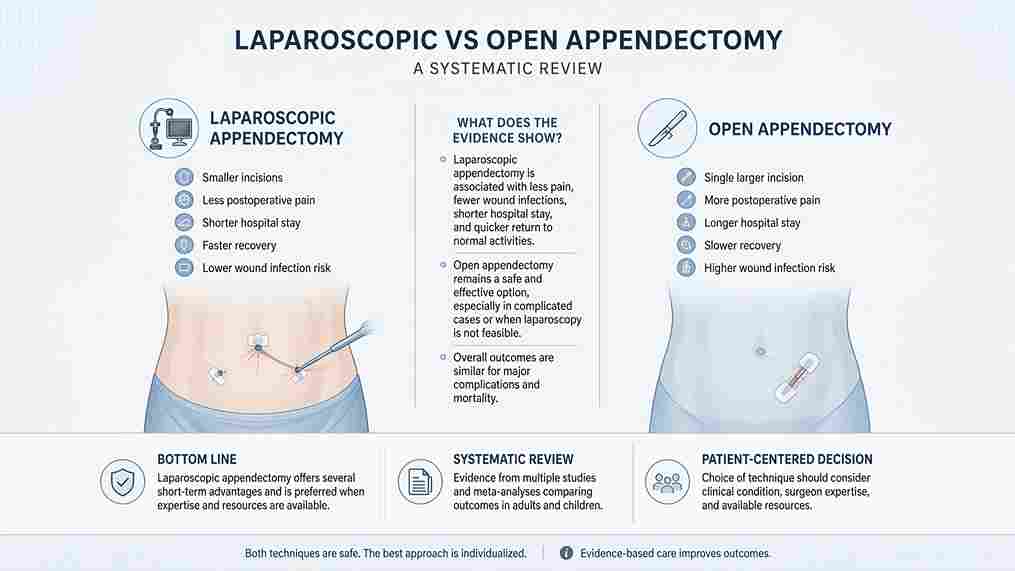
Comparing Laparoscopic Vs Open Appendectomy, Systematic Review
Both take out the inflamed appendix, but they vary in how your surgeon gets to it, how quickly you bounce back and which risks you encounter. Which is best for you depends on your condition, your body, and your surgeon’s judgment.
| Outcome / Feature | Laparoscopic Appendectomy | Open Appendectomy |
| Incisions | 3–4 small ports (5–12 mm) | 1 larger cut (≈4–8 cm) |
| Mean hospital stay | ~0.8–1 day shorter | Longer stay |
| Pain (day 1, 10‑cm VAS) | Negative 0.52 cm versus open | Higher pain scores |
| Back to normal activity | Approximately 5 days prior | Slower recovery |
| Wound infection (Peto odds ratio) 0.42 (95% confidence interval 0.35 to 0.51), lower risk | Greater wound infection risk |
| Intra-abdominal abscess (OR) | 1.65 (95% CI 1.12 to 2.43), higher risk | Lower abscess risk |
| Cosmetic result | Smaller scars, typically better | Larger, more obvious scar |
| Quality of life (adults) | Superior at 2 weeks, 6 weeks, 6 months | Early and mid-term scores were lower |
1. Surgical Incisions
For an open appendectomy, you typically receive one incision on the right lower abdomen, usually approximately 4 to 8 centimeters in length. For laparoscopic surgery, the surgeon makes three or four incisions, each 5 to 12 millimeters in length, to insert a camera and surgical instruments.
These smaller laparoscopic incisions result in less tissue damage and typically heal with finer scars, which most of you will observe on the lower abdomen or around the navel.
The bigger open incision can introduce an increased risk of wound infection and in the long term, incisional hernia, where tissue pushes through the weakened scar line.
Incision type determines how much it hurts to move, cough, or get out of bed, so it can influence your pain and how quickly the skin and muscle heals and feels normal again.
2. Recovery Period
On average, you leave for home sooner from a laparoscopic versus an open surgery. Pooled data indicate that the hospital stay is nearly a whole day (0.81 day) shorter.
You walk sooner, climb stairs sooner, and return to work or college approximately five days prior to an open approach.
With an open operation, you can lie in bed longer, may require more assistance to stand or sit down, and usually spend additional days in the ward before you are well enough to go home.
Age, how inflamed or burst your appendix is, and whether you have other illnesses or obesity can stretch or shorten recovery with either technique.
3. Postoperative Pain
Most adults have lower pain scores the first day after laparoscopic appendectomy, with studies discovering a reduction of roughly 0.52 cm on a 10-cm visual scale compared to open surgery.
Open surgery typically causes additional pain directly on top of the large incision, so it generally requires stronger pain medications, occasionally opioids, for extended periods.
Because there is less pain after laparoscopy, you sit up, walk to the bathroom and breathe deeply sooner, which decreases your risk of chest or vein issues and often translates into a smoother week one.
Because of the smaller cuts and less pulling on the muscles, pain plans differ. Laparoscopic patients may use milder pills earlier, while open cases lean more on injected or stronger medicine at the start.
4. Complication Risks
Both techniques share core risks, including wound infection, intra-abdominal abscess, and temporary bowel shutdown, which is known as postoperative ileus.
Across most studies, laparoscopic appendectomy exhibits less wound complications, with surgical site infections substantially lower, translating to less dressings, less antibiotics, and less skin-related clinic visits.
Meanwhile, the rate of deep intra-abdominal abscess is higher after laparoscopy with a Peto odds ratio of 1.65 and a 95% confidence interval of 1.12 to 2.43. This is particularly true in complicated or perforated cases, where pus has already disseminated.
If your appendix is gangrenous, perforated or you have diffuse peritonitis, both methods have a higher risk for infection and abscess. Your surgeon’s skill and experience, along with your own health status, often matter more than the access route chosen.
5. Financial Impact
Laparoscopic appendectomy typically requires dedicated ports, a camera system and often single-use instruments, so OR cost can be higher initially.
Since you tend to stay nearly one day less, require less wound-care visits, and encounter fewer superficial infections, your total cost of the entire episode can level off or decrease, particularly if returning to work sooner is relevant for your salary.
Open surgery might seem less expensive on the equipment list, but longer hospital stays, more pain medications and greater risk of wound complications can drive costs, including lost work and assistance at home.
In fact, in studies where adults were followed for weeks and months, people who had laparoscopic surgery not only had better quality-of-life scores at 2, 6, and 12 months, they used fewer health-care resources over time.

Which Appendectomy Is for You?
This isn’t a procedure you typically get to select yourself, but now you can see how your profile, your appendix and the hospital influence that decision. Use this checklist as a guide when you speak with your care team:
- your age and general health
- how severe and complex your appendicitis is
- your weight and past abdominal surgery
- hospital tools, staff skills, and emergency set‑up
- surgeon’s judgment based on what they see during surgery
Getting all these pieces to match up helps reduce risk and optimize how speedily you return to normal life.
Patient Profile
If you’re younger and healthy, surgeons tend to favor laparoscopic appendectomy. It employs several small incisions rather than the traditional one five centimeter (about two inch) incision in the right lower abdomen for an open appendectomy.
In adults, laparoscopy has demonstrated less day one pain, reduced wound infections, shorter stays, and quicker return to normal activity.
If you’re older or have heart, lung, kidney, or diabetes issues, your scheme requires extra attention. Your squad will balance how you do with anesthesia, your recovery pace, and how mobile you are post-surgery.
Obesity or multiple previous abdominal surgeries can complicate laparoscopy. In such cases, an open approach can provide better access and control. Your surgeon might begin laparoscopic and convert to open if the visibility is less than optimal.
Gender, your overall health and your ASA class, which is a rating anesthesiologists assign, all factor into the risk and benefit equation between a laparoscopic and open approach.
Appendix Condition
Uncomplicated, early appendicitis is often managed with laparoscopic appendectomy, which takes advantage of less pain and better quality of life reported at 6 weeks and 6 months.
A perforated or gangrenous appendix may push surgeons toward open surgery to drain pus, wash out the abdomen, and control infection more directly.
Abscess or very severe inflammation is sometimes treated first with drainage and antibiotics, then surgery later. When surgery does occur, the ultimate decision between open and laparoscopic is based on how friable surrounding tissue appears.
Unexpected findings during surgery: the surgeon may change from laparoscopic to open if vision is limited or if there is widespread infection because accurate intraoperative judgment is key to safety.
Laparoscopic surgery reduces the length of hospital stay by approximately 0.9 days in some studies. The total length of stay after appendectomy is anywhere from approximately 2.35 to 6.2 days.
However, it has a higher rate of intra-abdominal abscesses than open surgery. Wound infections are much less likely following laparoscopy, with moderate-quality evidence indicating significantly reduced odds.
Hospital Resources
Laparoscopic appendectomy requires functioning laparoscopic towers, scopes, specialized instruments, and nurses and surgeons who perform them regularly. In well-staffed centers that do a lot of laparoscopic cases, this is usually the default when your situation permits.
In small or resource-constrained hospitals, open appendectomy can be the safer and speedier option. The approach utilizes basic equipment and the majority of general surgeons are able to carry it out 24/7.
Emergency department pathways and how quickly an OR is available are factors. In very busy systems, whichever choice is fastest and safe in your case, open or laparoscopic, is the approach that minimizes waiting and minimizes the risk your appendix will perforate.
High‑volume hospitals and surgeons who do a lot of appendectomies typically experience higher overall outcomes, regardless of the approach. He or she will take a variety of things including your health, the severity of the appendicitis, and the hospital’s resources available and determine between laparoscopy and the classic open incision.
The Surgeon’s Deciding Factor For Open Versus Laparoscopic Appendectomy
Your surgeon’s preference for laparoscopic versus open appendectomy depends on expertise, training and in-the-moment decision-making. They consider your age, co-morbidities, previous surgeries, and your current illness, then blend that with the approach they do best.
Additionally, they consider your recovery period, work, and family obligations.
Tactile Feedback
During an open appendectomy, your surgeon can palpate organs and tissues with his or her hands. That firsthand contact can help identify a hard lump, covert abscess, or gritty, irritated region that appears unremarkable initially.
With laparoscopy, that tactile sense is diminished because instruments and trocars interpose between the surgeon and your organs. Instead, you get that trade-off of a close-up, magnified view of the appendix and the whole abdomen, which can expose fine details like small patches of pus or early infection on the bowel.
It matters more in unusual or complicated cases, like a burst appendix, dense scarring from previous surgery, or ambiguous right lower quadrant swelling. In these environments, a lot of surgeons still gravitate toward an open incision because they believe what they feel more than what they observe on a monitor.
Due to this, certain surgeons will opt for open surgery when they anticipate complicated disease, while others, extremely experienced in laparoscopy, remain minimally invasive but convert to open if the situation is unsafe or unclear.
Surgical Experience
You generally have the best outcomes when your surgeon goes with the technique he’s familiar with, open or laparoscopic. For laparoscopy, there is a learning curve. With enough cases, the surgeon can cut the time in the operating room and lower the chance of bleeding, wound infection, or organ injury, which reduces the risk of extra procedures.
Laparoscopic appendectomy is associated with reduced mortality, approximately 0.9% versus 2.8% for open. In several studies, it shows shorter hospitalizations, facilitating quicker resumption of activities of daily living if your surgeon is skilled and your case is appropriate.
The safer profile is not automatic and it relies on good technique, consistent case volume, and frequent skill auditing. While many hospitals have adopted simulation labs, video review, and formal mentorship to teach essential laparoscopic maneuvers, from deliberate port placement to safe control of the mesoappendix, that combination of focused training and continuous practice keeps surgeons’ both open and laparoscopic skills sharp.
This ensures they can adapt to what they encounter once they’re inside the abdomen.
Emergency Scenarios
In true emergencies, your surgeon prioritizes speed and stability. If you show up hypotensive, have diffuse peritonitis and/or sepsis, an open appendectomy could provide the quickest, most direct means to wash out pus, control bleeding and drain abscesses.
Some surgeons prefer open surgery in very advanced, ruptured cases, as attempting laparoscopy can increase the risk of prolonged anesthesia or overlooked infection pockets.
If you’re stable, have an early diagnosis and no significant heart or lung disease, a laparoscopic approach can often work well. It can translate into smaller incisions, less suffering and a rapid transition from bed to ambulation.
Some data demonstrate a shorter overall hospital stay with laparoscopy, which averages 2.7 days, while other reports note shorter stays after open surgery, which averages 1.4 days. This illustrates the impact local practice patterns and discharge rules can have on results.
For instance, in most ERs, surgeons begin laparoscopically, then switch to open if the vision is insufficient, the inflammation too severe, or you deteriorate under anesthesia. They consider your long-term needs, such as how quickly you need to return to work, sport, or caregiving, versus the risk for wound issues or a second surgery.
Long-Term Patient Outcomes
Long term results count when you consider laparoscopic versus open appendectomy if you’re interested in pain, daily function, and risk of later complications.
Laparoscopic appendectomy will provide you with less abdominal wall problems in the long run. The mini incisions, typically 5 to 10 millimeters, reduce your likelihood of incisional hernias compared to the longer incision in open surgery. You risk fewer adhesions, which are internal scar bands that can lead to bowel obstruction years later.
Other research connects laparoscopy with fewer surgical site infections, wound issues, and less later bowel obstruction, which can translate into fewer unplanned hospital visits down the line.
When you consider cure, laparoscopic and open appendectomy fare equally well when properly performed. For acute appendicitis, both approaches take out the infected appendix and provide excellent long-term cure rates with negligible risk that you need a second operation for the same issue.
Big studies even dub laparoscopic appendectomy as the optimal treatment for uncomplicated appendicitis because it combines this high cure rate with fewer long-term consequences, shorter hospital stay, and quicker return to daily activities.
Long-term patient quality of life is comparable once you’ve fully recovered. Roughly the same proportion of each group experiences normal work, exercise, and social life.
The disparity is more in the short to medium term. With laparoscopy, you experience significantly less pain, have lower pain scores, and you walk earlier, eat earlier, and return to work or school much quicker.
This is linked to improved perioperative care, including effective pain management, early ambulation protocols, and defined post-operative nutritional pathways that recent studies are attempting to optimize.
You still require follow-up, regardless of the approach you take. Routine follow-up helps your team identify infrequent late complications, such as stump appendicitis (inflammation of a tiny residual portion of appendix) or a small incisional hernia.
Future research has to examine long-term expenses, which could include repeat visits, lost work time and subsequent bowel problems, so you and your physician can weigh the lifetime value of each alternative.

The Future Of Appendix Removal
The future of appendix removal means less pain for you, shorter hospital stays, and more options for how your appendicitis is managed.
Laparoscopic appendectomy is already an option and sometimes the standard in many hospitals, and you can anticipate its proliferation. Since it makes small incisions instead of one long one, you generally experience less pain, fewer wound complications and a faster return to work or school.
Newer single-incision laparoscopic surgery strives to make just one small incision, frequently near the navel, to reduce scarring and accelerate recovery even further. As more surgeons are trained in these techniques and equipment prices decline, you will be more apt to be given a laparoscopic approach up front, even in smaller centers.
Robotics is creeping into appendectomy. They can provide the surgeon improved precision and 3-D visualization, which can be advantageous in complicated instances, like those involving obese patients or heavily perforated appendicitis.
For now, robots add cost and are not needed for standard cases, but as the technology becomes less expensive and ubiquitous, you might find robotic appendectomy presented as one of multiple choices.
You might encounter an actual choice between surgery and medicine. Research is exploring whether certain mild, non-perforated cases of appendicitis can be managed solely with antibiotics, at least initially.
This may save you from surgery, though with a risk of recurrence down the road. Better risk scoring tools and clear guidelines will help you and your care team determine which path suits your health, lifestyle, and availability of follow-up care.
Imaging and data tools will transform how your appendicitis is discovered and managed. Sharper ultrasound and CT, along with AI to interpret scans and lab tests, could detect appendicitis earlier and reduce ‘false alarms.’
With quicker, more precise diagnosis, more cases can be scheduled the same day instead of emergency night surgery, and outcome tracking will continue refining best practices for you.
Conclusion
So now you understand how both laparoscopic and open appendectomy each have their place. You get smaller incisions and usually a speedier return to normal activities with laparoscopy. You receive consistent, trusted treatment with open surgery in tough or perilous cases.
Your optimal decision does not reside in a graph by itself. It depends on your health, your pain, your prior surgery, and your surgeon.
True security is rooted in solid knowledge and transparent communication. Apply what you learned here, come armed with questions, and have a no-nonsense talk with your care team so you walk in clear, calm and prepared.
Frequently Asked Questions
Is laparoscopic appendectomy safer than open surgery?
Both are generally safe. Laparoscopic surgery tends to have smaller incisions, less pain, and speedier recovery. Open surgery might be best if your appendix has burst, you have a severe infection, or prior scars. Your surgeon will pick the safest option for you.
Which surgery has a faster recovery: laparoscopic or open appendectomy?
Laparoscopic appendectomy tends to have a quicker recovery. Most patients resume light activities by approximately 1 to 2 weeks. Open surgery generally requires a little more healing time due to the larger incision. Your general health and the presence of complications influence recovery time.
Will I have visible scars after appendectomy?
Laparoscopic surgery leaves you with three to four tiny scars that often disappear with time. Open surgery leaves one larger scar in the lower right abdomen. In either case, good wound care and time will help scars fade.
How do surgeons decide between laparoscopic and open appendectomy?
Your surgeon reviews your symptoms, imaging, past surgeries and overall health. If your appendix has burst or there’s a lot of infection or scar tissue, open surgery might be safer. If not, lap is usually preferred.
Is laparoscopic appendectomy more expensive than open surgery?
Laparoscopic surgery may be more expensive for equipment and OR time. You’ll probably be in the hospital for fewer days and get back to work earlier, which can bring your total costs down. Your insurance coverage and local healthcare system impact the final price.
Are there long-term differences in outcomes between laparoscopic and open appendectomy?
For most patients, long term outcomes are the same. You can get on just fine without your appendix. Laparoscopic surgery can have marginally lower risk of wound infection and less chronic pain at the incision. Your surgeon can discuss your individual long term risk.
Can children and older adults safely have laparoscopic appendectomy?
Yes. Laparoscopic appendectomy is commonly performed and safe among children and the elderly. Surgeons tailor the approach to age and comorbidities. In very frail patients or in complicated situations, your surgeon may advise open surgery to maintain your safety to the greatest extent possible.