Bariatric surgery diabetes remission means your blood sugar returns to normal after weight-loss surgery, often without diabetes medications. You can witness significant reductions in HbA1c, reduced insulin requirements, and decreased risks of cardiovascular and nephropathic complications.
Remission rates differ by the type of surgery, weight, age, and duration of type 2 diabetes. Below, you learn how remission works, who benefits most, and key risks.
Key Takeaways That Bariatric Surgery Can Lead
- You need to know that obesity and type 2 diabetes are intimately intertwined and that even modest weight loss can drastically alter your blood sugar control and disease course. Keeping your weight in check through lifestyle or medical options is a fundamental tool for safeguarding your long-term metabolic health.
- Think of bariatric surgery as a magic wand for diabetes remission. It induces quick weight loss and significant shifts in your metabolism, gut, and hormones. If lifestyle measures alone are not sufficient, consulting about surgical options with your care team can assist you in determining whether metabolic surgery is right for you.
- You’ll enjoy hearing that hormonal shifts, gut microbiome, bile acid signaling, and early, rigorous caloric restriction all conspire post-surgery to increase your insulin sensitivity and reduce your need for diabetes medications. Adhering to your post-op diet and medical plan ensures you get the most from these metabolic changes.
- You should know that not all bariatric procedures provide the same tradeoff of diabetes remission, weight loss, and complication risk. Collaborating with your medical team to tailor the procedure type to your BMI, diabetes duration, and overall health provides you with a more individualized and safer result.
You’re more likely to get into and stay in remission if you’ve had diabetes for a shorter duration, have better preserved pancreatic function, and don’t need intensive insulin therapy. Having your providers walk you through predictors of remission can set realistic expectations and help guide your decision making. - Make sure that you have long-term follow-up planned because diabetes can come back if you regain weight or don’t maintain lifestyle changes after surgery. Habits of balanced eating, regular exercise, and regular follow-up with a multidisciplinary team keep you in remission and safeguard your health in the years to come.
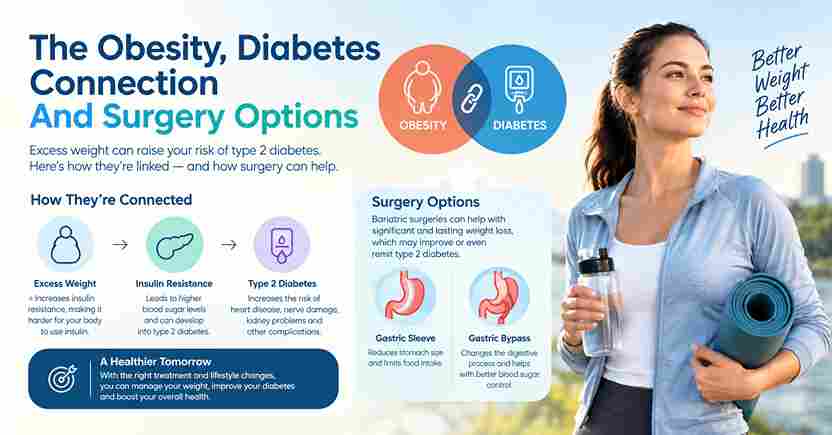
The Obesity ,Diabetes Connection And Surgery Options
Obesity and type 2 diabetes go hand-in-hand because excess fat causes your cells to ignore insulin. Your pancreas therefore needs to produce more insulin to maintain your blood sugar stable. Over time, this high demand wears out the system and blood sugar climbs. This is the reason that obesity is one of the primary risk factors for type 2 diabetes across the globe and why the worldwide increase in obesity follows so closely behind the rapid increase in diabetes.
When you’re heavily laden with fat, it doesn’t just lounge beneath your skin. It behaves like an active organ that sends out signals and secretes hormones and inflammatory molecules. These signals cause your muscles and liver to become insulin resistant and damage the insulin-producing pancreatic β cells.
As β cells fade, your fasting, post-meal, and HbA1c rise and type 2 diabetes becomes more difficult to manage with tablets alone. At a population level, higher obesity rates translate into more people crossing this “tipping point” earlier, at younger ages and with more severe disease.
That’s why health systems are experiencing more people requiring insulin, more kidney and eye issues, and more heart disease related to diabetes. Weight management intervenes in this cycle. As you shed a significant portion of your excess pounds, insulin sensitivity increases and the burden on β cells decreases.
Lifestyle changes can help, but for many folks with elevated BMI, metabolic (bariatric) surgery offers more profound and sustainable weight loss and vastly improved blood sugar control. Another meta-analysis, looking at more than 135,000 surgery patients, found that 86.6% of patients with type 2 diabetes experienced improvement or remission.
In individuals with BMI greater than or equal to 35, studies show about 85% remission for up to two years, and even with BMI between 30 and 35, surgery often surpasses non-surgical care on weight and glucose control. Remission is now clearly defined as HbA1c under 6.5% for at least 3 months without diabetes drugs.
Long-term data demonstrate roughly 30.4% of patients remaining diabetes free 15 years following surgery, and some studies even observe remission in people with BMI less than 30 kg/m², although with less dramatic weight loss.
How Bariatric Surgery Induces Diabetes Remission Or Diabetes Improvement
Bariatric surgery, including gastric bypass and sleeve gastrectomy, alters the way your gut processes food, hormones, and energy. You experience rapid and significant weight loss, improved insulin sensitivity, and more stable blood sugar, frequently with significantly reduced diabetes medication or even complete remission.
1. Hormonal Shifts
After gastric bypass, cells in your small intestine release more GLP‑1 and related gut hormones. These hormones drive your pancreas to produce more insulin when you eat and help your muscles absorb glucose more quickly, so your blood sugar falls, sometimes within days.
At the same time, ghrelin, the “hunger hormone,” often falls, so you feel less hungry, eat less and keep your calorie intake low without trying to battle constant craving.
GIP and other hormones shift. This can improve the function of your β cells and can decelerate their dysfunction, the hallmark of type 2 diabetes. These hormonal shifts account for why you can have remission before significant weight loss registers on the scale.
2. Gut Microbiome
Surgery remodels your gut, so food arrives at different sections of the bowel at new times and new volumes. This new arrangement nourishes different microbes.
You accumulate more strains associated with improved glucose sensitivity and reduced inflammation. That shift can soothe chronic low-grade inflammation in your fat tissue and liver, which is a primary cause of insulin resistance.
A healthier microbiome sustains continued weight loss and improves your body’s reaction to insulin, so your relapse risk decreases. Long‑term data, with remission rates surpassing 30% at 15 years in some cohorts, imply that these gut changes stick with you to keep diabetes at bay.
3. Caloric Restriction weight loss Surgery For Diabetes Patients
Immediately following surgery, your food consumption drops precipitously, usually to a couple hundred kilocalories a day. This immediate reduction can bring fasting glucose down and decrease your requirement for insulin or oral medications within days.
It’s very similar to a harsh, controlled diet but easier to maintain since your reconstructed physiology restricts portion size. With fewer calories coming in, your liver produces less glucose overnight and between meals.
Muscles begin to burn more glucose for fuel, thereby increasing insulin sensitivity. This honeymoon period is a big reason you may catch normal blood sugar while you’re still in the hospital.
4. Bile Acid
Bariatric surgery increases circulating bile acids and alters their flow through your intestine. These bile acids are like messengers that activate receptors in your liver, intestine, and fat that aid the utilization of insulin.
Improved bile acid signaling links with lower fasting glucose, improved lipid panels, and reduced liver fat. Bile acids communicate with gut cells that secrete GLP‑1 and other hormones, contributing yet another dimension of glucose regulation.
These changes appear to promote long-term metabolic wellbeing and might illustrate why diabetes remission can persist for years for some individuals.
5. Weight Loss
Over the ensuing months, the robust, sustained weight loss from surgery becomes the primary driver of diabetes remission. When you lose a significant proportion of excess weight, your fat deposits decrease, inflammation subsides, and your muscles and liver begin to listen to insulin again.
This translates into lower insulin doses or occasionally none at all. Less visceral fat around your organs can relieve stress on β cells, so they function more efficiently and potentially longer.
Studies show a clear pattern: the more weight you keep off, the higher your chance of full or partial remission and the lower your chance of diabetes returning.
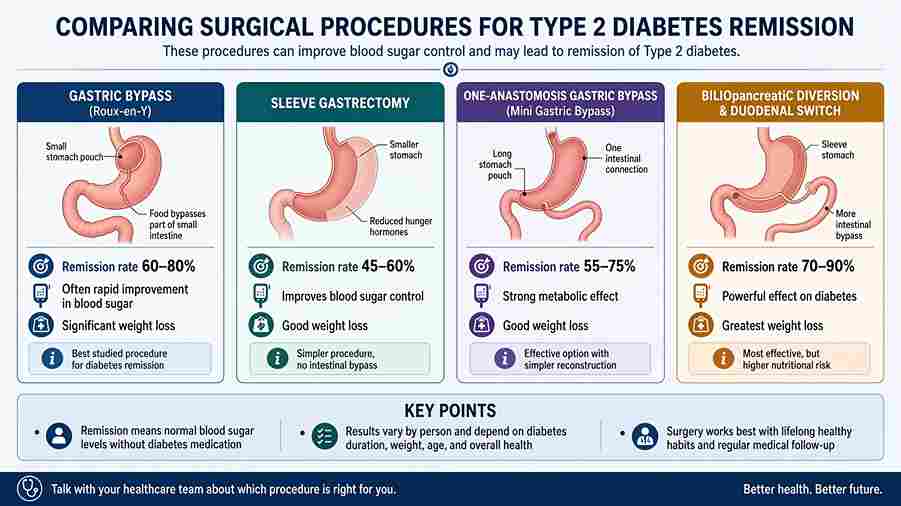
Comparing Surgical Procedures For Type 2 Diabetes Remission
You usually see three main operations used for diabetes remission: Roux-en-Y gastric bypass, sleeve gastrectomy, and more malabsorptive options like biliopancreatic diversion with duodenal switch. They all target large weight loss and improved blood sugar, but they do so in different ways and with different compromises.
Gastric bypass transforms the stomach into a small pouch and bypasses a portion of the small bowel. You lose more weight with this than older alternatives such as adjustable gastric banding, with around 22.7% total body weight loss compared to 14.0% at 7 years.
At 7 years, diabetes remission in one large group was 24.5% for gastric bypass, with overall remission across all bariatric procedures at 18.2% versus 6.2% for medical or lifestyle care alone. Gastric bypass reduces insulin use significantly long term, with 16% still on insulin compared to 56% with medical or lifestyle care.
It frequently improves HDL cholesterol and triglycerides more, with around a −19.0% shift in triglycerides compared to a small increase with non-surgical care.
Sleeve gastrectomy eliminates a significant portion of the stomach and does not require bowel rerouting. At 7 years, loss was roughly 19.7%, which is near other surgeries, and diabetes remission was approximately 15.2%.
It is considered a tad easier and less likely to cause some deficiencies than more heavy malabsorptive procedures. You might get slightly lower remission rates than gastric bypass, and it’s still a major, permanent alteration.
Biliopancreatic diversion with duodenal switch and other malabsorptive procedures can provide the most remission and the sharpest weight loss, but present the greatest risk for long-term malnutrition, vitamin and mineral deficiencies, and bowel problems.
These tend to be used more in folks with extremely high baseline BMI or longstanding, problematic diabetes, and they require rigid, lifetime follow-up.
Procedure selection should be based on your BMI, the duration of your type 2 diabetes, its insulin usage, and your tolerance for follow-up and supplements.
Adjustable gastric banding has a lesser role now, with less remission of approximately 8.9 percent, less weight loss, and even a long-term increase in diastolic blood pressure, which is a deterrent for many.

Who Achieves Remission?
You’re more likely to enter diabetes remission post-bariatric surgery if you fit certain known medical trends. Remission, simply put, is when your HbA1c remains below 6.5 percent for a minimum of 3 months after discontinuing diabetes medications, according to the American Diabetes Association.
One key predictor is how long you’ve had type 2. If your diabetes is recent in onset, your chances improve. A shorter duration generally indicates your pancreas continues to produce more insulin independently. A lower HbA1c before surgery assists, because it indicates your blood sugar isn’t out of control.
If you’re not on high doses of insulin or no insulin at all, that too is a positive indicator. People on intensive insulin treatment usually have further progressed loss of β‑cell (pancreas) function, so remission is more difficult, but not impossible.
Younger age, improved health, and more robust pancreatic reserve increase the likelihood of full remission. Research indicates that over 85% of type 2 diabetics experience remission or significant improvement following bariatric surgery, with many maintaining these benefits for years. This high percentage is influenced by individuals who match these ideal characteristics.
You don’t even need very high obesity to benefit. If your BMI is below 35 kg/m², you can still respond. It reports that surgery has a 56.1% remission rate in this group, versus 7.0% without surgery.
Among larger cohorts, approximately 64.0% achieve remission following surgery compared to 2.8% with medical non-surgical care. Even a primary-care weight program by itself put 46% into remission in one study, which demonstrates how potent weight loss and metabolic change can be, with or without surgery.
A simple checklist that your team can walk through with you can help: diabetes duration, age, BMI, HbA1c, insulin use, and signs of remaining β‑cell function. This type of list doesn’t guarantee remission, but it provides you and your clinician a clearer sense of your practical chances prior to electing surgery.
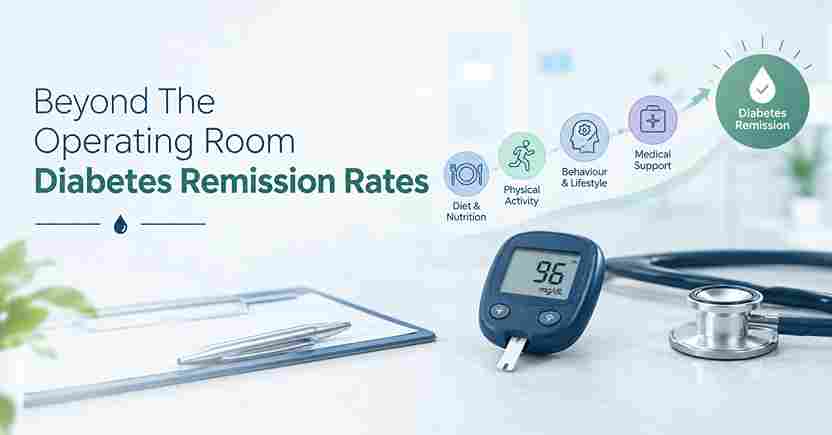
Beyond The Operating Room Diabetes Remission Rates
Bariatric surgery alters your body’s glucose metabolism within days or weeks, far ahead of any significant scale-based changes. You might reduce or discontinue diabetes medications, even achieve remission, with some studies showing this in as many as 90% of patients. This frequently translates to more energy, fewer blood sugar swings, and a dramatic reduction in long-term risks such as retinopathy, nephropathy, and neuropathy.
To maintain that advantage, you still require consistent weight management. You reduce your chances of recurrence when you maintain a healthy weight, eat a balanced diet, and exercise most days. That can mean simple things: walking 30 minutes a day, using stairs, doing light strength work two or three times a week, and choosing whole foods, lean protein, and high-fiber carbs instead of sugary drinks and ultra-processed snacks.
These mini, consistent habits maintain high insulin sensitivity and keep glucose in range. You do better when you have a full care team around you. A surgeon, endocrinologist, primary care doc, dietitian, and mental health professional each monitor different aspects of your health.
They can identify creeping weight, fasting glucose, or A1c before it becomes a full type 2 relapse again. Support groups, in person or online, are popular where members swap real-life tips on eating, stress, and exercise. You should monitor your figures.
These fasting glucose, A1c, and weight checks will help give you an idea of how your remission is holding up. Other centers employ metabolic surgery scores or remission scoring tools to raise red flags, so your team can tweak your diet, exercise regimen, or medications before relapse compels full reintroduction of diabetes medicines.
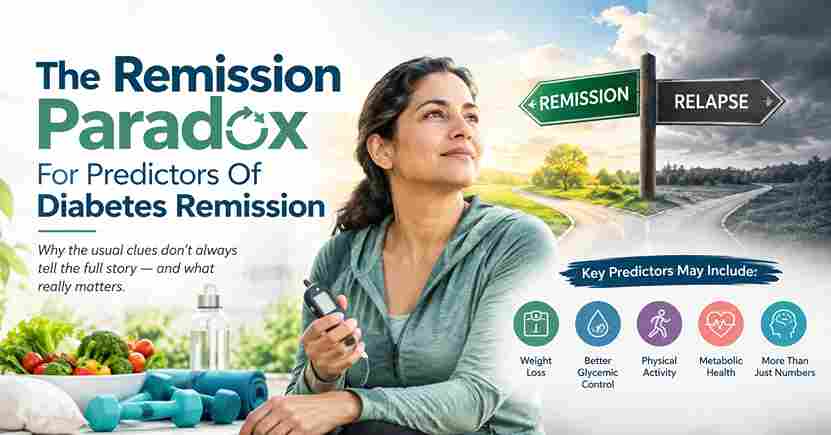
The Remission Paradox For Predictors Of Diabetes Remission
The remission paradox is the divide between how quickly your diabetes can get better following bariatric surgery and how difficult it is to maintain that advantage for life. You might observe your glucose dip and your HbA1c normalize within days or weeks—well before you shed many pounds. Gastric bypass studies demonstrate improved insulin sensitivity and reduced glucose within days of surgery when your body weight has hardly shifted.
That early alteration has to do with changes in gut hormones and glucose metabolism, not fat loss. In most people, bariatric surgery increases gut hormones such as GLP‑1 after eating. These hormones drive your pancreas to secrete more insulin, reduce glucagon, and decrease the rate at which food leaves your stomach. Consequently, your blood sugar swings less and your cells utilize insulin more efficiently.
For some, it causes type 2 diabetes to go into full remission, where you achieve near‑normal glucose without medications. That’s why surgery can work even in people who don’t shed massive amounts of weight. The paradox makes its appearance later. A portion of patients go into remission, only to experience a resurgence of diabetes years later.
Weight regain is one instigator. When your weight creeps back, insulin resistance rises and your body demands more from your β cells once more. If those β cells were frail to start with, they might not keep pace. Whenever you slide on food decisions, cease activity, or skip follow‑ups, your glucose rears back up.
Durable remission is more likely if you lose and maintain a large proportion of your excess weight, have superior β cell reserve at baseline, and adhere to close metabolic follow-up. Long-term data show remission rates drop over time, so you require ongoing lab checks, nutrition support, and at times a return to diabetes drugs.
This paradox is now informing who gets offered surgery, which one, and how teams craft long-term care plans.
Conclusion
You understand the potency of the connection between excess weight, type 2 diabetes, and your future health. Bariatric surgery can turn things around for a lot of individuals. Blood sugar drops quickly. Diabetes drugs can decrease or even halt. Others reach full remission. Others achieve improved control and fewer swings.
That said, surgery is no silver bullet. You confront actual trade-offs. Life post-surgery requires stable eating patterns, medical visits, and candid discussions with your care team. You balance surgery with drugs, diet modification, exercise, and new medications.
If diabetes is crushing you and everything feels ineffective, mention bariatric surgery to your doctor and ask specific, pointed questions about your personal probabilities.
Frequently Asked Questions
Can bariatric surgery really put my type 2 diabetes into remission?
Indeed it can. Most individuals observe blood sugar normalization post-surgery, frequently with reduced or eliminated diabetes medications. Outcomes vary based on the length of your diabetes, weight, type of surgery, and adherence to lifestyle recommendations after surgery.
How does bariatric surgery improve blood sugar so quickly?
Bariatric surgery changes your gut hormones, your insulin sensitivity, and the way your body processes food. These changes can enhance blood sugar within days, even before significant weight loss occurs. That’s why so many folks wean off diabetes meds immediately after surgery.
Which bariatric surgery is best for diabetes remission?
Gastric bypass and sleeve gastrectomy procedures have the best remission rates. What’s “best” depends on your health, BMI, medications and risk profile. You and your bariatric team should weigh benefits, risks and long-term outcomes before making a decision.
Who is most likely to achieve diabetes remission after surgery?
You’re pre-disposed to remission if you’ve had type 2 diabetes for a relatively low number of years, take fewer medications, are not on high-dose insulin and make lifestyle changes. Young age and greater initial weight loss increase your odds.
Is diabetes remission after bariatric surgery permanent?
Not necessarily. Remission can last for years. Diabetes can recur if you regain weight or discontinue lifestyle changes. Consider remission a ‘window of opportunity’ to safeguard your heart, kidneys, and eyes. You’ll need long-term follow-up with your care team.
What else besides surgery affects my chances of remission?
Your diet, physical activity, sleep, stress, and follow-up care all strongly impact remission. Routine lab checks, vitamin monitoring, and backing from a multidisciplinary bariatric team keep you tight on your blood sugar control and catch any relapse early.
Are there risks if I have bariatric surgery mainly for diabetes control?
Yes. Bariatric surgery is major surgery, with risks including leaks, bleeding, infections, and nutritional deficiencies. For numerous individuals with obesity and uncontrolled diabetes, the long-term benefits trump the risks. Your personal risk-benefit profile should be reviewed by a board-certified bariatric surgeon.