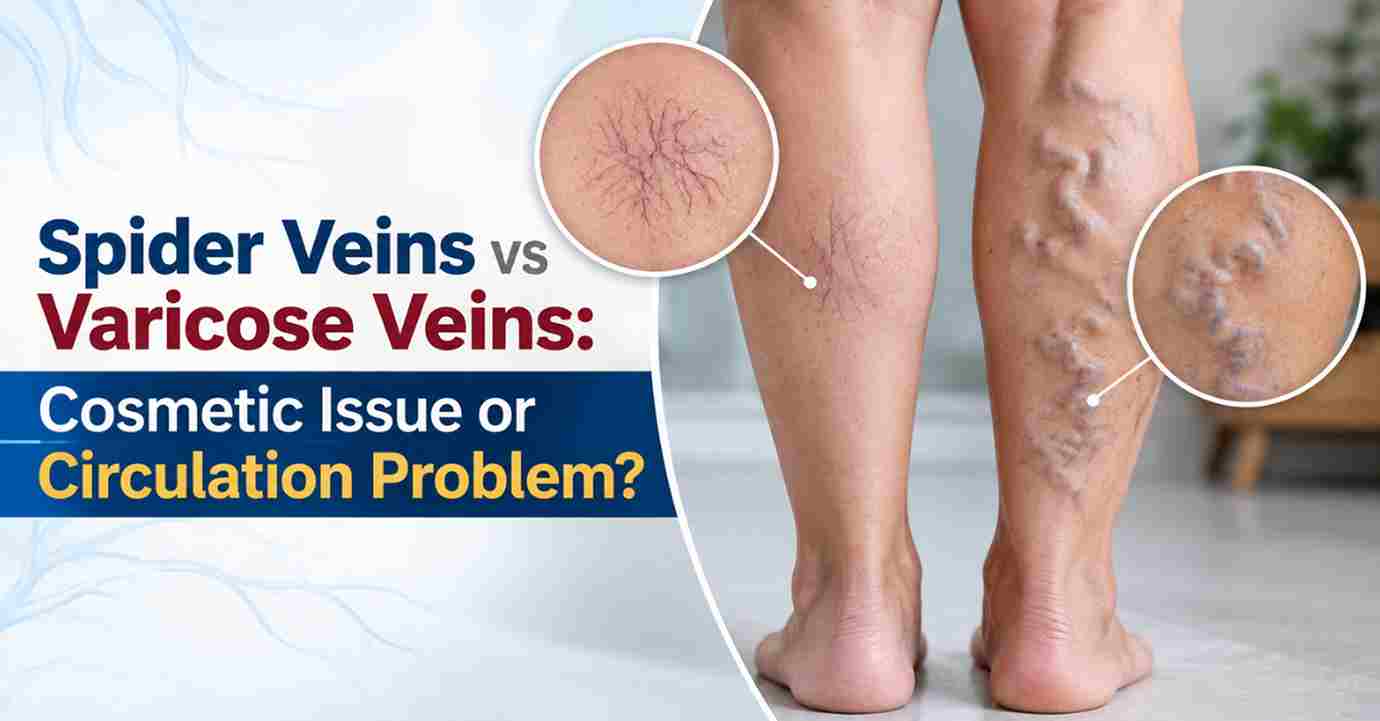
Spider veins vs varicose veins are two of the most common vein issues that impact both the appearance and sensation of your legs. They are not created equally.
Spider veins appear as thin red, blue, or purple lines on your skin. Varicose veins appear as larger, twisted veins that tend to bulge.
When you understand the distinctions, you can approach symptoms, risk, and treatment decisions with more composure and confidence.
Key Takeaways About Varicose Veins And Spider Veins
- You can usually distinguish spider veins from varicose veins by their appearance and texture. Spider veins are flat and fine, while varicose veins are raised and cordlike. Noticing these differences assists you in determining when an issue is primarily cosmetic and when it might be medical.
- You’re more likely to experience pain, throbbing, swelling, or night cramps with varicose veins than with spider veins, which typically cause little to no discomfort. If your legs are heavy, tight, or have skin changes, make sure to have your circulation checked.
- These veins can spring from a combination of genetics, hormonal changes, lifestyle, pregnancy and pressure on your leg veins. You can reduce your risk by remaining active and maintaining a healthy weight, avoiding prolonged sitting or standing and opting for comfortable clothes and shoes.
- Don’t overlook warning signs like chronic leg swelling, changes in skin color, open sores, or sudden warmth, redness, or tenderness near a vein. Early medical intervention can prevent complications like ulcers or blood clots and help you maintain better long-term vein health.
- You can expect a vein specialist to examine your legs and often use duplex ultrasound to assess blood flow and valve function. This professional evaluation helps distinguish between spider veins and varicose veins and guides the safest, most effective treatment plan for you.
- You have multiple choices, ranging from lifestyle modifications and compression stockings to minimally invasive interventions and in extreme cases, surgery. Collaborating with your doctor, you can select a strategy that aligns with your vein variety, symptom severity and objectives.
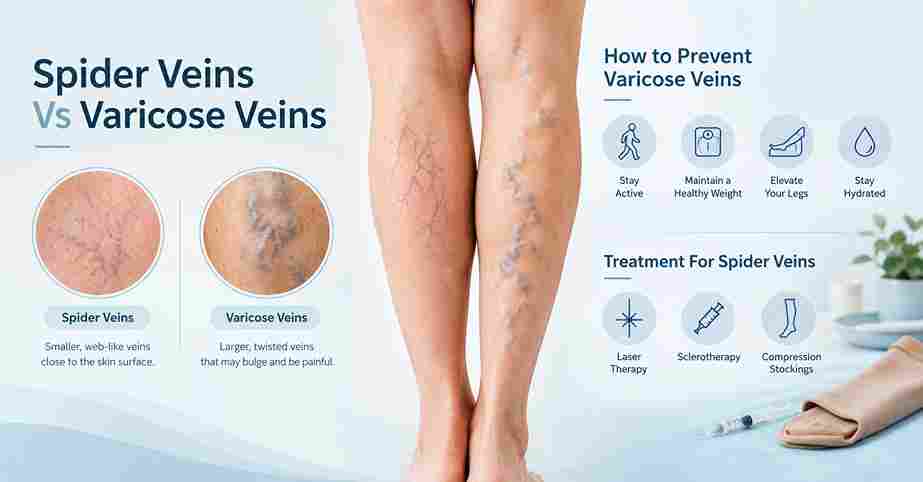
Spider Veins Vs Varicose Veins , How To Prevent Varicose Veins , Treatment For Spider Veins
You deal with the same basic problem in both: faulty vein valves that let blood pool. The size, depth, symptoms, and long-term risk are very different.
1. Visual Appearance Of Varicose Veins Or Spider Veins
Spider veins are small, under 1 mm wide, and rest directly on the skin’s surface. You’ll notice them as thin, wispy lines resembling spider webs, tree branches, or small blue hairs. They can cluster or fan and frequently radiate out in a flat pattern.
| Feature | Spider veins | Varicose veins |
| Size | < 1 mm, thread‑like | > 3 mm, thick cords |
| Color | Red, blue, or purple | Dark blue or purple |
| Texture | Flat, smooth to touch | Bulging, raised, often ropey or twisted |
| Depth | Very superficial | Deeper, often along main leg veins |
Varicose veins are significantly larger, typically greater than 3 millimeters in diameter, and frequently have the appearance of thick, ropey cords. They can bulge and twist above the skin, and you might see them more when you stand. Their color is often dark blue or purple, and the surface can be lumpy or knotty to the touch
.2. Physical Sensation Can Be Causes Varicose Veins
You usually don’t feel spider veins. Others feel a slight itch or gentle burning in the region, but it is typically minor and transient.
Varicose veins act very differently. They can make your legs ache, feel heavy, or cause a dull throbbing that intensifies throughout the day, especially if you stand or sit for periods over four hours. You may notice leg swelling around your ankles by evening, as well as itching or burning over the bulging veins.
As time passes, you might experience tightness, nagging fatigue, or tingling and numbness in the legs. In late-stage disease, the skin around the ankles can darken, harden, or become tenuous, and painful ulcers can develop where blood has stagnated for years.
3. Underlying Structure
Spider veins arise from dilated capillaries or very small superficial veins immediately beneath the skin. The vessel walls widen, so those fine red, blue, or purple lines are now visible, although they have a low blood volume.
Varicose veins are larger, deeper veins that have weak walls and valves that don’t close well. When those valves fail, blood cascades backward with gravity, stretches the vein, and makes it bulge. That’s why you get big twisted cords instead of fine lines.
Both alterations represent venous disease, albeit on different scales. Spider veins are surface-level dilation, while varicose veins involve significant vein dilation and valve failure which can impact leg circulation.
4. Common Locations Of Small Varicose Veins And Spider Veins Usually
You typically find spider veins on the face (cheeks and nose), outer thighs, calves, ankles, and behind the knees. They appear on the chest or abdomen, or in a ‘corona’ around the ankles in those who stand frequently.
Varicose veins primarily occur on the legs, particularly the calves, thighs, and inner knee area where the major superficial veins lie. The pressure in these leg veins is higher when you stand, so issues appear here first.
Pregnancy can contribute to additional locations. Pelvic and vulvar varicose veins can present as deep pressure or bulging visible veins in the groin or genital area. Some develop enlarged veins over the breasts. True varicose veins above the legs are still less common than leg involvement.
5. Medical Significance
By themselves, spider veins are primarily a cosmetic concern and seldom endanger your health. You may feel self-conscious in shorts or swimwear, but they typically do not impact how your legs function.
Varicose veins can indicate chronic venous insufficiency, where your leg veins don’t efficiently return blood to the heart. This increases the risk of issues such as skin breakdown, venous leg ulcers, or surface vein blood clots and sometimes deep vein thrombosis.
Swelling, skin discoloration around the ankles, or persistent pain are warning signs that you should not ignore. You’ll be more likely to have both if vein disease is in your family, if you’re prone to sitting or standing for long stretches, or with hormonal shifts like pregnancy or hormone therapy.
Supportive measures, such as compression stockings, elevating your legs during the day, and interrupting long sitting or standing blocks, can relieve heaviness, swelling, and burning.
When they’re symptomatic or appearance bothers you, there are medical treatments that can help. Sclerotherapy can fade spider and smaller varicose veins with an injected solution.
Endovenous thermal ablation closes larger broken veins from the inside with heat. In more severe cases, vein surgery removes or ties off the affected segments and blood flows through healthier veins.
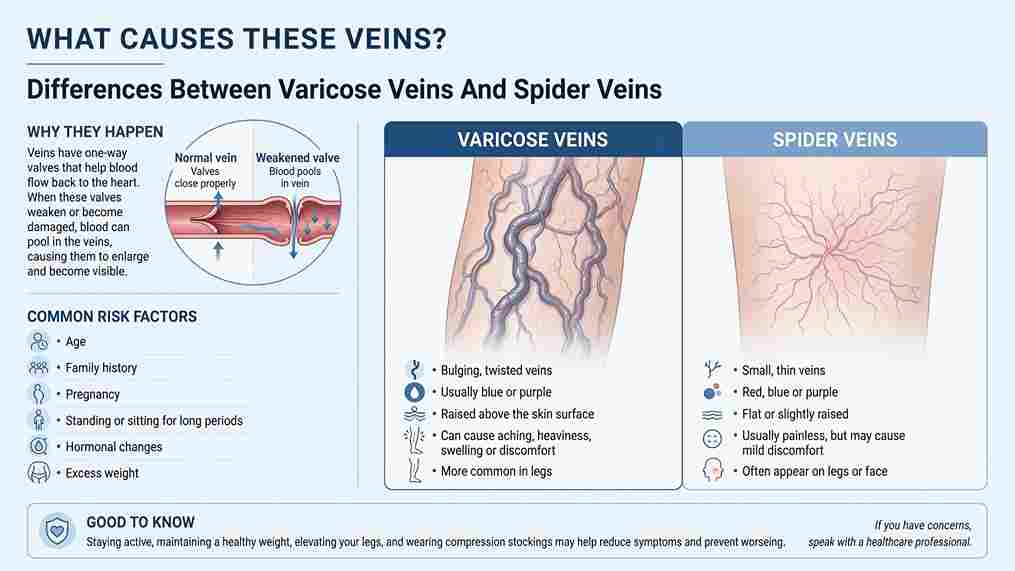
What Causes These Veins? Differences Between Varicose Veins And Spider Veins
Spider veins and varicose veins both begin when the small valves within your veins become weak and the vein wall loses elasticity. Blood then leaks back, pools and causes pressure to rise in the vein, which makes it twist, widen and show through your skin.
Shared key risk factors
- Age over 40–50 years
- Female sex or estrogen-based hormone exposure
- Family history of visible leg veins
- Obesity or higher body mass index
- Long periods (over 4 hours) of sitting or standing
Prior leg injury or surgery
History of superficial thrombophlebitis (clots in surface veins)
More specific to spider veins
- Sun exposure, especially on fair or thin skin
- Minor skin trauma (bruises, bumps, cosmetic procedures)
- Prolonged pressure on small facial veins, such as constant nose-blowing or intense coughing.
More specific to varicose veins
- Chronic venous reflux (valves not working, blood flowing backward)
- Persistent elevated venous pressure results from heavy lifting or prolonged daily standing.
- Advanced pregnancy or multiple pregnancies
- Marked obesity with impaired venous function
If close relatives have spider or varicose veins, your chances increase dramatically. You might even see a tendency towards your leg veins where your parent, grandparent, or multiple siblings all developed leg veins prematurely in their twenties, sometimes under 30 years old, whereas others in that family line never did.
You can inherit weaker vein walls, looser connective tissue, or valves that don’t close well, so blood pools sooner when you stand or sit still. Certain individuals are born with vein malformations or atypical vein pathways. These can cause prominent veins in childhood or young adulthood. Knowing who in your family had visible veins, leg swelling, ulcers, or “vein surgery” gives you an idea of how closely you should monitor your own legs.
Day-to-day habits tend to determine how quickly your genetic risk manifests. When you sit or stand in one place for more than 4 hours, your leg veins have to force blood uphill against gravity without assistance from your calf muscles. This is typical in office work, retail, teaching, factory work, and long-haul travel and gradually increases your risk for both spider and varicose veins.
Excess body weight places even more pressure inside the leg veins. That strain causes valves to die prematurely, which is why obesity and venous insufficiency frequently co-exist. Tight waistbands, shapewear that digs in at the groin, and high heels that restrict ankle motion all reduce the natural “pump” of your calf and ankle. Blood then flows slower and has more time to collect.
Checklist: habits you can change to prevent varicose veins
- Break up sitting or standing every 45 to 60 minutes with short walks.
- Keep a healthy body weight for your height.
- Go for flat or low-heel shoes for the majority of the day.
- Avoid very tight clothing around the waist, groin, or thighs.
- Actually, do easy calf raises or ankle circles while working or traveling.
- Elevate your legs after long days on your feet.
Hormones determine the degree to which your veins feel tight or relaxed. Estrogen and progesterone act to loosen the smooth muscle in vein walls and soften supporting tissue, making veins prone to stretch and remain wide once pressure increases. You see this most during puberty, monthly cycles, pregnancy, and menopause, when hormone levels fluctuate rapidly.
Women and people taking estrogen or progesterone in birth control or hormone therapy are at a greater lifetime risk of both spider and varicose veins. You could experience spider veins flare near your period or on specific pills, then subside a bit afterwards. Over time, these hormonal shifts can leave valves weaker and vein walls more susceptible to bulging, which paves the way for larger veins. Even if you’re feeling great, these subtle shifts can continue accumulating below the surface.
Pregnancy adds several direct stresses on your vein system at once. Your blood volume climbs, your body weight goes up, and your growing uterus presses on the veins deep in your pelvis. It all makes it more difficult for blood to get back up from your legs, so pressure builds in the surface veins and any weak valve begins to leak.
This is why a lot of women first become aware of varicose veins or a “spray” of new spider veins in either the 2nd or 3rd trimester. Pregnancy hormones, especially progesterone, relax vein walls even more, so they stretch under this additional burden. More pregnancies and more of the cycle each one may leave a tad more permanent damage in its wake, especially if you stand a bunch, put on more weight or have a family history.
While some of the visible veins subside in the first year after birth, others persist or worsen with each new pregnancy, morphing early spider veins into full blown varicose veins later in life.
More Than Skin Deep
‘More than skin deep’ is that what you see on the surface is just scratching the surface. Spider veins and varicose veins might appear to be just a skin concern, but they connect to the functioning of your veins, circulation, and even your emotional health.
The Emotional Toll
When veins bulge on your legs or face, you may find that others see them first, not you. You may find yourself measuring your legs against others or even against your own pics from a few years back. That silent transformation in the way you view your body may erode self-esteem over time, in the same way acne, eczema, or psoriasis do for many.
Maybe you begin to shun shorts, skirts, swimsuits, or even walk barefoot at a pool. Others avoid parties, athletics, or vacations because standing for hours makes their veins throb or appear worse. It’s like how vitiligo or other visible skin changes can influence what you feel secure donning in public.
The effect isn’t just skin deep. Persistent heaviness, itching, or burning in your legs can leave you less active, sleep less, and more irritable. That cocktail of physical discomfort and self-consciousness can fuel anxiety or depression.
Dermatology research shows this pattern in many skin problems: symptoms affect daily life, mood, and social ties, so the condition becomes more than skin deep. When you address veins, you’re not just smoothing the skin. You are reducing pain, increasing mobility and frequent comfort in your own skin.
That’s why so many vein and skin doctors now address physical, emotional and psychological concerns collectively, rather than just treating the visible veins.
The Circulation Red Flag
Spider veins tend to linger in the “cosmetic” category, but varicose veins are a potential symptom of chronic venous insufficiency, a condition in which the valves in your leg veins don’t return your blood to your heart effectively. When blood collects in the lower legs, pressure within veins increases and causes them to bulge and coil.
Over time, this tension isn’t just altering the appearance of your skin. It can alter the behavior of the skin and tissue beneath it, in the way that long-term diabetes can initially manifest as skin discoloration or slow-healing lesions.
Look out for ankle swelling at the end of the day, dull aching that subsides when you elevate your legs, or tight, itchy skin on your shins. Brown or purple patches, thickened ‘leathery’ skin, or areas that feel warmer than the rest of your leg can all suggest deeper venous damage.
If this cycle continues untreated, it can pave the way for blood clots in your surface veins, deep vein thrombosis, or tragic, slow-to-heal venous ulcers. Since our skin is so closely connected to our overall health, new or rapidly changing vein patterns are relevant.
Treat them as you would a new rash, sudden eczema flare, or unexplained bruise: something your body is using to send a clear signal about what is happening underneath. By keeping track of photos of your legs and when symptoms strike — for example, after long flights or extended desk days — you and your doctor can get a sense of whether your blood flow is deteriorating.
When To Seek Help
You should seek medical care if you notice any of these signs around your veins:
- Leg pain, cramping, or heaviness that doesn’t subside with rest.
- Swelling in your feet, ankles, or calves, particularly if one side is worse.
- Skin discoloration, hard or shiny patches, or a rash along your veins.
- Itching, burning, or warmth along a visible vein.
- Open sores, slow-healing cuts or weeping skin around your ankles.
- Sudden enlargement of veins or new twisting, bulging veins.
- Veins that are hard, warm, or very tender to touch.
- Any SOB or CP with leg swelling is an emergency.
If these symptoms alter how you walk, stand, sleep or work, a vein specialist can screen for early vein disease and recommend compression stockings, lifestyle changes or office procedures. Early intervention usually translates into a quicker recovery, less chronic skin discoloration and reduced risk of ulcers or clots, reinforcing again that skin and circulation care are more than skin deep.
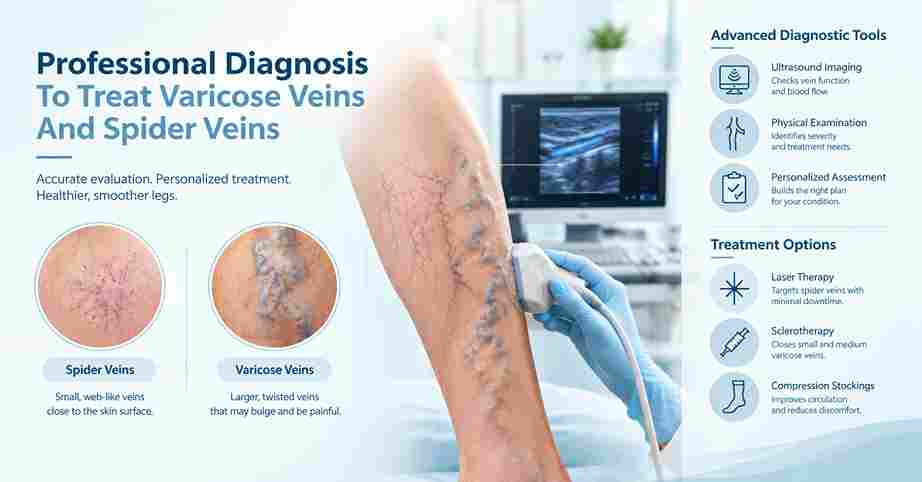
Professional Diagnosis To Treat Varicose Veins And Spider Veins
You may see only color and texture on your skin, but a vein specialist sees a circulation problem that needs a structured work-up. A professional diagnosis sorts out spider veins from varicose veins, checks how severe things are, and rules out issues like blood clots or chronic venous disease that can harm your quality of life later.
A simple checklist many vein clinics use includes:
- Comprehensive medical history includes family history, pregnancies, hormones, and occupations with long standing.
- Symptom review (aching, heaviness, itch, night cramps, skin changes)
- Visual inspection and palpation of the legs
- Duplex / Doppler ultrasound of superficial and deep veins
- Photos and a hand-drawn or computer-generated ‘vein map’ for planning.
Visual Examination
As part of a physical exam, your provider examines the pattern, color, and distribution of veins while you are standing and sometimes sitting or lying down. They note fine red, blue, or purple lines that sit flat in the skin (spider veins) versus thick, rope-like, bulging veins (varicose veins) and match what they see with what you feel: pain, burning, or simply cosmetic concern.
They look for skin changes suggestive of chronic venous insufficiency such as brown discoloration around the ankle, dry or inflamed areas, or healed and active ulcers. They may see swelling around your ankle or calf or a leg that looks larger than the other and push them to rule out blood clots.
In some clinics, a crude vein “map” is drawn directly on your chart or on leg photos, marking clusters of spider veins, feeding varicose veins, and suspected malfunctioning junctions. This map then directs where to inject sclerotherapy, place catheters, or concentrate laser energy.
Clear differentiation of spider veins (mainly cosmetic, very superficial) from deeper varicose veins (associated with valve incompetence and reflux) is essential as it alters your treatment course. This can range from modest surface injections to complete vein closure or stripping.
Ultrasound Imaging
Duplex ultrasound is the gold-standard test when your doctor suspects varicose veins or hidden venous disease behind your spider veins. A probe slides over gel on your skin and displays real-time images of the vein walls and color images of blood flow, so your doctor can determine if valves close properly or allow blood to leak backward.
With it, they time reflux, identify blood pooling regions, and map which surface veins are supplied by incompetent deeper trunks. That same scan can detect deep vein thrombosis, compressed or narrowed veins, or abnormal anatomy, which all alter their risk and treatment approach.
Since the test is both painless and fast, it frequently serves as the tipping point between “these are just spider veins” and “you have chronic venous insufficiency that requires more than cosmetic care.
It finds and then crafts a personalized plan that may combine lifestyle measures, compression stockings, and focused treatments like sclerotherapy, endovenous laser, or radiofrequency ablation. This approach targets the underlying cause instead of just blurring what you observe on the surface.

Modern Treatment Options, Minimally Invasive Treatment
You have four main paths for dealing with spider and varicose veins: lifestyle changes, compression therapy, minimally invasive procedures, and surgery. What’s best for you depends on vein type, severity, symptoms, and what you want to change about how your legs look and feel.
Modern treatments aim for aggressive results with minimal discomfort and downtime.
| Approach | Pros | Cons / Limits |
| Lifestyle adjustments | Low cost, safe, support long‑term vein health | Rarely enough for large varicose veins |
| Compression therapy | Eases pain, swelling, cramps; slows progression | Needs daily use; does not remove visible veins |
| Minimally invasive methods | Quick, clinic-based, same‑day return home | May need several sessions; possible minor side effects |
| Surgery | Suits severe, complex disease | Higher risk, more downtime than other options |
Lifestyle Adjustments Create Healthy Veins
You fight spider and varicose veins by maintaining circulation. Just walking regularly, even 20 to 30 minutes most days, gets your calf muscles pumping blood back to your heart.
Elevate your legs above your heart a few times a day to decrease swelling and that heavy feeling.
When you stand or sit in one place for extended periods, blood has a tendency to pool. Make an effort to get up at least every 30 to 60 minutes, even if it’s just to take a short walk or do some ankle circles at your desk.
Well fitting shoes with low to medium heels, along with loose clothing around your waist and groin, provide your veins additional space to operate. Tight waistbands or high heels can bottleneck flow.
Easy calf raises, toe lifts, and mini stair climbs develop the ‘second heart’ in your calves, which is crucial for natural blood flow up the legs.
Compression Therapy Treatments For Varicose Veins
Compression stockings or sleeves softly squeeze your legs, which prevents blood from accumulating and can reduce swelling and discomfort. For most of you, this is your initial treatment for both spider veins and varicose veins.
Doctors recommend it prior to any procedure. Opt for knee-high, thigh-high, or full pantyhose styles and from mild to medical-grade pressure.
A specialist fits your legs so you receive the appropriate fit and strength for everyday use. If you wear them as advised, they may slow vein disease, ease cramps at night, and make standing or long travel more comfortable.
They will not erase the veins you already see.
Minimally Invasive Procedures
Modern care has moved firmly in the direction of minimally invasive options that you get in an outpatient clinic and go home the same day. For many spider veins and small varicose veins, sclerotherapy is common.
A fine needle puts a solution or foam into the vein, which makes the vein walls stick together and fade over weeks. One session usually requires 15 to 60 minutes, and you may need a few visits separated by 4 to 6 weeks for several clusters of small pimples.
Modern treatment options for larger varicose veins include endovenous ablation, which uses heat to seal the primary malfunctioning vein from within. Laser ablation and radiofrequency ablation are the two main types.
Both steer a fine fiber or catheter into the vein under ultrasound and then apply heat to collapse it, so blood reroutes to healthier veins. Downtime is minimal. Typically, you’re out the door the same day and returning to light activity within hours.
Other office‑based avenues include Varithena and VenaSeal, which utilize a specialized foam or medical adhesive to close diseased veins without heat.
These can assist if you have been a poor match for thermal methods or wish to bypass tumescent anesthesia.
Surgical Solutions And Risk Factors For Varicose Veins
Surgery remains in the mix for very large, twisted, or complex varicose veins, or when more conservative interventions fail or complications such as skin ulcers, bleeding, or debilitating pain emerge.
Ambulatory phlebectomy extracts bulging surface veins through a few small incisions, usually while you’re awake with local anesthesia.
Surgical ligation, occasionally with stripping of an underlying vein, ties off or removes deeper defective segments through small incisions. While newer surgeries try to reduce scarring and recovery, they still require more healing than sclerotherapy or ablation.
A thoughtful consultation with your vein specialist goes a long way in tailoring the plan to your health, ambitions, and schedule.
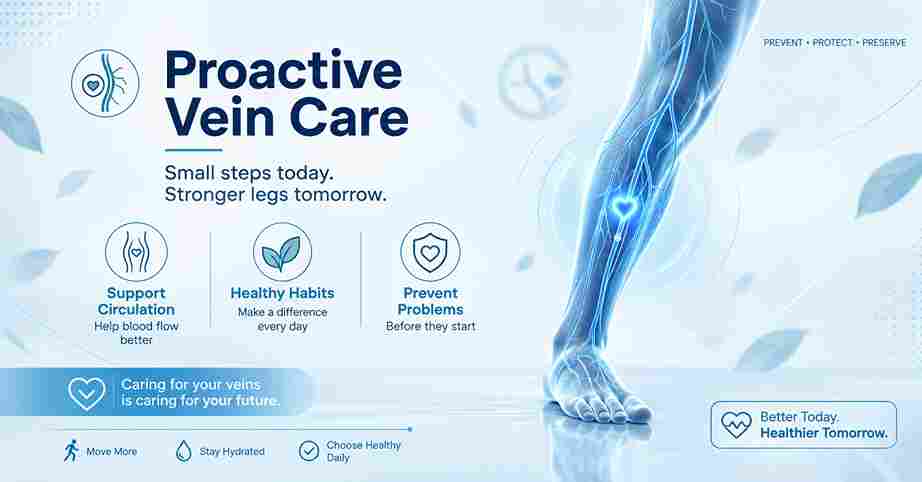
Proactive Vein Care
Proactive vein care is when you do little, daily actions to optimize circulation in your legs rather than waiting for spider or varicose veins to escalate. You emphasize how blood returns to your heart and how to reduce pressure inside your veins over time.
Here’s the thing. Medical-grade compression stockings assist in shoving blood from your feet back up to your heart, which reduces pooling and swelling. You typically wear them while you are awake, particularly if you sit or stand for extended periods, take long trips, or are expecting a baby.
In most clinics, you wear compression socks for 3 to 6 months before your doctor signs off on more advanced vein therapies because this step indicates how your veins react to simple support.
Easy postures that relax pressure on fragile veins. Try elevating your feet above heart level for 15 minutes, three times a day to relieve heaviness and pain from varicose veins. You can just lay on the bed and prop your calves up on a pillow or on the wall.
Movement breaks count, too. If you’re sitting or standing for long periods, flex your ankles or walk for 5 minutes every hour. The calf muscles work as a pump so blood does not pool in your veins.
Following your legs keeps you ahead of the curve. Varicose veins can be an indicator of underlying problems, such as venous insufficiency, where vein valves do not close properly. Genetics, weak valves, pregnancy, or standing still for extended periods can all contribute to threatening your veins.
Proactive steps such as compression, short walk breaks, and leg elevation can slow or prevent varicose veins from becoming a more progressive vascular disease and can ease symptoms from both spider veins and varicose veins in the long run.
Conclusion
To sum it up, spider veins and varicose veins can seem similar on the surface, but they’re two separate tales. You understand how they develop, what they can signify for your health, and what actual choices you have.
You don’t have to dismiss persistent pain, itch, or heaviness as ‘just age’ or ‘just aesthetics’. Your veins can go south with clever habits, such as more walking, less extended sitting, and smarter leg support. They can transform with safe, modern treatment from a vein specialist.
For your next move, consult a good vein doctor, be blunt with your questions and apply what you learned here to select a treatment plan that suits your lifestyle.
Frequently Asked Questions
How are spider veins different from varicose veins?
Spider veins are small, flat, and web-like. They are typically red, blue, or purple in color and rest close to the skin’s surface. Varicose veins are enlarged, protruding, writhing veins. They frequently exhibit heaviness, aching, or throbbing and can be an indicator of deeper vein issues.
Are spider veins just a cosmetic issue?
Not necessarily. Spider veins may occasionally be an initial symptom of compromised circulation or vein disease. If you experience leg pain, swelling, or heaviness in addition, see a vein specialist. Early diagnosis helps keep vein issues from escalating.
What causes spider and varicose veins?
These veins tend to be hereditary. Typical causes are heredity, aging, pregnancy, long hours of sitting or standing, obesity, and hormonal fluctuations. Weak vein walls and valves permit blood to pool and cause visible spider or varicose veins.
When should you see a doctor about visible veins?
Visit a doctor if your veins ache, burn, itch, swell, or feel heavy. Get care if the skin around your veins becomes darkened, hardened, or has sores. A vascular or vein specialist can evaluate for underlying vein disease and recommend optimal treatment.
How are varicose and spider veins diagnosed?
A vein specialist typically begins with a physical exam and your medical history. They might order a duplex ultrasound to observe blood flow in your veins. This imaging test is painless and is used to detect valve issues or deeper vein disease.
What are the best treatment options for spider and varicose veins?
These days, treatments are quick and minimally invasive. Popular choices are sclerotherapy, laser therapy, radiofrequency ablation and endovenous laser treatment. Your specialist will suggest a course of action based on your symptoms, the size of your veins and your general health.
How can you prevent new spider or varicose veins?
You can help your veins stay healthy by taking daily walks, maintaining a healthy weight, and avoiding sitting or standing for long periods of time. When resting, elevate your legs and wear compression stockings if recommended. These actions increase circulation and can delay new vein development.