Bariatric surgery is safe when you adhere to medical guidelines and collaborate with an experienced care team.
You still encounter serious risks, as with any major surgery, such as bleeding, infection, or blood clots.
You handle lifelong modifications of your eating behaviors and nutrient absorption.
To put the safety statistics in perspective, you need straightforward information about success rates, possible risks, and follow-up care, which this guide details below.
Key Takeaways About How Safe Is Bariatric Surgery Or Weight Loss Surgeries
- Bariatric surgery is quite safe as a major operation, with slim death rates comparable to other common surgeries, particularly when weighed against the greater health dangers of untreated serious obesity. You still need to discuss your personal risk profile with a professional bariatric team beforehand.
- You should know that short-term risks such as bleeding, leaks, and infections are rare yet possible and most are detected and treated early. Nutrient deficiencies and weight gain are more common in the long term, meaning you require lifelong supplements, lab tests, and follow-up visits.
- You enhance your safety and outcomes by selecting an experienced surgeon and an accredited high-volume center that provides the full team—dietitians, mental health experts, and medical specialists. You can check out outcome data and inquire about complication and success rates before you commit.
- You require an extensive pre-surgery workup that entails medical tests, psychological screening and evaluation of your existing diseases such as heart, lung or liver disease. You can compile a to-do list of appointments, tests and clearances to accomplish before you set the surgery.
- Prepare for huge lifestyle changes post-surgery — a staged diet, vitamin and mineral supplements every day, and increasing physical activity. You can back your momentum with a food diary, a daily recovery checklist, and regular visits with your care team and support group.
- There are emotional, social and body image changes that don’t always get talked about, including relationship shifts, extra skin and mood changes. You can prepare by setting realistic expectations, getting counseling if necessary, and joining support groups to exchange experiences and coping mechanisms.
Understanding Bariatric Surgery And Complications After Bariatric Surgery
Bariatric surgery comprises a set of procedures that alter the way your stomach and sometimes your intestines process food for you to lose significant weight. You generally think about it if you have morbid obesity. Typical cut-offs are a body mass index (BMI) of 40 and above, or 35 to 40 with diabetes, hypertension, or sleep apnea.
You consider it if lifestyle and medicines have failed to produce consistent, long-term loss. It’s complicated surgery, not a quick fix, and it’s not right for every overweight person. You must have a clear perspective on both risks and benefits before you proceed.
Bariatric surgery can relieve or even remit many obesity-related diseases. Most experience improvement in blood sugar control, reduced blood pressure, and reduced severity of sleep apnea. For others, this translates into less medication and reduced lifetime risk of heart attack and stroke.
To maintain those gains, you need to adhere to a rigorous diet, exercise regularly, and supplement with vitamins or minerals if your care team recommends.
The Purpose
The goal is permanent, health-protecting weight loss, not rapid or aesthetic transformation. By losing excess body weight, you reduce stress on your heart, joints, lungs, and hormone system.
This redistribution of weight can better your metabolic markers. You might experience decreased fasting glucose, enhanced HBA1c, improved cholesterol, and reduced liver fat as time goes on.
Another main goal is improved daily living. Most experience more energy to work, play with their family and travel, and an increased possibility of living longer with fewer major co-morbidities.
The Procedures
Your primary choices are gastric bypass, sleeve gastrectomy, adjustable gastric band, and biliopancreatic diversion with duodenal switch (BPD‑DS). Sleeves and bands are primarily ‘restrictive,’ so they literally reduce your stomach so you feel full with less food.
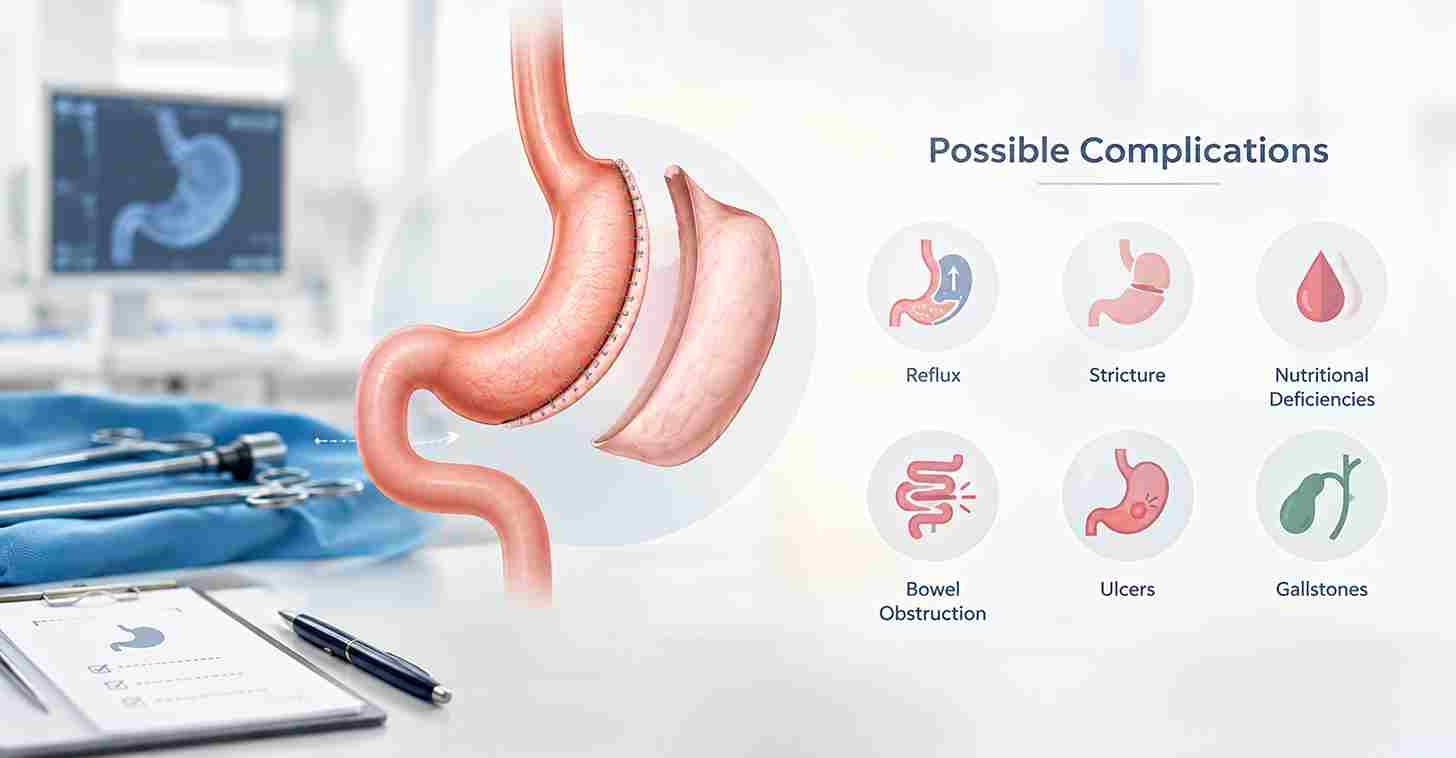
Gastric bypass and BPD‑DS both limit consumption and alter the way your jejunum absorbs calories and nutrients, which can accelerate weight loss but increases the risk of issues like ulcers, bowel obstruction, and vitamin deficiency.
Regardless of these, you transition into a staged diet, from liquids to soft to small solids, and can encounter side effects like ‘dumping syndrome’ post gastric bypass when sugar travels too quickly into the small bowel, resulting in nausea, cramps or dizziness.
These days, most bariatric procedures are carried out laparoscopically (keyhole surgery), so you typically get discharged from hospital in a few days and return to the majority of daily activities within 2 to 4 weeks. Long-term follow-up with your surgical and nutrition team remains crucial.
| Procedure | Main change | Pros (typical) | Cons / risks (typical) | Weight loss / disease effect* |
| Gastric bypass (RYGB) | Small pouch + bypass part of small bowel | Strong weight loss, high diabetes remission | Ulcers, bowel issues, dumping, vitamin lack | High; strong effect on diabetes, BP |
| Sleeve gastrectomy | Remove ~75–80% of stomach | Simpler, no bypass, good weight loss | Acid reflux, less effect than bypass for some | Moderate–high; good metabolic gains |
| Adjustable gastric band | Band around upper stomach | Reversible, no cutting of bowel | Slower loss, band slip/erosion, more follow‑ups | Modest; smaller effect on conditions |
| BPD‑DS | Sleeve + large bowel bypass | Very strong weight loss, strong diabetes effect | High surgery risk, severe vitamin/mineral lack possible | Very high; strong but higher risk |
Results differ significantly depending on your health, lifestyle, and aftercare.
Is Bariatric Surgery Safe? Benefits Of Bariatric Surgery
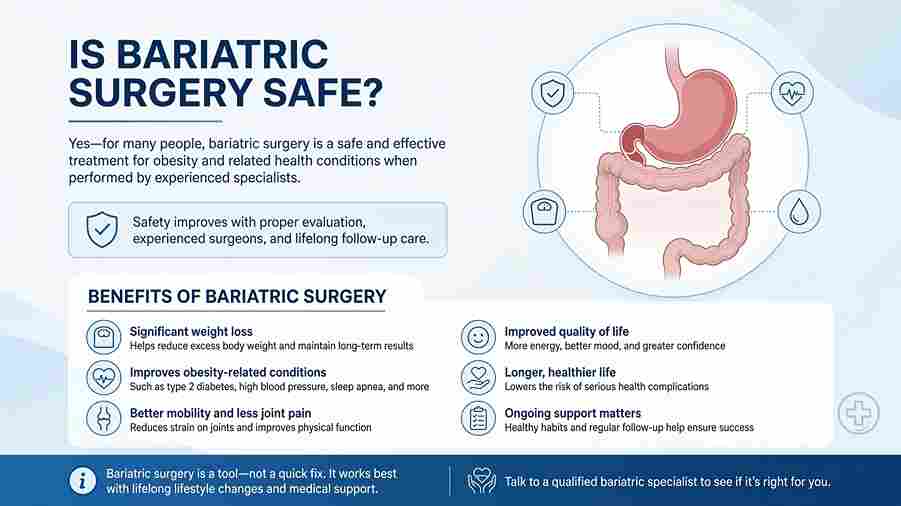
You’re dealing with a serious surgery, with serious short- and long-term risks, but recent statistics indicate bariatric surgery is among the safest major surgeries of all when performed in the appropriate hands. Perioperative death rates hover in the 0.1 to 0.2 percent range, comparable to gallbladder removal or hip replacement.
Untreated severe obesity has much higher risks over time — heart disease, type 2 diabetes, early death — so for many, the risk of doing nothing is greater than the risk of surgery. Safety has improved with superior techniques, stricter patient selection, and more robust perioperative care, but you still need a thorough work-up of your health, medications, and history before proceeding.
1. Immediate Risks
In the initial 30 days, you are susceptible to things such as bleeding, leaks at staple lines, infections and uncommon blood clots in your legs or lungs. Bowel obstruction, hernia, or the need for urgent re-operation can occur, though less frequently.
In large series, around 4.4% of gastric bypass and 2.3% of gastric sleeve patients experience an important early complication. The majority of problems appear while you’re still in the hospital or under close follow-up, where personnel can respond quickly with scans, blood tests, medications, or a trip back to the operating room if necessary.
A simple way to see the pattern:
| Procedure | 30‑day major complication rate |
| Gastric sleeve | ~2.3% |
| Gastric bypass | ~4.4% |
| Adjustable band* | ~1–2% |
*Less common today in many centers.
2. Long-Term Concerns
After surgery, your gut assimilates food differently, so low iron, vitamin B12, calcium and vitamin D are all common and sometimes serious. You typically require life-long daily vitamins and blood tests at scheduled intervals so your team can increase or switch doses before issues like anemia, bone loss, or neuropathy accumulate.
Dumping syndrome, primarily post-gastric bypass, affects around 31% of patients, causing symptoms like rapid heartbeat, abdominal pain, or diarrhea after sugary meals. Conscious food selections tend to deliver powerful respite in the long run.
You can experience some weight gain after a few years, or in rare cases require a revision surgery if anatomy shifts, if a chronic complication develops, or if weight loss is clearly insufficient despite adhering to lifestyle recommendations.
3. The Statistical Reality
Across big registries, the 0.1 to 0.2 percent perioperative death rate makes bariatric surgery as safe as many “mundane” and “everyday” major surgeries. They compared it to people with untreated severe obesity, who have an all-cause death rate nearly three times higher than the general population in the same age bracket.
Evidence indicates surgery reduces this additional mortality risk by approximately 50 percent in the long term, primarily through reducing cardiovascular, stroke, and diabetes complications. Most complications you’ll encounter are treatable if you remain in follow-up, keep on top of your labs, and reach out to your team early when something feels amiss.
4. Surgeon And Facility Impact
Your risk profile changes a lot based on who treats you and where. High-volume bariatric surgeons and accredited centers typically display lower complication and mortality rates since they have more experience dealing with tricky cases and refined safety protocols.
The best results tend to come from centers that use a full team: surgeons, anesthesiologists, bariatric nurses, dietitians, psychologists, and sometimes endocrinologists and physical therapists. That team can navigate you through food modifications, diabetes management, mental health, and mobility programs.
You can request hard figures. Lots of hospitals disclose leak rates, re-operations, infections, and 30-day readmissions. You’re entitled to shop around and select a center where their results equal or surpass national standards.
5. Technological Advances
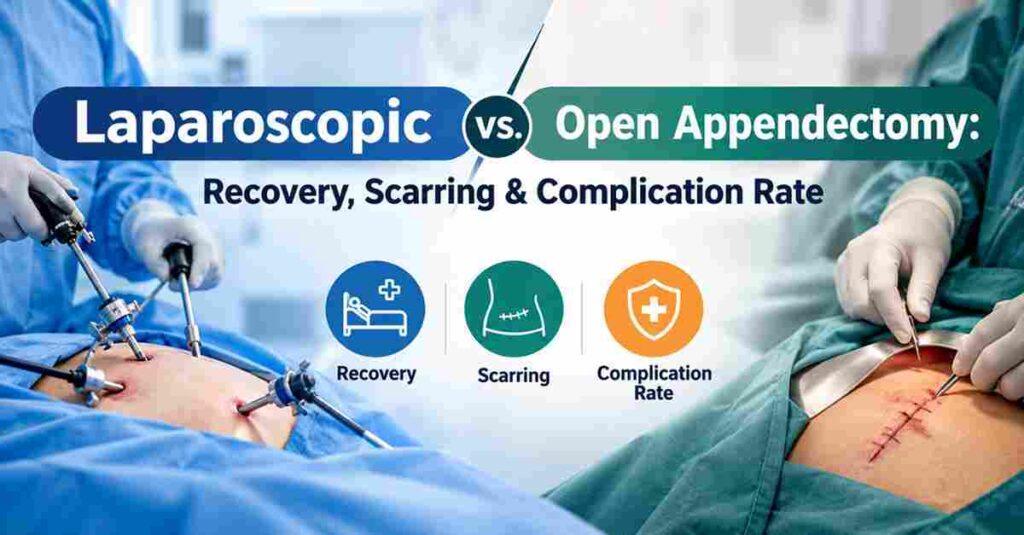
Nearly all bariatric procedures these days are laparoscopic or robotic-assisted, via a handful of small incisions in your abdomen as opposed to a gaping open wound. That shift has reduced pain, hospital time, wound infections, and scarring for numerous patients and it typically translates to you walking the same day and going home sooner.
Robotic systems may provide the surgeon enhanced vision and precision in control, which may be useful in very high BMI or revision surgeries. Short-term safety is much the same as standard laparoscopy, although some long-term data demonstrates a somewhat higher re-operation rate at around seven years.
Find out how often your surgeon performs each method and why. New tools, better staplers, stricter blood-clot prevention, and standardized checklists keep driving complication rates lower.
Bariatric surgery is generally recommended only if you satisfy specific requirements, such as a body mass index (BMI) of 40 or higher, or 35 or higher with complications like diabetes or sleep apnea. You must also be willing to undergo lifelong monitoring to track nutrition, weight, and any delayed complications.
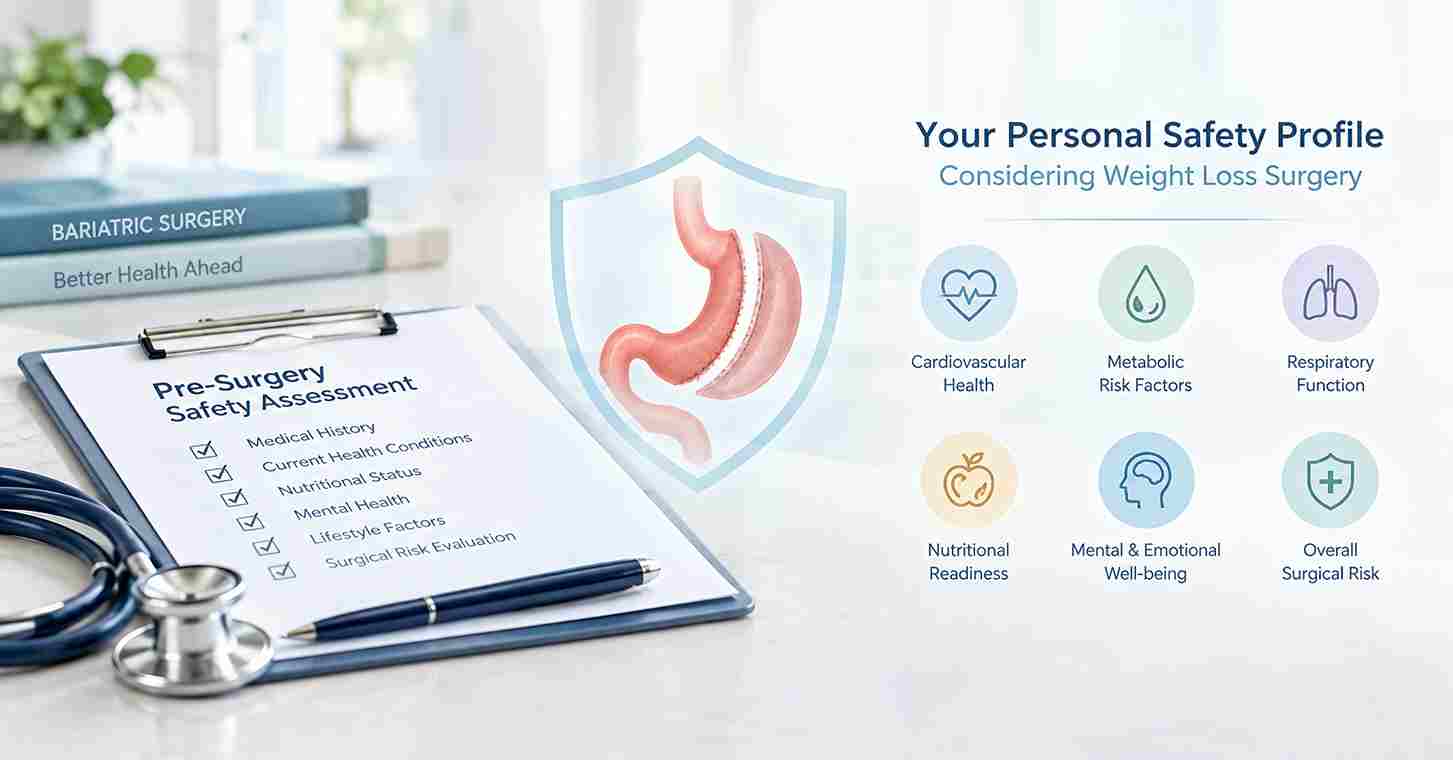
Your Personal Safety Profile Considering Weight Loss Surgery
Your safety profile is the mix of factors that shape how risky bariatric surgery is for you. The 30-day death rate is about 0.1% and major complications occur in roughly 4% of patients. Your age, BMI, medical history, and mental health can push that risk up or down. A clear, honest look at your own risks helps you know what to expect, how to prepare, and whether surgery is the right step now or later.
Pre-Surgery Evaluation
They want you to have a complete workup before they book an OR. This usually involves blood tests, including blood count, kidney and liver function, blood sugar, and clotting tests, urine tests, and heart checks such as ECG or Echo if required. Some teams include chest imaging and sleep studies for sleep apnea and infrequently upper endoscopy or abdominal ultrasound to evaluate your stomach, liver, and gallbladder because these can alter the plan.
You encounter a psychiatrist. They examine mood, substance abuse, eating patterns, and stress, and verify that you’ll comply with post-op rules. Not to judge you but to detect warning signs early, like deep depression or unmitigated binge eating.
You can bring order to this by keeping your own checklist: medical history summary, medication list, vaccination and infection history, lab panel, imaging, heart and lung clearance, sleep study, and written notes from a psychologist or psychiatrist. Use it to monitor what is accomplished and what is left to do before you choose a surgery date.
Your Health Status
Your current health can heighten or decrease your baseline risk. Conditions such as severe cardiac disease, uncontrolled hypertension, severe pulmonary disease, cirrhosis, or active infection complicate anesthesia and healing and shift you out of “typical” risk into an elevated category. Chronic kidney disease is a key example. Some data show odds ratios above five for serious problems after surgery, which is a big jump.
In real life, that could translate to you being in the hospital longer, having more lab checks, or requiring intensive care. Certain issues may put surgery on hold or even eliminate it altogether, at least temporarily. An unaddressed chest infection, unstable chest pain, or end stage cirrhosis will frequently prompt a team to say, ‘Not yet,’ or ‘Not at this BMI, not with this organ damage.’
Diabetes or sleep apnea, for instance, generally do not halt surgery but need to be brought under better control first. You assist your medical team by maintaining a documented record of all your diagnoses, surgeries, hospitalizations, and allergies. Include copies of any test reports, if you have them.
The more precise you are, the more your surgeon can tailor the type of procedure, such as sleeve gastrectomy with a 30-day mortality rate of 0.08 percent, versus gastric bypass with a rate of 0.14 percent, or banding with a rate of 0.03 percent, to your risk profile.
Mental Readiness To Confront Bariatric Surgery For Weight Loss
Your mind must be prepared to change, not just on surgery day but for years afterward. Bariatric surgery is normally a last option when diet and exercise have failed and weight-related issues have escalated. It still requires you to make lifelong changes to your eating, activity, and stress-management habits.
This translates to smaller meals, slower eating, a protein-centric diet, activity most days of the week, and actually attending follow-up visits and blood checks. Your mind matters for safety too. Recent suicide attempts, active self-harm, untreated psychosis, or very unstable mood disorders can make surgery unsafe.
They will typically defer surgery while you work with a therapist or psychiatrist, fine-tune medication, and develop a more stable daily routine. You can create a small action plan before you proceed. Write down how you will handle cravings, who you will call when you feel low, which support group or online community you will join, and how you will remember vitamins, clinic visits, and lab tests.
Make sure you have obvious mini objectives for the first 12 months, such as walking for 30 minutes, 5 days a week, and define how you will monitor weight, BMI (your initial might be close to or greater than 33.7 kg/m2) and mood throughout the time period.

Life After Surgery And Quality Of Life
Life after bariatric surgery isn’t about the surgery. It’s about how you live every day — what you eat, how you move, sleep, and follow up with your care team.
The Recovery Phase After Gastric Bypass Surgery
One to three days post-op in the hospital, longer if there are any medical issues to monitor. They won’t let you eat for one to two days so your stomach and gut can heal. Nurses will encourage you to stroll down the hall on either day one or two in order to reduce the risk of blood clots and pulmonary complications, despite your weariness.
During the initial 1–2 weeks at home, anticipate pain at the incision sites, some tiredness and lack of mobility. Basic activities such as taking a shower or climbing stairs might drag. Your physician may provide you with pain medications, recommend a safe sleeping position and educate you on movement to protect your abdomen.
Full recovery means about 4-6 weeks at most, depending on the procedure and how quickly you heal. A short daily checklist can keep you on track:
- At least a few minutes every few hours while awake.
- Drink sufficient fluids, typically 1.5 to 2 liters per day, if permitted.
- Take prescribed medicines and blood-thinner shots if ordered.
- Check wounds for redness, swelling, or discharge.
- Note pain level, temperature, and any nausea or vomiting.
- Follow your surgeon’s rules on lifting, driving, and showering.
Nutritional Demands
Your new diet proceeds in phases. You begin with clear liquids, move up to full liquids, then purées, then soft food, and eventually small amounts of regular solid food. You learn to take small nibbles, chew thoroughly, and quit the instant you’re full.
If you eat too fast or too much, you will become nauseated and vomit or experience stabbing pain. You have to plan for lifelong vitamin and mineral supplementation. Most require daily multivitamins, as well as additional iron, calcium with vitamin D, vitamin B12, and occasionally others.
Skipping them can cause anemia, nerve problems, hair loss, or bone loss. If you neglect the plan, the risk of malnutrition and osteoporosis increases, even if you’re shedding pounds. Others experience indigestion, nausea, or altered bowel habits such as loose stools or constipation.
A simple food diary helps you notice patterns: what you eat, how fast, how you feel after. Bring it to standard visits with a dietitian so you can tweak your meals, protein intake, and supplements before minor issues become major.
Lifelong Follow-Up
For the long term, you require routine medical visits to monitor weight, blood pressure, cardiac risk, and psychological health. For instance, Roux-en-Y patients can lose roughly 70% of their excess weight initially and regain approximately 5% after two or more years. Follow-up lets you react quickly if pounds begin sneaking back up.
Your team will order routine blood work to check iron, B12, folate, vitamin D, calcium and other markers. This is how they screen for sneaky issues, such as osteoporosis or silent vitamin deficiencies, before you experience symptoms. These aren’t just one and done tests; they repeat them every year, sometimes more frequently.
Support groups and counseling can count for a great deal. You cope with your new body image, your new diet and your new social calendar. A tiny fraction of patients, approximately 7 to 10 percent, have issues with alcohol post-surgery. Therefore, candid discussions with your squad are essential if you observe fresh boozing habits.
Mental health support comes in handy when weight loss stalls. To keep things simple, most people schedule visits every three months for the first year, then every six to twelve months. Use these to discuss lab results, tweak supplements, update your workout, and realign your goals.
It’s staying on top of meal planning, exercise, and follow-up visits that transforms early weight loss into long-term health.
The Unspoken Realities Of Gastric Sleeve And Gastric Bypass
Aspects of Life after Bariatric Surgery are not only smaller clothes and better lab results. You’re handling social transitions, a new body, and a new mindset — all the while learning to manage a device that could help you shed 50 to 80 percent of your excess weight and occasionally 50 to 100 pounds in year one.
Social Adjustments
Your social life changes more than you think. Food-laden events like weddings, work dinners, and family holidays become weird when you can eat only a few bites or when rich food is nauseating. You’ll sometimes have to explain why you pass on the booze or eat at a snail’s pace, and not everyone will understand that this is part of reducing long-term risk for health issues similar to other major surgeries like routine gall bladder surgery.
Some of your peeps will root for you. Others will feel left in the dust or threatened by your success. A partner could be concerned that you’re going to “outgrow” the relationship. Friends who unite over big dinners or beers may distance themselves when your habits shift. They will encourage you to ‘cheat’ so everyone feels normal again.
You need fresh coping skills that aren’t centered around food. That could involve leaving parties early, preparing in advance with a protein-packed snack, or guiltlessly refusing with a ‘no, I’m good.’ A support group, online or in person, can help you listen to how others manage comments, pressure, and fresh attention as the weight comes off and later when it plateaus around 2 years.
Body Image Changes
Quick weight reduction can cause loose skin on your arms, belly, chest, and thighs. You might drop a few dress sizes but still be blown away when you see your naked body. Even with robust weight loss data showing a greater likelihood of maintaining the weight loss at 10 years than diet and exercise alone, you might not feel “complete” when you reach your goal on the scale.
Others are disappointed because they thought they’d have a “nice” body after they dropped the weight. You may glimpse skin folds in the mirror and experience the same shame you carried at a heavier weight, or even new shame because you believe you ‘should’ be happy now.
Reconstructive surgery is one possibility to remove excess skin or reshape certain areas, except it means more scars, more recovery, and more cost. It’s another big surgery with its own risks, both short and long term, so you consider it carefully with your care team.
You guard your sanity by getting the expectations out there early. That means seeing success as more than a number: moving with less pain, better blood sugar, more stamina, or being able to play with your kids. These non-scale victories come in handy when your weight loss plateaus, which it probably will after a couple of years.
The Mental Toll
Bariatric surgery does not just transform your diet, it transforms your self-image. You transition to a smaller body that’s still lugging old memories, others’ bias, and life-long habits around food. That very instrument that diminishes health hazards can whip up nervousness, depression, or a fragile self-concept — particularly if you’ve inhabited a bigger body for most of your life.
As you find that you can’t eat your way through big feelings anymore, you instead grab for alternative numbing tools, like alcohol, shopping or overworking. Others develop new disordered patterns, like grazing all day, or they drift toward old habits and regain weight, which is not uncommon as over half of dieters who lose weight with lifestyle change alone put it back on.
Yes, even after surgery, you can gain the weight back if you discontinue the habits that lost it for you originally. Mental health care isn’t some last resort here. It’s part of long-term safety, like vitamin checks or follow-up blood work.
You crave direct advice on timing significant life shifts, such as pregnancy. For instance, they’ll typically say don’t get pregnant in your first two years when you lose weight fastest and your body is still adapting.
| Mental health factor | What it can look like in real life | Helpful supports you can use |
| Mood swings, anxiety, depression | Tearful days, fear of regain, feeling flat even as others praise your loss | Regular sessions with a therapist who knows bariatric care |
| Identity shifts | Not recognizing yourself, discomfort with new attention or compliments | Peer support groups, journaling, honest talks with trusted people |
| Transfer addiction | Drinking more, online shopping, or gambling instead of binge eating | Early screening, addiction counseling, setting clear limits with support |
| Disordered eating patterns | Grazing, food avoidance, or rigid “good/bad” food rules | Dietitian follow‑up, structured meal plans, gentle accountability |
| Fear of long‑term regain | Panic when the scale stalls or creeps up after the two‑year plateau | Education on normal plateaus, realistic goals, long‑term follow‑ups |

Weighing The Decision And Understanding Complications Of Bariatric Surgery
You’re making a medical decision that can alter your health and day-to-day in profound ways, so you have to consider both sides with a level head. Bariatric surgery is often only considered once you’ve tried diet and exercise plans and perhaps weight-loss medication and still contend with a high BMI or obesity-related disease.
You balance potential benefits, such as improved management of type 2 diabetes, blood pressure, and sleep apnea, with actual risks like bleeding, infection, clots, leaks, and death, which is rare but does occur. The risk of significant complications and death is low at experienced centers, but it’s not zero and it’s increased if you have severe heart or lung disease.
You also balance short-term recovery time and pain with long-term health benefits that sometimes take months or years to manifest. Cost factors into the equation too. Surgery is costly and coverage under insurance or national plans differ.
You add the surgery fee, hospital stay, follow-up visits, lab tests, vitamins and minerals for life, skin removal surgery in some cases, time off work, and travel if you have to go to a distant center. Bariatric surgery is a powerful implement, not a magic bullet.
Post surgery, you eat small meals, take supplements every day, and maintain a consistent exercise routine. You encounter dieticians and physicians on a daily basis and you join support groups. If you aren’t prepared to alter the way you eat, drink, move, and manage stress over the long term, the pounds may not stick.
Key points to weigh:
- Your health risks now versus surgery risks
- Past attempts with diet, exercise, and medicines
- Ability to follow new eating and exercise rules
- Mental health, coping skills, and support system
- Cost, access, and quality of the surgical center
- Your reasons, goals, and realistic expectations
Conclusion
Bariatric surgery is not a magic bullet. It’s a real medical intervention with real risk and real reward. You encounter pain, fear and transformation. You acquire a tool that can reduce health risk, increase energy and liberate your everyday life.
You’re at a fork in the road. On one side is surgery with rules, follow-ups, and new habits. On the other hand, it is the road you know with its own risks and strains.
There’s no hurry. Discuss with your care team. Pose direct questions. State your deal breakers. Tell me your fears. Time, then decide on a route that accommodates your body, your life, and your long game.
Frequently Asked Questions
Is bariatric surgery safe for me personally?
Bariatric surgery is generally safe when you are carefully screened and treated by an experienced, accredited bariatric team. Your age, weight, medical history, and lifestyle all matter. A full pre-surgery evaluation helps your surgeon decide if the benefits outweigh the risks for you.
What are the most serious risks of bariatric surgery?
Serious risks include bleeding, infection, blood clots, leaks, and anesthesia complications. These issues are rare in accredited facilities. Your surgeon should discuss your individual risk, your hospital’s complication rates, and how the team prevents and manages emergencies.
How likely am I to die from bariatric surgery?
For most contemporary procedures, the mortality rate is on par or less than routine procedures such as gallbladder removal. Your specific risk is going to depend on your health, your weight, and your surgeon’s experience. Request their mortality rate and how it stacks up against the national or international average.
Can bariatric surgery be safer than staying at my current weight?
For some individuals with severe obesity and corresponding diseases, surgery can be safer in the long term than nothing. It can lower the risk of diabetes, heart disease, sleep apnea, and premature death. Your physician can weigh your surgery risk against your risk for the future without surgery.
How do I know if my bariatric surgeon and hospital are safe?
Seek out high case volumes, accredited bariatric centers, and a multi-disciplinary team. Inquire about their complication and readmission rates, infection prevention, and follow-up support. A good team tells you your individual risks in no uncertain terms and invites you to question and get second opinions.
What will life really be like after bariatric surgery?
You’ll have to modify your habits around food, drink, activity and emotions. Bariatric surgery can be very effective for weight loss and health. You need to have follow-ups and take vitamins long term, too. Support groups, counseling and education make day-to-day life after surgery safer and easier.
How can I reduce my risk before and after surgery?
Do your pre-op diet, quit smoking, get diabetes or blood pressure optimized and walk as much as your doctor will let you. Post-surgery, walk early, take medications as prescribed, keep all follow-ups and report warning signs immediately. Good preparation and follow-through make you safer!

 555329 says: