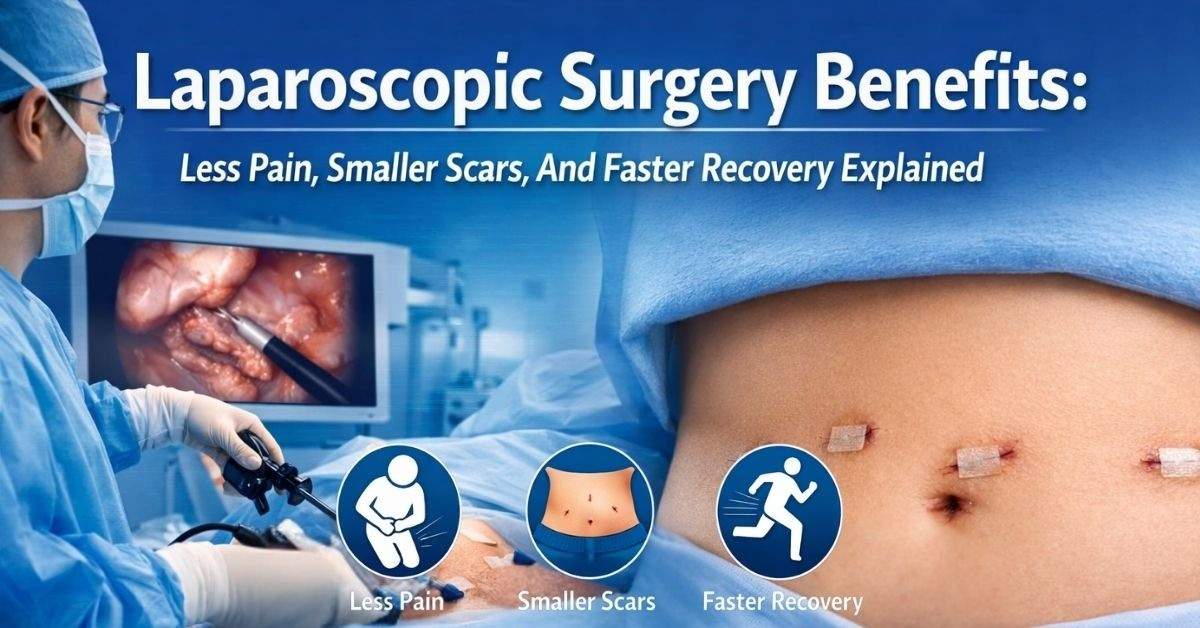
Benefits of laparoscopic surgery include smaller incisions, less pain, and quicker recovery. You usually go home the same day, with fewer wound problems and less infection.
You receive evident results, which include reduced hospital stay, reduced blood loss, and earlier return to work. Scars are small, typically 5 to 10 mm, aiding comfort and mobility.
The majority utilize general anesthesia and safe carbon dioxide inflation. To inform your decision, the following sections dissect dangers, constraints, and when it suits most.
Key Takeaways
- You enjoy small incisions that cause minimal scarring, improved cosmetics, and reduced risk of internal adhesions. This promotes more rapid wound healing and enhances self-esteem.
- You’ll experience less post-operative pain because less tissue is disturbed. This typically translates into less pain medication and a more rapid resumption of normal activities.
- You generally heal more quickly with less time in the hospital and back at the office. This minimizes the interruption to your life outside of surgery.
- You encounter less infection risk due to smaller incisions, less tissue exposure, and reduced hospital stay. State-of-the-art sterilization and imaging enhance safety even more.
- You benefit from increased accuracy with HD cameras and specialized instruments. This minimizes bleeding, collateral tissue damage and complications.
- You can optimize results by selecting a proficient surgeon, adhering to pre/post-op care guidelines, and adopting healthy behaviors. Discuss your history and goals to see if laparoscopy is appropriate for you.
Understanding Laparoscopic Surgery
Laparoscopic surgery, or keyhole surgery, is a minimal access surgical technique for treating problems in your abdomen or pelvis. Instead of one big cut, your surgeon makes two to four little cuts, typically 5 to 10 mm, to pass a camera and slender tools. This method seeks to repair the damage while preserving healthy tissue, so you experience less discomfort and a quicker recovery.
A laparoscope is a slender tube equipped with a light and a camera that transmits a magnified view to a video screen. Your surgeon views crisp, magnified images of your internal organs in real time and directs instruments with delicate precision.
Consider a gallbladder surgery, where the camera assists in mapping bile ducts prior to any clip or cut. For a hernia repair, you see the very edge of the defect, and the mesh placement is very accurate. The identical configuration backs gynecologic work, like addressing endometriosis, and colorectal endeavors, such as excising a section of diseased bowel.
The difference is in the size and number of cuts as opposed to traditional surgery. Open surgeries utilize a single large incision that could be several centimeters in length. Laparoscopy employs small ports, usually no more than a half-inch (about 12 mm) each, so there is less blood loss, minimal scarring, and less strain on the abdominal wall.
That is why you usually require fewer opioids post-surgery and can mobilize earlier. Most patients are up and feeling better within days. For simple cases, you are typically back to normal after about three weeks, but it depends on your health, the organ treated, and your profession.
New technology enabled this transition. Diagnostic laparoscopy commenced in the 1960s. Semm K and Muehe E pioneered it into full surgical work in the 1980s. Since then, high-definition imaging, improved energy devices, and safer access tools have slashed operative times as teams gain experience and customize steps.
The outcome is widespread, standard application in general, gynecologic, and urologic care, with robust safety performed by experienced teams. Always call your doctor if pain, fever, or swelling worsens.
The Tangible Benefits Of Laparoscopic Surgery
You see real, everyday, and long-term benefits of minimally invasive techniques.
- Minimal scarring and better cosmetic results
- Reduced pain and lower need for strong pain meds
- Faster recovery and shorter hospital stay (often 1–2 days)
- Lower infection risk and fewer complications
- Less blood loss and fewer transfusions
- Higher precision with less collateral tissue damage
- Better comfort and higher satisfaction
1. Minimal Scarring
You have small incisions, sometimes 0.5 to 1 cm, not one long incision. This translates into tiny scars that diminish and disappear with time.
Cosmesis is better, with less evidence you had surgery. Inside, there’s less risk of adhesions than with open surgery, which can prevent later pain or bowel problems.
A lot of folks find that they’re more comfortable in professional or social environments when scars are less visible — that can boost day-to-day confidence.
2. Reduced Pain
The smaller incisions cause less muscle damage, so post-surgical pain decreases. Two-thirds of you require just mild painkillers.
With less pain, you’re able to sit up, stand, and walk earlier, which is good for your lungs, your gut, and your spirits. That comfort accelerates your return to work and daily responsibilities.
3. Faster Recovery
Most of you go home within hours or a day or two. Light housework frequently begins within several days, and most resume work in approximately two weeks, depending on occupational requirements.
Cuts heal quickly due to reduced tissue trauma. That faster bounce back reduces stress on home life and your career.
4. Lower Infection Risk
Tiny cuts keep inside tissue from being exposed to the outside world. This reduces wound infection rates.
There’s less tissue handling and a shorter stay in hospital, which each reduce risk. Today’s sterilization and precise steps make results safer in lots of procedures.
5. Enhanced Precision
A high-definition camera provides a crisp, magnified perspective, allowing your surgeon to visualize fine vessels and planes.
With that perspective and delicate instruments, they can avoid adjacent tissue, which reduces bleeding and allows you to lose much less blood. Predictable moves result in fewer complications during surgery and more robust outcomes, with improved safety and quicker recovery.
Beyond The Operating Room
Results rely on more than incisions and the scope; they also depend on the surgical techniques employed. Your outcomes are connected to who operates on you, how you get ready, and how diligently you adhere to the post-discharge regimen.
The Surgeon’s Skill
Your chances for an easy course increase if you have a surgeon with extensive laparoscopic experience and specialized training. Skill in camera navigation, safe tissue handling and use of energy devices counts when anatomy is tight or scarred.
With a specialist, complicated procedures such as simultaneous hernia repair and gallbladder removal tend to have fewer complications, less blood loss, and less time spent at the hospital. Continued practice, simulation labs, peer review, and case volume maintain standards and mitigate risk across common procedures, from appendectomy and gyne cases to bariatric surgery.
The Patient’s Role
Pre and post-op steps define healing and comfort.
- Pre-Op Checklist:
- Share the full meds list and stop blood thinners if told.
- Observe NPO guidelines and schedule a transport home.
- Quit smoking and maintain blood sugar control.
- Inquire about pain plan and early walk goals.
- Post-Op Checklist:
- Ambulate the same day if cleared, advance steps per day.
- Dress minor lacerations as directed, remain dry.
- Take pain meds as directed; most require less hardcore drugs as pain is mild.
- Resume easy tasks in a couple of days, and most return to work in one to two weeks.
Fever, worsening pain or redness, difficulty breathing – REPORT IMMEDIATELY. Keep moving, eat a balanced diet with plenty of protein, and get good sleep to support healing.
The Financial Impact
Short stays and speedy recovery reduce overall costs by reducing bed days and time off work. Less invasive incisions result in fewer dressings, less reliance on narcotic pain medications, and fewer clinic visits.
Reduced infection risk and reduced readmissions save even more, particularly in hernia and gallbladder care.
| Item | Laparoscopic | Open |
| Typical stay | 1–2 days | 3–5 days |
| Return to light work | 7–14 days | 21–28 days |
| Wound care costs | Low | Moderate–high |
| Readmission risk | Lower | Higher |
Patients frequently do better early, walk earlier, and return to their lives quickly. Laparoscopy today backs more than 40 million U.S. Cases annually across gallbladder, appendix, hernia, gynecologic, and bariatric surgery with fewer infections and earlier mobilization.
Common Laparoscopic Procedures
You find these procedures amongst many specialties because they leverage small incisions, a camera, and narrow instruments to accomplish the same work as open surgery with less trauma. They generally last anywhere from one to three hours, and a diagnostic laparoscopy can take thirty to sixty minutes.
Several are same-day or short-stay, with return to daily activities in days, not weeks.
- Gynecology: ovarian cyst removal, endometriosis excision, fibroid removal, ectopic pregnancy care, and hysterectomy. You frequently go home the same day or after one night. Most go back to light work in 7 to 10 days. Benefits include less pain, lower blood loss, fewer adhesions, and faster bowel recovery.
- Urology: kidney stone removal, partial or total nephrectomy, and pyeloplasty. Stay is typically 1 to 2 nights. Most return to desk work within 7 to 14 days. Benefits include smaller scars, quicker drain removal, less post-op nausea, and lower infection risk.
- Colorectal: appendectomy, colectomy for cancer or colitis, and rectopexy. Same day for appendectomy are common. Larger resections require 2 to 4 nights. Usual return to activities of daily living in 10 to 14 days. Benefits include quicker gut function, fewer wound issues, and faster mobilization.
- Gallbladder: cholecystectomy for gallstones. They’re all outpatient; most go home the same day. Return to light activity in 3 to 5 days. Benefits: minimal pain, early diet restart, low bile leak risk.
- Bariatric: sleeve gastrectomy and gastric bypass. Almost all are 1-2 night stays. Return to light work in 10 to 14 days. Benefits include smaller wounds at higher BMI, fewer hernias, and earlier ambulation.
- Diagnostic laparoscopy is used to confirm the causes of pelvic or abdominal pain or infertility. It typically lasts 30 to 60 minutes, with same-day discharge. Patients can return to normal activities in 2 to 3 days. Benefits include direct view, targeted biopsies, and quick answers.
NPO after midnight, don’t eat, drink, or smoke. Wear low-heeled shoes on the day. Following surgery, you typically only need to spend about 1 hour in recovery as your team monitors your vitals.
| Procedure | Usual recovery | Targeted advantages |
| Gallbladder removal | Home same day, 3–5 days to light work | Less pain, quick diet restart |
| Gynecologic procedures | Same day to 1 night, 7–10 days | Less adhesions, quicker recovery |
| Urologic procedures | 1 to 2 nights, 7–14 days | Smaller scars, lower infection risk |
| Colorectal | Same day to 4 nights, 10–14 days | Quicker gut healing, fewer wound problems |
| Bariatric procedures | 1 to 2 nights, 10–14 days | Lower hernia risk, early walking |
| Diagnostic laparoscopy | Same day, 2–3 days | Quick answers, minimal downtime |
Your Recovery Journey
After laparoscopic surgery, you progress through set stages: immediate monitoring, a brief home rest phase, and then a gradual return to routine. This surgical technique allows for quicker recovery compared to traditional surgery, often resulting in same-day or next-day discharge, minimizing discomfort and promoting effective patient outcomes.
Immediate Post-Op
You transition from OR to recovery, where nurses monitor your pulse, blood pressure, respirations, oxygen saturation and incisions. Small cuts are inspected for bleeding, redness or leaking, all of which can catch a problem early.
Most people experience mild soreness or bloating, not sharp pain, often from the gas used during surgery. You’re typically encouraged to walk within 6 to 8 hours, which aids gut function and decreases clot risk.
Pain relief is tailored: simple pain pills first, then stronger ones only if needed, plus warm packs, guided deep breathing, and position changes. Same or next day discharges are common when pain is managed, you can tolerate fluids and urinate.
First Few Weeks
Schedule a stepwise return to activities. Light desk work resumes in 3 to 5 days. Complete restoration requires 2 to 4 weeks.
Keep incisions clean and dry. Shower after 24 to 48 hours if cleared, pat dry, and skip baths and pools until skin seals. Be on the lookout for fever, spreading redness, foul odor, or pus.
Attend all follow-ups to check pathology if taken, incision healing, and activity restrictions. Bring a question list, medications, and wound pictures if you experience any changes.
Anticipate some mild swelling, bruising, shoulder-tip gas pain, or fatigue. They typically subside within 3 to 5 days. No heavy lifting for 2 to 4 weeks; think 5 to 10 kg until otherwise advised.
Long-Term Wellness
Safe habits nurture recovery and prevent backsliding. Stopping smoking is important; even quitting a few weeks before surgery helps the lungs and wounds.
Keep moving: start with short walks, then add low-impact cardio and gentle core work as cleared. Consume well-balanced meals with lean protein, fiber, and fluids to avoid constipation and promote tissue repair.
Others observe improved quality of life once pain and flare-ups decrease, and some conditions recur less with consistent attention to weight, sleep, and stress management. Keep in touch with your care team for medication reviews, symptom checks, and screening plans.
Is This Surgery For You?
You balance the advantages with your health, aspirations, and lifestyle. Laparoscopic surgery suits a lot of scenarios, but not all. It employs small incisions, a camera, and precision instruments to address typical ailments such as gallbladder disease, appendicitis, hernias, endometriosis, ovarian cysts, and certain bowel or bariatric requirements.
This may take one to three hours, depending on the complexity of your case. A diagnostic laparoscopy is quicker—around thirty to sixty minutes—if the goal is to observe, confirm, or stage disease. You can go home the same day, which is nice, but you still require somebody to drive, assistance with meals, and a little TLC. Expect to recover for a couple of days.
That pause will impact your work schedule, babysitting, and travel, so make room.
- Your medical history includes heart or lung disease, bleeding issues, past clots, and allergies.
- Type of condition: Simple gallbladder versus severe adhesions or large tumors.
- Prior surgeries: Many abdominal scars can make access hard.
- Body habitus: A very high BMI may change risk and time.
- Ability to follow prep: no food or drink after midnight and meds plan.
- Home support: safe ride, help at home, supplies ready.
- Work and duties: Time off, lifting limits, and sitting versus standing needs.
- Goals: less pain, small scars, quicker return, or maximum exposure.
Laparoscopic advantages include smaller scars, less pain, and sometimes shorter stays. For instance, most hernia or gallbladder cases are home the same day and back to light work in a few days. Boundaries appear when you require broad access, address profuse bleeding, or contend with thick scar tissue.
Open surgery can be safer and faster in those cases. Certain bowel cancers, perforated ulcers, or serious abdominal infections continue to require open surgery. Your surgeon might begin laparoscopically and convert to open for safety. That’s not a failure; it’s prudence.
Make a checklist: your diagnoses, meds, allergies, past operations, anesthesia history, support at home, time-off needs, and your top three goals. If you’re considering surgery, take it to your surgeon and settle on a plan that works for you.
Conclusion
You can now understand why laparoscopy can reduce pain, reduce risk and accelerate your return to everyday life. Small cuts mean less blood loss. Short stays translate into reduced expenses. Getting back to work quicker boosts both your agenda and your income. Genuine results appear in hours, not weeks. For many, scars fade to faint lines. Fewer wound problems aid overall long-term health. Easy preparation and straightforward home care keep your journey smooth. Examples help: walk a few laps at home on day two, swap to solid food by day three, and plan light desk tasks within one to two weeks.
Got next steps on your brain? Check with your own surgeon about your case, your meds, your timeline. Schedule a consult and receive a plan that suits you.
FAQ
What is laparoscopic surgery?
Laparoscopic surgery is a prime example of a minimally invasive procedure that utilizes advanced laparoscopic techniques. Surgeons employ mini-incisions, a video camera, and specialized surgical instruments to deliver precise therapy with minimal scarring.
What are the main benefits of laparoscopic surgery?
You usually experience less pain, minimal scarring, and a reduced risk of surgical infections with robotic surgery. Most people bounce back more quickly, thanks to effective laparoscopic techniques, and get back to life sooner.
How long is the recovery time?
Recovery from laparoscopic surgery is typically faster than traditional surgery, with numerous patients returning home the same day or within one to two days. You can resume light activity within a week, depending on the surgical technique and your health.
Is laparoscopic surgery safe?
Yes, it’s very safe for most patients. Complication rates are typically lower than those of traditional surgery. Your doctor can gauge your risks based on your surgical history and the procedure.
Which procedures are commonly done laparoscopically?
Popular operations, such as gallbladder surgery, utilize advanced laparoscopic techniques, benefiting patients with minimal scarring and gentler recovery.
Will I have visible scars?
You will experience minimal scarring, typically 0.5 to 1 cm each, thanks to advanced laparoscopic techniques. These small cuts tend to fade and are easier to hide than larger scars, as your surgeon will strategically place them.
How do I know if laparoscopic surgery is right for me?
You and your doctor will determine the appropriate surgical technique based on your situation, previous surgeries, and health. Imaging, lab results, and exam findings all help direct this choice, including the benefits of laparoscopic surgery.