Vitamins after bariatric surgery are essential nutrients you require to remain well when your smaller stomach and altered gut begin to inhibit or disrupt the efficiency with which you absorb food.
You count on them to maintain your energy, defend your bones, and promote your hair, skin, and mood. You reduce your risk of anemia and nerve problems.
In this guide, you’ll learn which vitamins you need, dosing tips, and follow-up fundamentals.
Key Takeaways
- You require daily vitamin and mineral supplements following bariatric surgery as your reduced stomach size and altered digestion impact the absorption of nutrients from food. This continuous coverage helps safeguard your immunity, bones, energy, and overall healing.
- Take a bariatric-specific multivitamin, vitamin B12, calcium citrate with vitamin D, iron, and other fat-soluble vitamins as recommended by your care team. Use a basic tracking table or chart so you can see what you take each day and avoid missed doses.
- You need routine bloodwork to monitor levels of important nutrients like vitamin B12, iron, calcium, vitamin D, folate, and more. Take these labs with your physician to adjust doses over time, particularly as your diet and weight fluctuate.
- By monitoring early signs of deficiency, such as fatigue, hair loss, weakness, or mood changes, you can reduce your risk of serious issues like anemia, bone loss, and nerve damage. If you observe new symptoms, be proactive and reach out to your bariatric team and revisit your supplement regimen.
- Get bariatric-formulated vitamins in easy-to-absorb forms like chewable, liquid, or capsule and steer clear of gummies. They usually fall short on essential nutrients. Schedule your timing so that calcium and iron are taken separately and develop a routine that works with your daily life.
- You best support your long-term health when you pair supplements with a balanced, high-protein, nutrient-dense diet, proper hydration, movement, and mental support. Stay in touch with your bariatric team, dietitian, and support network to ensure your vitamin plan remains realistic and sustainable.

Why Your Body Needs Vitamins After Surgery
Post-bariatric surgery, your digestive system does not function the same way. With part of your stomach and sometimes part of your intestine bypassed or removed, food doesn’t remain in contact with the areas that absorb essential micronutrients as much as it once did. Even if you consume a “perfect” diet, your body can struggle to extract sufficient vitamins and minerals from smaller meals and snacks. This is why bariatric multivitamins are crucial after surgery.
The reduced stomach size leads to lower nutrient intake at each meal, making vitamin and mineral supplements essential components of your daily routine. Variations in stomach acid and enzymes significantly impact your absorption of important nutrients, including iron, calcium, vitamin B12, and vitamin D. This combination of eating less and absorbing less places you at a higher risk of developing nutritional deficiencies.
If you aren’t getting these nutrients daily through supplements, you may begin to face health issues that could take months or years to manifest, such as fatigue, brittle bones, or nerve problems. Effective treatment through supplements helps prevent these complications before they arise. Iron and B12 vitamins are vital for creating red blood cells and preventing anemia, which can lead to symptoms like shortness of breath and low energy.
Iron and B12 help you create red blood cells and prevent anemia, which can make you short of breath, dizzy, and low-energy. B12 promotes your nervous system and reduces the chances of experiencing numb hands or feet, memory loss, and mood fluctuations such as irritability. Vitamin D and calcium maintain strong bones and reduce the risk of bone pain, osteomalacia, or osteoporosis.
Following a complete multivitamin regimen every day, for life, helps protect your immune system, stabilizes your energy levels, supports wound healing, and reduces the risk of long-term complications after surgery. These supplements are not just beneficial; they are integral to your recovery and overall health post-surgery.
Core Vitamins After Bariatric Surgery
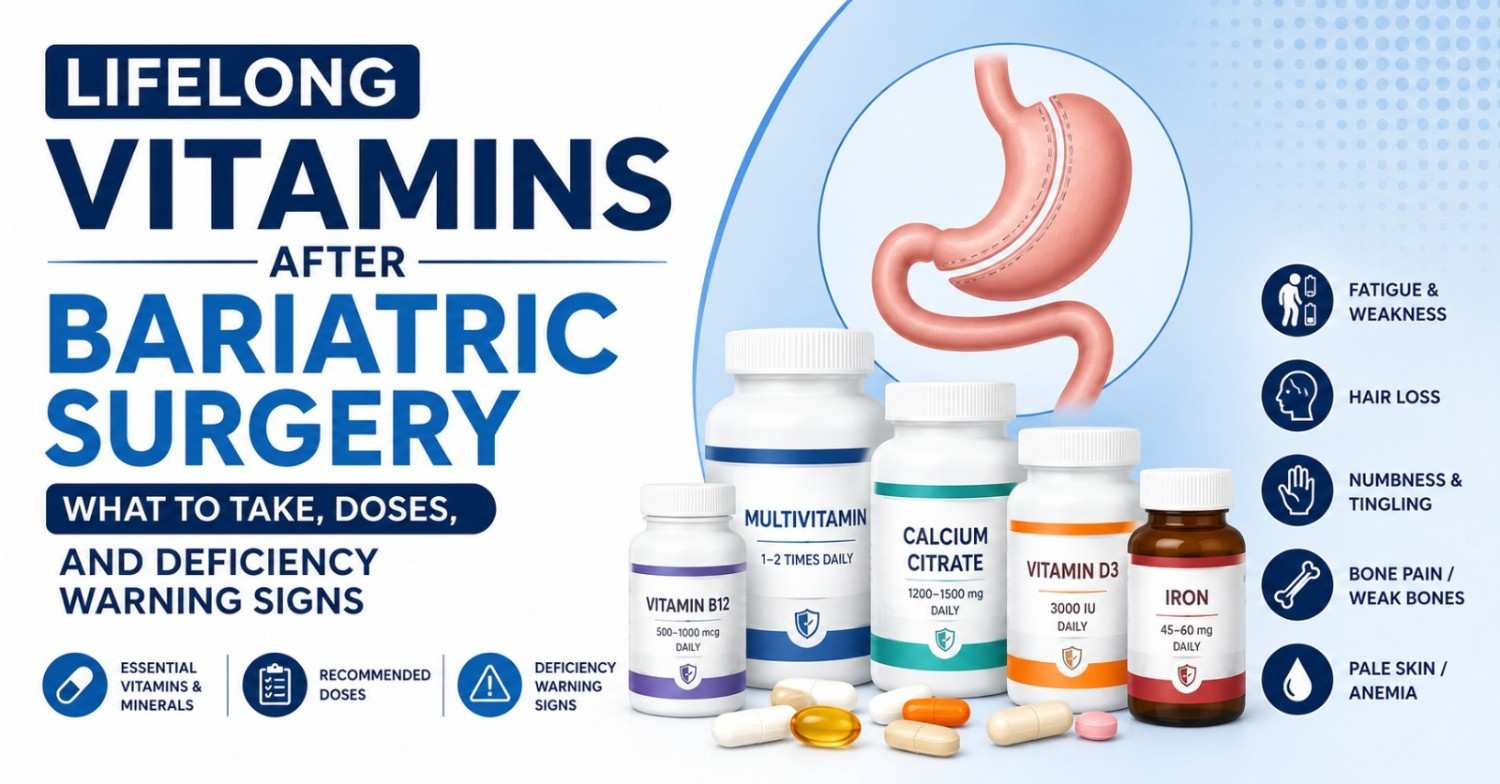
Post-op, your gut absorbs so much less that vitamins and minerals supplements are daily, lifelong, and non-negotiable. Core requirements tend to be a double-dose bariatric multivitamin, B12, B1, calcium and vitamin D, and additional iron if your labs indicate you require it.
Key micronutrients you must cover each day:
- Bariatric multivitamin (taken in split doses)
- Vitamin B12
- Vitamin B1 (thiamine)
- Calcium citrate with vitamin D3
- Iron (often separate tablet)
- A, D, E, K (fat-soluble, usually contained within the bariatric multi)
1. Comprehensive Multivitamin
Go for a bariatric multivitamin, not a normal OTC one. It needs to be formulated for your smaller stomach and diminished absorption and is often taken as a ‘double dose’ in two to three divided doses throughout the day for optimal absorption.
Check for thiamine, folic acid, zinc, iron, vitamin A, D3, K, and trace minerals such as copper and selenium. If any of these are missing or significantly below bariatric guidelines, bring it up with your bariatric team before you count on it.
2. Vitamin B12
B12 is an important core vitamin after gastric bypass or sleeve because you produce less intrinsic factor and have less stomach acid, so you absorb far less B12 from food. To work around this, you typically require 500 mcg of oral B12 daily, often best if sublingual or chewable, or a B12 injection every 3 months if your team prefers that method.
Maintaining B12 in range prevents you from developing fatigue, anemia, numb hands or feet, and memory or mood fluctuations. Arrange annual blood tests to monitor serum B12 and increase the dose if your level begins to decline.
3. Calcium Citrate
You want to preserve bone for decades, not just. Calcium citrate is preferred since it requires less stomach acid, allowing it to still be well utilized post-surgery. Following a sleeve gastrectomy or Roux-en-Y gastric bypass, you typically require 1,200 to 1,500 mg of elemental calcium daily.
Following a duodenal switch, this range increases to 1,800 to 2,400 mg per day. Divide the total between 2 to 3 doses, separated throughout the day, and keep each individual dose at approximately 500 to 600 mg for optimal absorption.
Don’t take calcium at the same time as iron. Leave at least 2 hours in between so both can be absorbed. Calcium combined with sufficient vitamin D reduces your risk for bone loss, fractures, and secondary hyperparathyroidism, where your parathyroid glands leach calcium from bone to maintain blood levels.
4. Vitamin D
Vitamin D deficiency is prevalent pre- and post-bariatric surgery and tends to exacerbate absent daily assistance. Most patients are prescribed about 3,000 IU (75 mcg) of vitamin D3 daily, usually paired with calcium but occasionally as its own softgel or drop.
Vitamin D helps calcium absorption and bone mineral density, but it boosts immune function and muscle strength. Your care team will probably test your serum 25‑hydroxyvitamin D annually and sometimes more frequently as they fine-tune your dosage.
If your multivitamin falls short of the required daily total, supplement with additional D3 as a stand‑alone supplement and note it in your tracking table.
5. Iron
Iron deficiency and iron‑deficiency anemia are very common after gastric bypass and sleeve since you eat less, absorb less, and may avoid red meat. You will frequently require a bariatric‑specific iron dose, one to two times daily, apart from any calcium by at least two hours.
Signs of low iron are profound fatigue, low exercise tolerance, pale skin, hair loss, and low hemoglobin on laboratory studies. To stay ahead of this, request frequent labs that include ferritin, hemoglobin, and a full blood count.
Your team can increase or decrease your iron dose based on these results instead of adhering to a fixed amount.
6. Fat-Soluble Vitamins
Vitamin A, D, E, and K all require fat to be absorbed and are therefore at increased risk after malabsorptive procedures such as Roux-en-Y and duodenal switch. Most bariatric formulas utilize dry or water-miscible forms of these vitamins, which your gut can deal with better when fat absorption is impaired.
Low vitamin A can manifest as night blindness or dry eyes, low vitamin E as a compromised immune system or neurological problems, and low vitamin K as easy bruising or delayed blood clotting. Make sure your multivitamin includes these four, and that the dosage aligns with what your bariatric center suggests for your surgery type.
Your team can order annual levels of vitamins A, D, E, and K to inform dose adjustments, particularly if you have chronic diarrhea, extremely low fat intake, or prior deficiency following surgery.

Your Personalized Vitamin Roadmap
It’s your lifelong vitamin roadmap after bariatric surgery — designed around your surgery type, your labs, and how you eat and feel on any given day. You’ll probably take a daily multivitamin, B12, B1, calcium and vitamin D, and often extra iron, 60 to 100 grams of protein, and at least 64 ounces (approximately 2 liters) of fluid a day.
Tracking doses, lab results, and symptoms in a simple chart keeps this plan precise and easier to navigate.
The Role Of Bloodwork
Blood tests catch vitamin and mineral deficiencies well before you feel really ill, so they are your primary safety net. Low iron may initially present as a lab abnormality, then as mild fatigue. Low B1 can manifest as numbness or difficulty with balance.
Low vitamin D and calcium can cause your bones to weaken over time. You and your team should schedule regular labs at least annually for life, and often every 3 to 6 months during that first year. It’s when you see if you can transition from chewable or oral liquid vitamins to capsules without stomach upset.
Key Blood Tests Usually Include:
- Vitamin B12
- Vitamin B1 (thiamin)
- Iron studies (ferritin, transferrin saturation, full blood count)
- Calcium and vitamin D (25‑OH vitamin D)
- Folate
You could encounter checks for zinc, copper, and fat-soluble vitamins if your results or symptoms warrant suspicion.
Different Surgery Types
Your vitamin roadmap varies by type of bariatric surgery since each alters digestion and changes what your body can absorb from food in a different way. With Roux‑en‑Y gastric bypass and sleeve gastrectomy, you typically require 1,200 to 1,500 mg calcium per day in 2 to 3 doses and 3,000 IU (75 mcg) vitamin D3, in addition to a bariatric multivitamin, B12, B1, and frequently iron, as the stomach acid is decreased and the food intake volume is reduced.
Gastric band surgery causes milder restriction, but eating can still be uneven, so a good multivitamin, B12, and calcium with vitamin D are still important, with high‑dose iron or extra B1 more lab-based than routine. Your best step is to review your specific operation report with your dietitian or surgeon and align your vitamin and mineral supplementation to the known risks of that procedure, then calibrate using your bloodwork.
Evolving Needs
Your requirements change as you progress from clear liquids to purees, then soft foods, and finally to more regular solid meals. In the beginning, all of your nutrients come from chewable or liquid supplements, including essential micronutrients, as you eat so very little. You must space out calcium supplements into two to three doses and sip fluids throughout the day to hit at least 64 ounces, helping to avoid nausea, kidney problems, constipation, or fatigue.
Over months, as significant weight loss decelerates and your diet diversifies, you may absorb more protein, natural iron, and B vitamins through your meals. Your team may reduce supplemental iron or switch B12 from regular injections to a high-dose oral or sublingual version, ensuring you meet your nutritional needs.
New symptoms such as hair thinning, mouth sores, leg cramps, and tingling can indicate gaps in protein, iron, zinc, or B vitamins, warranting repeat labs and a supplement audit. These could be signs of micronutrient deficiencies that need addressing.
Lifestyle shifts count. If you begin intense training, travel frequently, or switch to a plant-based diet, you’ll require more protein, iron, or B12, leaning on dietary supplements more than food on hectic days. An annual comprehensive vitamins and minerals check, combined with an easy track of your daily multivitamin, vitamin B1, vitamin B12 supplementation, calcium plus D, protein, and lab date updates, keeps your roadmap fresh and feasible.
The Hidden Dangers Of Deficiency
Micronutrient gaps following bariatric surgery can accumulate rapidly and lurk silently for years. Because your intake is reduced and sections of your intestine take up less, you are at genuine risk for deficiency of essential micronutrients like vitamin B12, thiamine, folic acid, and vitamins A, D, and K, along with vitamin C and riboflavin. Without scheduled bariatric multivitamins and lab follow-ups, you can progress from subtle scarcity to organ failure within months.
Bone and joint problems can arise as low vitamin D and calcium speed up bone loss, raising fracture risk and potentially leading to early osteoporosis. Vitamin D deficiency is prevalent even preoperatively and frequently worsens postoperatively, with incidences of approximately 7% absolute deficiency during the first year after gastric sleeve surgery.
Nerve and muscle damage can occur due to thiamine (vitamin B1) deficiency, which can show up as early as 4 to 6 weeks after surgery and affects roughly 30% of patients. It can lead to burning feet, poor balance, eye movement disorders, and even life-threatening neurologic syndromes if accompanied by vomiting or minimal intake.
Blood, skin, and immune issues can manifest as vitamin B12, folate, and riboflavin deficiencies, triggering anemia, mouth sores, glossitis, and skin changes like dermatitis and stomatitis. In the first year post-RYGB, vitamin B12 deficiency occurs in about 13 to 14 percent of patients, emphasizing the importance of a complete multivitamin regimen.
Vision and wound‑healing problems: Vitamin A deficiency can reduce night vision and dry your eyes. Vitamin C deficiency slows wound healing and increases the risk of bruising. Data report year‑one RYGB rates of vitamin A deficiency of roughly 11% and vitamin C deficiency of roughly 35%.
Escalation to intensive care can occur if you ignore lab results and early symptoms, potentially requiring intramuscular or even parenteral nutrition for B12, thiamine, or fat-soluble vitamins. Staying ahead means daily supplementation with bariatric-specific multivitamins, extra vitamin D and calcium, and targeted doses when your squad discovers a deficiency.
For instance, scurvy, or vitamin C deficiency, frequently requires 200 mg per day orally. Riboflavin deficiency usually responds to 5 to 10 mg per day. Vitamin B12 can be replaced with 500 to 2000 micrograms per day orally, 1000 to 3000 micrograms intramuscularly every six months, 500 micrograms nasally once a week, or 500 micrograms sublingually daily.
Early Warning Signs
Early signals of nutritional deficiencies are often vague: you may feel drained even after sleep, notice more hair in the shower drain, or experience muscle weakness when climbing stairs or lifting light objects. These symptoms can indicate a lack of essential micronutrients such as protein, vitamin C, iron, or zinc. Additionally, wounds might not close as quickly, gums might bleed more, or bruises might appear from minimal bumps, pointing towards a need for a complete multivitamin to support overall health.
Observe cognitive shifts as well. New brain fog, low mood, irritability, or trouble focusing can be associated with low B12, folate, or thiamin. Tingling in hands or feet, or a weird “pins and needles” sensation can be early nerve stress from vitamin B12 deficiency or vitamin B1 deficiency. It’s crucial to track these changes instead of dismissing them as “typical post-surgery.” A simple symptom diary can help: jot down fatigue levels, hair changes, bowel habits, new rashes, mouth sores, or visual changes, and note your supplement use and food intake.
If you notice clusters of symptoms such as growing fatigue, numb feet, and pale skin, reach out to your bariatric or primary care team. Request labs targeted at B12, folate, thiamine, vitamin D, iron, and other essential micronutrients your surgeon advises. You might just need a dose change, such as switching from oral B12 to an injectable form, but catching any deficiencies early reduces the chances of permanent damage.
By staying vigilant about your nutritional needs post-surgery and adhering to your prescribed vitamin regimen, you can significantly enhance your recovery and overall health. Discuss with your dietitian about suitable multivitamins and ensure you are meeting your daily intake of nutrients to prevent any long-term complications.

Long-Term Consequences
Chronic vitamin D and calcium deficiency can severely compromise your skeleton, increasing the risk of falling and fracturing with even minor collisions. This can lead to crippling spine, hip, or wrist breaks that hinder mobility and labor. Vitamin D deficiency is particularly prevalent among those awaiting bariatric surgery, and it often persists post-op despite efforts to meet nutritional needs through food alone. To combat this, incorporating suitable multivitamins, including a complete multivitamin that provides essential micronutrients, may be necessary.
Prolonged deficiencies in B12 or thiamine can lead to nerve impacts that are often irreversible. Symptoms like numbness, burning pain, and balance issues can diminish your capacity to work out and maintain weight. Cognitive changes, such as memory slips and mood swings, can be traced back to chronic deficiencies in B12, folate, or vitamin A. Addressing these nutritional deficits is crucial to avoid hospitalization for anemia or serious neurologic emergencies.
In some cases, oral tablets may not suffice, necessitating vitamin B12 supplementation through routine intramuscular shots or parenteral nutrition to bypass the gut entirely. Each step up in treatment can lead to increased expenses and more time spent at the clinic, which can impose additional restrictions on your daily routine. Therefore, it is vital to prioritize adequate vitamin intake and consider the role of dietary supplements in your post-surgery recovery plan.
Choosing The Right Supplements
Your long-term bariatric success depends as much on what you put in each day as on what your surgeon did in the OR. Supplements fill the gaps of your lower intake and decreased absorption, so you don’t experience exhaustion, neuropathy, osteoporosis, and weight gain associated with chronic deficiencies.
Bariatric-specific brands matter here since they are formulated for higher needs of iron, B12, folate, and fat-soluble vitamins using doses and forms your altered gut can actually absorb. You do best when you approach your supplement plan with the same seriousness that you approached the decision to have surgery and when you check labs at least annually so your team can tailor doses instead of flying blind.
Form Matters
Post-surgery, your stomach and intestines process pills differently, so form is not a minor point. Almost everyone absorbs chewable or liquid multivitamins more easily, and they just feel easier on the pouch in that first 6–12 months.
Oversized, hard tablets can linger in the stomach, cause nausea, or slip through only semi-dissolved, so they are prone to provide less reliable results and more irritation. If you deal with taste changes or low-grade nausea, textured chewables, powders you can blend into 150 to 200 milliliters of water, or liquids you can sip may seem more doable than typical pills.
For instance, you could take a chewable multivitamin and a fiber powder to aid digestion and keep you satiated. Match the form to your actual day. If you travel a lot, capsule packs may fit better than bottles of liquid. If you forget doses, a once- or twice-daily bariatric multi beats five different products scattered throughout the day.
Timing Your Intake
Timing determines the absorption of essential nutrients. A handy guideline is to divide your vitamins into three doses throughout the day so your gut encounters smaller, more frequent quantities, which tend to absorb better and feel softer.
Calcium and iron compete, so maintain at least a 2-hour interval between them. For example, take iron in the morning, your multi-vitamin with lunch, and calcium in the evening. If possible, attempt to take the majority of your supplements with a small meal or snack, which may reduce nausea and other stomach side effects.
Your care team may request that you take certain items, like some types of iron, on an emptier stomach. Many people stay on track with a simple timing chart: morning (iron and B12 if separate), midday (bariatric multivitamin), evening (calcium and vitamin D, plus fiber). Use phone reminders or a pill organizer so this routine turns automatic rather than something you need to rethink each day.
Why Not Gummies
Gummies are cute and delicious. They seldom satisfy bariatric requirements. Most don’t have adequate iron, B12, folate, or fat‑soluble vitamins for a post‑op body, and they rarely provide the type and dose of calcium you require for bone health.
A lot contain added sugars or sugar alcohols, which can increase energy intake or cause dumping‑type symptoms in certain individuals. Because gummies tend to avoid iron and higher-dose minerals and might use less absorbable forms, you’re left with subpar coverage, even if you take them daily.
Blood tests later reveal iron and B12 deficiencies while you still think you’re “taking a vitamin.” For these reasons, the majority of bariatric teams have you skip standard gummies and choose bariatric-formulated chewables or capsules instead. Then, supplement with a separate calcium product and, if necessary, a fiber supplement that your gut tolerates well.
Beyond The Pill Bottle
After bariatric surgery, you require life-after-bariatric-surgery vitamins to meet your nutritional needs. Pills alone do not cover all your body’s requirements. Since your gut now absorbs less, tackling food, movement, liquids, and habits simultaneously is essential. A bariatric multivitamin at a ‘double dose’ significantly helps minimize the number of pills needed, but it remains just one part of your overall strategy.
Food As A Partner
You get the most bang from bariatric multivitamins when you combine them with consistent, nutrient-packed meals. Aim for protein first at every meal, as protein assists in healing and maintaining muscle during weight loss. Great choices include eggs, Greek yogurt, cottage cheese, tofu, lentils, and soft fish, as well as lean poultry or mince if you can tolerate it.
You require foods that replace some of the essential micronutrients your body now absorbs with less ease. Consider cooked dark leafy greens (spinach, kale), pureed beans, pumpkin, carrots, enriched dairy or plant milks, and soft fruits such as banana or peeled apple. Incorporating a complete multivitamin can also help address potential nutritional deficiencies.
Most people do better with 5 to 6 small meals or snacks a day instead of 2 to 3 large ones to spread nutrients out and avoid nausea. Don’t overload; keep it small and consistent. Skip the plate, weigh the protein, which should be 60 to 80 grams per day, if your team agrees, and restrict low-value foods that crowd out nutrients, such as sweets or fried snacks.
Trace what you eat with your supplement times so you and your team can identify gaps early. This can ensure you are meeting your nutritional needs effectively during your weight loss journey.
The Mental Aspect
Life-long vitamins, food rules and lab checks can all feel like a lot. They’re sick of tablet chewing or concerned when they skip a dose. This is typical, not pathological. Simple systems help.
Use phone alarms for your bariatric multi, another time for calcium with vitamin D two hours from the multi and iron, and another for any additional iron or vitamin D3. Chewable or liquid is usually best for the first three to six months, then you can transition to capsules if your pouch tolerates them.
Others tack a weekly chart to the fridge, and some couple vitamins with daily actions, like post tooth brushing. Proper nutrition aids your brain. Low B12, B1, iron, or vitamin D can manifest as brain fog, low mood, or fatigue.
Several teams recommend B12 (hydroxycobalamin) 1 mg intramuscular injection every 3 months and an additional D3 of approximately 20,000 IU weekly or 2,000 to 4,000 IU daily, on top of calcium with vitamin D. When you see more stable energy or mood, record those victories. They signify your plan is working, not that you ‘got lucky’.
Your Support System
You do better when you’re not doing this alone. Remain connected with your bariatric surgery team and a dietitian familiar with post-op requirements. They will control labs, tweak your double-dose multi, B12, B1, calcium with D, iron, D3, and verify that you’re absorbing sufficient nutrients, despite the fact that absorption is now diminished.
Share your schedule with family or close friends so they understand why you space pills out. For example, you may take your bariatric multi in the morning, calcium with vitamin D midday and evening, two hours away from iron and the multi, and iron later with vitamin C for better absorption.
They can give you reminders on hectic days or aid with meal planning to suit your needs. Peer groups—online or in person—layer on top of this. Folks swap advice on chewable brands, liquid varieties for those first months, when to time a 20,000 IU weekly vitamin D3 dose, or how they maintain a 2-hour separation between calcium and iron.
Reading what others attempt can inspire you without supplanting medical advice. Regular follow-up visits and blood tests keep you on track long-term. They indicate when you need to supplement or reduce certain vitamins and provide room to inquire about side effects, cost concerns, or new items.

Conclusion
Your life after bariatric surgery demands more of you, not less. Your body puts in effort every day to recover, remain resilient and shed pounds safely. Vitamins provide reinforcement for that effort. They help you maintain your hair, guard your bones, preserve your mental acuity, and sustain your energy.
You now understand the essential vitamins, the dangers of deficiencies, and how to select quality brands. You notice that food, labs, and checkups all have a significant role.
For next steps, consult your care team, audit your current routine, and adjust one little thing this week. A stronger you begins with those everyday decisions, one serving at a time.
Frequently Asked Questions
Do you really need vitamins after bariatric surgery?
Yes. After surgery, your stomach and intestines absorb fewer nutrients, leading to potential micronutrient deficiencies. Daily bariatric multivitamins safeguard your energy, immunity, hair, skin, and long-term health, ensuring adequate vitamin intake.
Which vitamins are most important after bariatric surgery?
You typically require a complete multivitamin, which includes bariatric multivitamins, in addition to supplemental vitamin B12, vitamin D, calcium, iron, and occasionally vitamins A, E, K, and folate. Your specific regimen is based on your surgery and blood work, ensuring adequate vitamin intake.
How soon after surgery should you start taking vitamins?
You usually begin bariatric multivitamins within the initial 1 to 2 weeks post-op, once your surgeon permits. Early use prevents rapid-onset deficiencies such as vitamin B1 and iron. Pay attention to the specific start dates and forms, chewable or liquid, your bariatric program suggests.
What happens if you skip your bariatric vitamins?
Skipping vitamins can lead to nutritional deficiencies such as fatigue, hair loss, and anemia. After bariatric surgery, taking bariatric multivitamins daily is crucial to meet your nutritional needs and prevent permanent deficiencies.
Can you use regular over-the-counter multivitamins instead?
Typically not. Regular multivitamins are too weak and not made for your new gut. Bariatric multivitamins contain higher, more targeted doses of essential micronutrients and superior absorption. Consult your bariatric dietitian or surgeon about the brands and forms that comply with current clinical guidelines.
How often should you check your vitamin levels?
Most bariatric patients require lab tests every three to six months during the first year, and then at least once a year for life to monitor for potential nutritional deficiencies. If you’re pregnant, symptomatic, or have undergone a malabsorptive procedure such as gastric bypass, additional testing may be necessary to assess micronutrient levels.
Are there non-pill options if you struggle to swallow?
Yes. Most bariatric multivitamins are chewables, liquids, soft chews, or dissolvable tablets. Sometimes vitamin B12 supplementation is administered sublingually or by injection. Inform your bariatric team if pill swallowing is difficult, and they can modify your vitamin regimen.