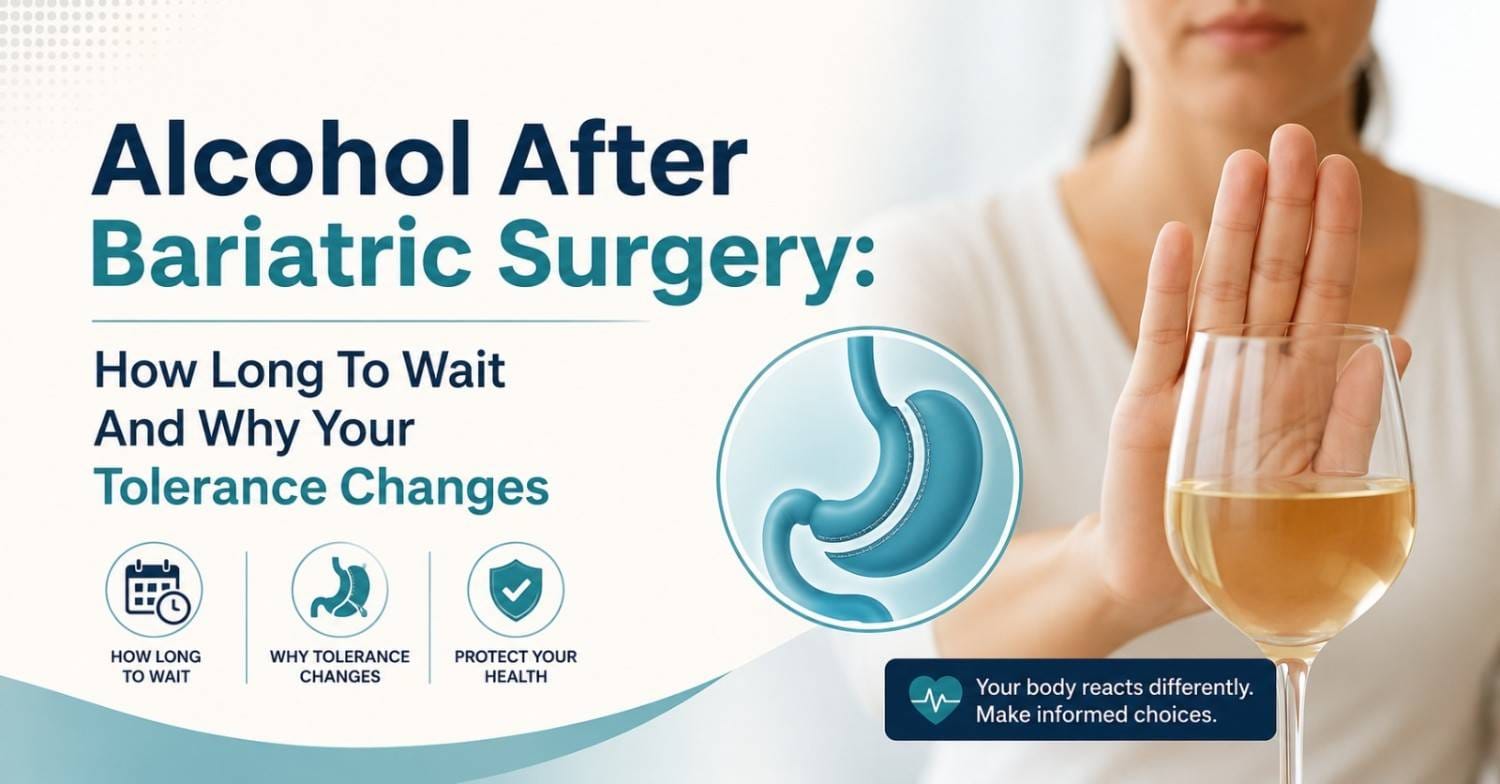
Alcohol after gastric sleeve is something you need to approach with caution because your system processes beverages a whole lot differently post-op. You absorb alcohol quicker, feel it sooner, and your blood alcohol level can climb higher than in the past.
Even small quantities may hit hard and linger. To be safe and to safeguard your long-term results, you need the unvarnished facts. The following passages talk you through what actually changes and why.
Key Takeaways
- You absorb alcohol much quicker after gastric sleeve, so one drink can give you higher and more prolonged blood alcohol levels than before. You have to organize yourself for driving, work, etc., where you need to be all there.
- Your alcohol tolerance is lower post-surgery, so small amounts make you dizzy, sleepy, and stupid. Begin with tiny sips, monitor for early signs of intoxication, and cease abruptly if you feel less than well.
- Alcohol can irritate your much smaller stomach, cause ulcers, internal bleeding, and hypoglycemic episodes. You shield yourself by mitigating or abstaining from alcohol and always drinking, if you must, alongside food that complements your post-op meal plan.
- Alcohol contains empty calories, creates cravings, and can immediately derail your weight loss success. You back your long-term results with low- or no-alcohol drinks and make any alcoholic beverages rare and intentional.
- You can mitigate risks by slowly reintroducing alcohol, avoiding hard or sweet drinks, and maintaining a written log of what you drink and how your body responds. This allows you to find your own limits and make modifications early.
- You’re at an increased risk of alcohol addiction following bariatric surgery. Therefore, you require firm limits, understanding loved ones, and alternative social options. If you find yourself drinking more frequently or turning to alcohol as an escape, it’s time to get help, quickly.
How Gastric Sleeve Changes Your Relationship With Alcohol
Post gastric sleeve, alcohol no longer acts the same in your body. The combination of a smaller stomach, accelerated emptying, and changed metabolism translates to getting drunk quicker, staying impaired longer, and at greater health risk from less booze.
Key changes you should know:
- Higher blood alcohol from fewer drinks
- Much faster “time to feel it” after each sip
- Stronger and longer intoxication, even with light drinking
- Lower tolerance and worse hangovers
- Higher risk of alcohol‑related health and safety problems
1. Faster Absorption
Your reduced stomach cannot contain much food, so you are frequently imbibing with less in your system. With less food to hold things back, alcohol moves quickly to the small intestine, where it is absorbed into your blood at a rapid pace.
Many people report feeling a heavy buzz after just one drink, often within 10 to 15 minutes. The pyloric valve might open more quickly, and your smaller stomach could make every sip more ‘concentrated.’
Research indicates increased peak blood alcohol concentration and decreased time to reach maximum concentration post-bariatric surgery, even when consuming the same quantity as pre-surgery. That’s why that same glass of wine that used to seem tame can now have you stumbling, red-faced and foggy in the head.
As a result, even a single drink can spike your BAC above legal driving thresholds, and the impact can sneak up on you. It may feel fine when you initiate the beverage, but you can be significantly impaired when you rise to leave a restaurant or social gathering.
2. Lower Tolerance
The quick weight loss and reduced body mass after surgery provide alcohol less body tissue to diffuse through, so it gets you a lot more buzzed. Your body doesn’t clear it as well, in part because stomach enzymes that begin alcohol breakdown are diminished.
A lot of folks feel faint, “sedated,” or mentally “foggy” after what was once a light drink—half a beer or a small (100–150ml) glass of wine. Old drinking habits no longer forecast your experience.
You may have been able to manage multiple beverages pre-surgery, but now can’t stand up after one. You may notice harsher hangovers: headaches, nausea, and fatigue after one or two drinks that once felt harmless.
Some remain more sensitive for years. Even a little alcohol consumption can trigger obvious intoxication, so you have to test your boundaries cautiously and gradually if you decide to drink at all.
3. Altered Metabolism
Gastric sleeve removes stomach tissue that produces alcohol dehydrogenase, one of the primary enzymes that begins metabolizing alcohol. With less of this “first-pass” metabolism, more unmetabolized alcohol reaches your bloodstream, increasing both the peak and the total exposure.
This metabolic shift transforms how your liver functions under alcohol load. Your liver is already working hard managing quick weight reduction and fat mobilization post-surgery. Adding alcohol to it can stress it further, potentially increasing long-term risk of liver disease or even pancreatitis, particularly if drinking is regular.
Among a minority of bariatric patients, these shifts connect to increased alcohol use disorder rates. Because alcohol seems stronger and more rewarding at lower doses, you’ll seek the swift hit.
That doesn’t happen to everyone, but it’s a known pattern, so monitoring how many you have, how quickly you consume them, and how they make you feel is essential. Pharmacokinetic changes, including a quicker rise to peak, a higher peak, and a slower decline, cause you to remain impaired longer than you anticipate.
Just because you “feel” more sober after an hour doesn’t mean your BAC is still high enough to impact your driving, your work, or your ability to care for family.
4. Heightened Effects
Higher BAC from less booze usually makes the buzz stronger. One cocktail can provide a powerful hit of relaxation, comfort, and disinhibition, which is more reinforcing than pre-surgery. That same drink, though, comes with sharper downsides: poor judgment, slower reaction times, and more risk of alcohol poisoning if you keep drinking.
Cognitive and performance impairment increase steeply. Even simple tasks, such as crossing a busy street, using tools, or driving, become less safe at BAC levels you can attain with one standard drink. For many gastric sleeve patients, ‘one drink with dinner’ is not a low-risk option anymore.
You can experience more physical side effects. Since your stomach is smaller and more sensitive, even light drinking can cause nausea, vomiting, or abdominal pain. Others face hypoglycemia, which includes sweating, shakiness, or weakness, when alcohol and quick blood sugar changes combine, particularly if they didn’t eat.
These intensified, longer-lasting effects are why most crews recommend waiting at least 6 to 12 months before any booze, then reintroducing it with medical supervision. There is not a single timeline for everyone, and some people remain extremely sensitive for years.
If you decide to drink, plan ahead: eat first, sip slowly, avoid driving, and stop well before you feel “on the edge.
The Hidden Dangers Of Drinking Post-Surgery
Alcohol hits your body very differently after a bariatric surgery procedure like gastric sleeve surgery. Your reduced stomach size and accelerated gut transit times result in alcohol getting to your bloodstream more rapidly and in much higher peaks. You get drunk on far less, and your blood alcohol can spike quickly, even if you consume what used to be a ‘light’ amount. This change is not just about getting buzzed more quickly; it alters your chronic risk profile significantly.
You’ve got an increased risk of alcohol use problems following bariatric surgery. Studies involving bariatric patients, particularly those with gut re-routing procedures that alter how both nutrients and ethanol are absorbed, indicate an increase in de novo or exacerbated drinking issues years down the line. If you drank to deal with stress or peer pressure before, that risk increases. One drink might as well be five, and the buzz hits so hard and so fast that self-control arrives too little, too late.
That’s why a lot of teams recommend that you have a candid conversation with your physician or counselor before you resume drinking. Alcohol will anger your new stomach lining. After gastric sleeve surgery, your tissue is more exposed and more fragile. Alcoholic beverages can irritate that lining, increase the likelihood of ulcers, and in extreme cases, cause internal bleeding.
If you supplement with painkillers like NSAIDs, the hazard rises even further. Burning pain, black stools or vomiting blood are not ‘wait and see’ symptoms. Your blood sugar is yet another Achilles heel. Alcohol can cause disruptive glucose drops, particularly if you drink on an empty stomach or accompany drinks with low-protein, sugary snacks. You’ll be sweaty, shaky, dizzy, or confused – classic hypoglycemia symptoms.
Since your food travels more quickly through the gut, this crash can occur earlier and pack a bigger punch. Some folks develop dumping syndrome with alcohol, experiencing nausea, a racing heart, and diarrhea after even one sweet cocktail. Alcohol delivers empty calories that sabotage your weight-loss efforts. A couple of drinks can equal a complete small meal in calories, but without the protein, vitamins, or minerals.
If you exchange antioxidant-rich berries or your protein shake for wine or spirits, you increase your risk of malnutrition and dehydration. This, in turn, means slower healing, hair and muscle loss, and more fatigue. Over time, those liquid calories can stall or even reverse your weight trend, even if your portion sizes remain small.
Timing and habits count. A lot of programs recommend no alcohol whatsoever for at least 6 weeks and often up to 3 months as your stomach recovers and you get re-acclimated to your new diet. Any strategy for reintroducing alcohol should be vetted through your bariatric team, not just a quick consult with a friend or online group.
Your squad can assist you in determining your individual risk, including psychological wellness, previous drinking, and medicines. If you do drink later, simple steps lower harm: always have food with alcohol, sip slowly, choose lower-strength drinks, alternate each drink with water, and stop at the first sign of lightheadedness, heat in your face, or slurred speech.
Parties are hard, so bringing non-alcoholic choices and a solid limit ahead of time keeps both your surgery results and your safety intact.
Why Alcohol Can Sabotage Your Weight Loss
Alcohol after gastric sleeve does more than give you a quick buzz. It fights against the goals you had surgery to achieve. It does so in a few subtle yet potent ways.
Alcohol provides you with “empty calories.” Each gram contains about 7 calories, nearly as dense as fat, and beverages tend to be sweetened by soda, juice, or syrups. A handful of glasses of wine, beer, or mixed drinks can contribute 500 to 1,000 calories in a night, with no real nutritional value.
Post-sleeve, your daily intake could be 800 to 1,200 calories the first few months. If you dedicate a big chunk of that to booze, you shove aside the protein, vitamins, and legitimate foods your body requires to repair and maintain muscle. That can stall or even reverse your weight loss, even if your food portions continue to look small.
Alcohol agitates appetite and cravings. It can interfere with hunger hormones too, so you’ll be hungrier and craving high-fat, high-sugar junk. Most individuals realize they munch on chips, fries, or desserts when they imbibe, or they skip scheduled meals and then hit the drive-thru at 1 am.
That combination of additional drink calories plus bad food decisions can devastate a week of disciplined eating. Your new eating pattern after surgery depends on structure: small, slow meals, high protein, low sugar, and enough fluid. Alcohol interferes with that habit.
It can dehydrate you, irritate your stomach, and inhibit your ability to meet your protein and water requirements. It messes with your judgement, so the ‘I’ll just have one’ can quickly become additional drinks and carb‑slammed snacks you’d typically eschew.
Post-bariatric surgery, your body metabolizes alcohol in a different way. With less stomach volume and food, alcohol hits your bloodstream quicker, and your capacity to metabolize it declines. A lot of folks get drunk after a single drink that used to feel tame.
Research even shows that some procedures, like gastric bypass, may have higher alcohol-related risks than sleeve gastrectomy, with gastric bypass patients in one study being 98% more likely to be hospitalized for alcohol-related reasons. Although very few patients develop obvious alcohol problems, the potential is still present, and it’s greater because of what has happened to your body.
If you do drink, you need to count those calories into your daily total and be honest about the trade-offs. That might mean one light drink, slowly sipped with a meal, and no “extras” such as dessert or midnight munchies.
It means paying attention to how alcohol affects your appetite, mood, and choices, and being prepared to scale back or quit if you spot warning signals.
The Recommended Timeline For Reintroduction
After undergoing gastric sleeve surgery, you will face two significant changes: a smaller stomach and an increased rate of alcohol absorption. This means that you may become intoxicated more quickly and for a longer duration, potentially placing extra strain on your liver, even if you consume the same cocktail as before.
For the initial six weeks following your weight loss surgery, it is crucial to avoid drinking alcohol altogether. Your staple line is healing, and nausea is common, making it essential to focus on hydration and protein intake. Alcohol is dehydrating and can irritate your digestive system, pushing out vital nutrients.
From six weeks to around three months post-surgery, many medical teams will still advise against alcohol consumption. Your diet remains strict, and you are in the process of establishing new habits. Most physicians recommend waiting at least this long before considering any test drinks.
About 3 months, some surgeons permit a slow, cautious test. In other words, you chat with your crew beforehand, then get going with no more than a few sips (30 to 60 ml of wine), eating, and water in between each sip. You halt at the initial onset of dizziness, nausea, or rapid heartbeat.
Between 6 and 12 months, most folks have solid weight loss and improved healing, but alcohol remains tricky. A lot of physicians will tell you that this 6 to 12-month period is the crucial safety period. Some will even request that you wait the full year so that you can solidify your healthy habits.
When you do decide to reintroduce alcohol, it’s wise to choose low-sugar, lower-strength options like dry wine or light beer. Avoid shots, strong spirits, and sweet cocktails. Keeping a journal to track your consumption, effects, and any negative reactions can help establish new limits and maintain a healthy lifestyle.
Navigating Social Drinking With A New Stomach
Social drinking after gastric sleeve surgery feels so different because bariatric surgery patients process alcohol differently. Liquids empty quickly into your small intestine, where around 80 percent of alcohol is absorbed, leading to rapid weight loss effects that are felt sooner and harder. You face an elevated lifetime risk of alcohol use disorders, necessitating a solid strategy before even lifting a glass.
Your New Drink Menu
Pick places with an actual non-alcohol menu, not just “water or Coke.” Look at the online menus for sugar-free menu items, so you’re not caught in the moment. Even after six to twelve months, go for no more than one, and only if you’ve eaten and aren’t driving.
Avoid carbonated drinks that expand in your smaller stomach and may trigger pain or reflux.
- Regular beer
- Hard seltzers
- Champagne or sparkling wine
- Regular soda or tonic water
Safer low-volume, lower-impact ideas, if your care team clears alcohol for you:
- 2–3 sips of dry wine, then wait 30 minutes
- Spirits heavily diluted with still water or ice
- Sugar‑free diluted juice with a measured splash of spirit
- Alcohol‑free beer or wine (still watch carbonation and sugar)
Good non‑alcohol standbys that fit most calorie plans:
- Still water with lemon or lime
- Herbal tea served iced or hot
- Diet or sugar‑free flavored drinks without bubbles
- Plain seltzer only if your stomach tolerates light fizz
Handling Social Pressure
Use this quick checklist to stay in control:
- Decide your limit before you go (often zero)
- Eat a solid meal first
- Plan how you will get home without driving
- Pick a non‑alcohol drink you will order
- Practice one firm but polite “no” line
Bring your own non-alcohol drink to casual events, like unsweetened iced tea or a ready-to-drink mocktail, so you always have something in your hand.
Shift attention off rounds of drinks by proposing games, communal meals, strolls, or mini group discussions instead of bar hopping.
If you have a personal or family history of alcohol use disorder, talk about lifelong abstinence with your team because bariatric surgery increases the risk and the consequences.
Mindful Consumption
If you and your surgeon agree that alcohol is fine, begin with 2 to 3 sips, then pace yourself and wait at least 30 minutes. Most sleeves say they feel much stronger, with 84 percent experiencing increased potency, and a single ‘little’ drink can feel like a whole bunch.
ALWAYS DRINK WITH FOOD to slow absorption and reduce the risk of sudden hypoglycemia. Sip extremely slowly, intersperse with pauses, and cease at the first indication of dizziness, hot flashes, nausea, or mental “fog,” even if everyone around you is still on their first glass.
Breathalyzers can underestimate your actual blood alcohol level by as much as 27%, so consider every test a minimum. Don’t drive after you drink anyway.
You Can Track Patterns With A Simple Table:
| Date | What you drank | Amount | Physical response | Notes / next step |
Use this log to identify red flags early and determine if it’s time to scale back even more or stop.
The Unspoken Risk Of Alcohol Dependency
You have an elevated yet frequently unacknowledged risk of alcohol consumption issues post-gastric sleeve surgery. Your body processes alcohol more quickly, your brain might react to it differently, and your typical coping mechanisms can change all simultaneously. This is particularly significant for bariatric surgery patients, as they may not realize how their drinking behavior can be affected.
You don’t have to drink big amounts for this risk to appear. Weight-loss surgery means a lot of folks get tipsy a lot faster and stay that way longer. This phenomenon manifests in multiple types of weight loss procedures, although the risk appears most elevated following gastric bypass.
Another study discovered that individuals with gastric bypass had a hospitalization risk for alcohol use that was 98% higher than those with sleeve gastrectomy. Even then, sleeve patients remain more at risk than the general population, highlighting the importance of understanding the effects of alcohol intake post-surgery.
Against this backdrop, your brain’s reward system can alter. Some studies indicate ‘reward deficiency’ and changes in D2 receptor availability following significant weight reduction. Put simply, alcohol might seem more pleasurable than before, and your brain might seek that sensation harder after weight loss surgery.
Research indicates that individuals who experience a more pronounced “buzz” or euphoria from drinking are more likely to drink more frequently or more heavily. There’s probably a combination of genetics, quick weight loss, stress, and life transition at play. Existing research doesn’t firmly back “addiction transfer” as the primary culprit, but it does show an association between surgery and increased alcohol risk.
You can lower your risk by watching for warning signs: you drink more days per week than you planned, you need more alcohol to feel the same effect, you often drink to cope with stress, anger, or boredom, or you binge drink, even once or twice a month.
If you notice these trends, consult with your care team. A lot of clinicians now screen for alcohol risk pre- and post-surgery, and they can steer you toward safer limits, therapy, or support groups. Having other rewards that you build into your life — movement you like, social time without booze, hobbies that quiet your mind — helps keep you grounded while your body and brain adjust.

Conclusion
Life post gastric sleeve feels different, and alcohol falls smack dab in the middle of that. Your body processes alcohol quickly at this point. One glass can hit hard. Additional calories from beer, wine, or mixed drinks can impede your weight loss. That’s reality, not just speculation.
You can still have nights out, friends, and fun. You simply require defined boundaries, strategy, and a little bit of brutal self-auditing. For example, you can impose a two-drink maximum, sip water between drinks, or select alcohol-free weeks each month.
Your health journey didn’t conclude with surgery. It just hit a new chapter. Speak to your care team, take a look at your habits, and determine what role alcohol should have for you moving forward.
Frequently Asked Questions
Can you drink alcohol after gastric sleeve surgery?
Yes, but not immediately after weight loss surgery. Most bariatric teams advise avoiding alcohol for at least 6 to 12 months. Your new stomach after gastric sleeve surgery absorbs alcohol more quickly, leading to rapid intoxication and prolonged effects, so be sure to consult your bariatric surgeon about timing and limits.
Why does alcohol affect you more after a gastric sleeve?
After bariatric surgery, your stomach empties faster and is smaller, leading to rapid weight loss. Consequently, alcohol hits your small intestine and bloodstream quickly, causing significant increases in blood alcohol concentration from fewer drinks. This means you could be impaired after just a single cocktail.
When is it usually safe to reintroduce alcohol?
Most bariatric doctors recommend waiting at least 6 to 12 months post-bariatric surgery before consuming alcohol. Even then, begin with a few sips, drink slowly, and never on an empty stomach to avoid harmful effects on your digestive system.
Can alcohol slow down your weight loss after gastric sleeve?
Yes. Alcohol is packed with empty calories and is a common overeating trigger, especially for bariatric surgery patients. It reduces your inhibitions, making it easier to snack or be drawn to high-fat choices, which can stall or reverse the effects of weight loss surgery.
Are you at higher risk for alcohol addiction after gastric sleeve?
You might. Others develop ‘addiction transfer’, trading food for alcohol, especially after weight loss surgery. Because alcohol hits faster and harder post-bariatric procedure, it can become a coping tool. If you experience cravings or loss of control, seek out your bariatric team or a mental health professional.
What are safer ways to handle social drinking after surgery?
Prepare in advance, especially as a bariatric surgery patient. Opt for alcohol-free or low-sugar mocktails to avoid problematic drinking. Sip slowly, don’t drink on an empty stomach, and establish a hard drink limit to maintain healthy alcohol consumption guidelines. Inform close friends of your weight loss surgery so they can support your decisions.
Which types of alcoholic drinks are better if you choose to drink?
If your squad approves you to drink, choose beverages that are lower in sugar and calories, such as dry wine or spirits with calorie-free mixers, which are better options for bariatric surgery patients. However, all alcohol consumption remains risky post-surgery, so moderation is key.