Blood in stool when to worry – you want to know when a common but scary symptom requires speedy attention. You can notice bright red streaks on toilet paper, darker red in the bowl, or even black, sticky stool.
All types can indicate various causes, ranging from minor tears to grave bowel disease or cancer. In this guide, you discover what patterns are important and when to get a doctor quickly.
Key Takeaways Cause Of Blood In Stool
- You can often get some clues regarding the source of bleeding by the stool color. Bright red, dark red, or black tarry stools all indicate different regions of your digestive system and different potential causes.
- You need to be alert for red flags like significant amounts of blood, persistent bleeding or black, tarry, smelly stools and get urgent medical attention if these arise. If you feel lightheaded, frail, or witness your toilet bowl fill with clots of blood, call 911.
- Don’t brush aside persistent or unexplained blood in the stool — even if you suspect hemorrhoids or are under 50. New bleeding, changes in bowel habits, or weight loss need medical evaluation as they can be early signs of serious disease including bowel cancer.
- You can assist your physician by monitoring stool color, frequency of blood occurrence, and any additional symptoms like pain, diarrhea, constipation, fever, or vomiting. Keeping a basic diary and noting your medications, diet changes, and family history can accelerate diagnosis and treatment.
- You may find that causes range from benign problems like hemorrhoids or anal fissures to more serious conditions such as inflammatory bowel disease, ulcers, or colorectal cancer. Knowing your personal risk factors such as age, family history, and use of blood thinners helps you decide how quickly to seek care.
- You would probably require blood and stool tests, endoscopy or scans to identify the source of bleeding and then specific treatments. There are several ways you can make your outcome better by adhering to your treatment plan, modifying your diet and lifestyle as recommended, and going to regular follow-up and screening appointments.
What Does The Blood Look Like In Rectal Bleeding?
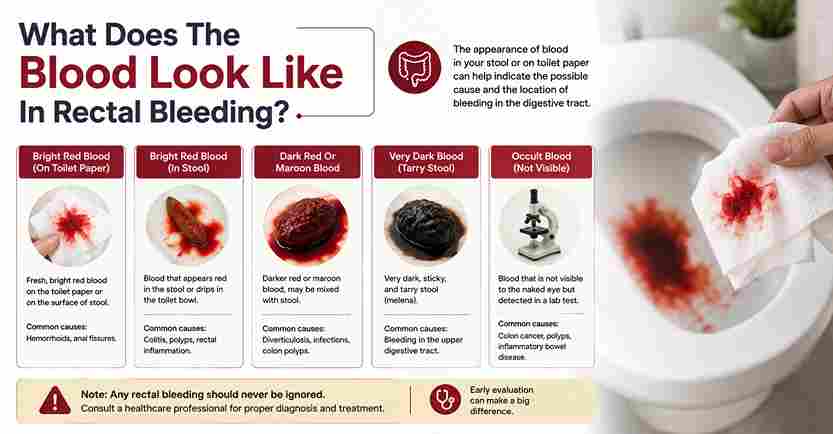
Blood can appear in your stool in different ways, and what you notice often indicates where in your gut the bleeding originates. You may see blood on the toilet paper only, red streaks on the outside of the stool, pink or red water in the toilet bowl, blood mixed with stool, or very dark, almost black stool.
The color and texture are important as they help distinguish mild reasons, such as hemorrhoids, from serious ones, such as bowel cancer or ulcers further inside. You have to remember that food and medicine can alter stool color, so consider what you ate or took before you freak out.
Bright Red Blood In The Stool
Bright red blood usually comes from the lower part of your gut, such as the anus, rectum, or the very end of the colon. You may see fresh red streaks on the outside of the stool, drops of red blood in the toilet, pinkish water, or smears of blood only on the toilet paper.
This pattern often links to hemorrhoids, anal fissures (small tears in the anus), or minor trauma from hard stool, straining, or anal sex. Persistent bright red bleeding is not to be disregarded. If you continue to see blood, if it appears to increase in quantity, or if you lose weight, become weak, or experience a change in your normal bowel habit, you should discuss with a physician to exclude polyps, bowel cancer, or other lower bowel disease.
Dark Red
Dark red blood typically indicates the bleeding is further up your colon or occasionally in the small intestine. Rather than riding on the surface, the darker blood is more likely to be incorporated into the stool, so the entire stool appears maroon, plum colored, or clotty.
This pattern can occur with diverticulosis, inflammatory bowel disease, or tumors that hang higher in the bowel and bleed into the stool as it forms. Since this blood has had more time to marinate in your intestines, it’s more likely to indicate a more serious bleed, particularly if you’re noticing dark red blood in loose stool or diarrhea.
Keeping track of how frequently it occurs, approximately how much you observe, and if you experience dizziness, shortness of breath, or excessive fatigue can assist your physician in determining the urgency.
Black And Tarry
Black, sticky, tar-like stool, called melena, typically means that blood has come from the upper part of your gut, such as the stomach or esophagus, and has been digested on the way down. Stomach ulcers, severe reflux with esophageal damage, and certain tumors can all cause this type of bleeding.
The stool is often very strong smelling and foul; you can’t ignore it. Very dark or black stool, particularly if it’s shiny and sticky, can indicate a significant bleed and requires emergency intervention, especially if you’re feeling lightheaded or experiencing palpitations.
Not all black or red stool is blood. Iron tablets, certain stomach medications, and foods such as liquorice, blueberries, and black pudding can color stool very dark, while beetroot, tomatoes, and red food coloring can make it look red or like blood has been mixed in.
If you’re unsure, or the color change doesn’t fit with what you ate or the pills you take, a doctor can have the stool tested for occult blood or use a stool color card to help determine if what you’re seeing is from bleeding, diet, or supplements.
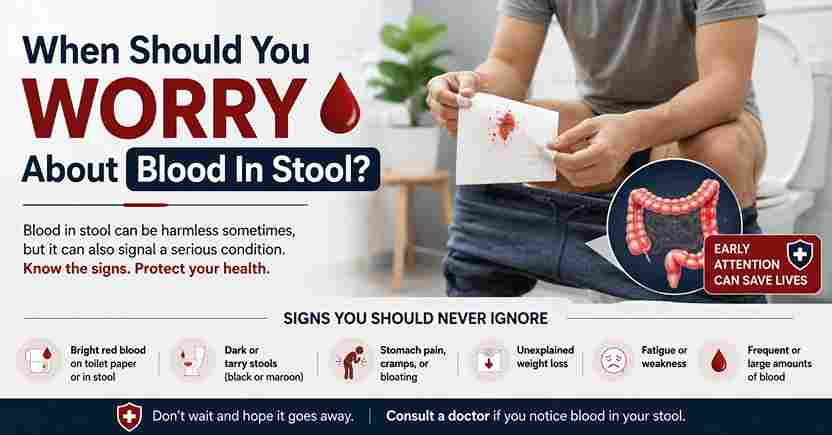
When Should You Worry About Blood In Stool?
You should worry about blood in your stool when it is heavy, recurrent, or accompanied by other concerning symptoms. A minor, one-time streak on the toilet paper can be from a small fissure or hemorrhoid and may resolve on its own. Persistent or recurring bleeding is not normal at any age.
You should seek urgent or emergency care if you notice:
- Large amounts of blood in stool or the toilet
- Blood in stool and chest pain or shortness of breath
- Bloody diarrhea, or vomiting blood
- Severe abdominal pain, fever, or feeling faint or dizzy
- Fast weight loss, anemia, or black, tar-like stool
A symptom checklist can help. Note how often you see blood, how much, stool color and shape, pain level, and any weight loss, fever, or change in bowel habits. Bring this record to your doctor for a quicker, safer strategy.
1. Large Amounts Cause Of Bleeding
Large bleedings can be life-threatening. If the toilet water becomes red, you pass blood without stool, or large clots continue to pass, you need emergency care, not a wait-and-see approach. This can be from bleeding ulcers, diverticulosis, severe colitis, or cancers, and you can lose a lot of blood in a short period of time.
Make a point of tracking how frequently you expel blood, if it continues to drip after wiping, and whether you feel faint or dizzy. Pass this information along to the emergency crew.
2. Persistent Bleeding
Bleeding is “persistent” if it goes on for more than a few days or recurs over weeks, even if the volume appears minimal. That slow loss can cause iron-deficiency anemia, fatigue, and shortness of breath over time.
You should maintain a basic diary of dates, stool appearance (hard, loose, mixed blood, blood coating, dark, tar-like), and any pain or cramping. This trend assists your physician in looking for polyps, inflammatory bowel conditions, diverticulosis, or cancers with examinations such as rectal examination and colonoscopy.
3. Associated Symptoms
Certain symptoms with rectal bleeding raise the stakes: abdominal pain or cramps, unexplained weight loss, fever, nausea, vomiting, dizziness, fainting, chest pain, or shortness of breath.
Persistent diarrhea, serious constipation, pencil-thin stools or new mucus in stool can indicate colon cancer, inflammatory bowel disease or infections. You can construct a basic cheat sheet for yourself, with one column for symptoms (i.e. ‘bloody diarrhea and fever’) and the other for what it could indicate (‘infection or colitis requires immediate attention’).
If you have strong pain, fever, or are vomiting blood with your bloody stool, call emergency services immediately.
4. Personal Risk And Possible Causes
Your own risk profile counts. You should be more alert if you are 45 or older, have a family history of colorectal cancer or polyps, have had polyps yourself, or live with long-standing bowel problems. Heavy alcohol use, smoking, or diagnosed iron-deficiency anemia all increase your risk, so blood in stool is more concerning, even if it’s only a small amount.
If you take blood thinners, aspirin, or have an immune disorder, inflammatory bowel disease, or past bowel surgery, you can bleed more easily and may not notice trouble until you are quite unwell.
At 45 and older, a colonoscopy every 10 years is recommended even with no symptoms. With bleeding, your doctor may move this test earlier along with a rectal exam.
5. Unexplained Changes In Stool Mean
Unexplained blood means there is no clear trigger like hard straining, pregnancy-related hemorrhoids, or a recent minor anal injury. When this comes with a new change in how often you go, looser stools, or new night-time trips to the bathroom, it needs a closer look.
This mix can be a sign of cancer, colitis, or gut infections, not just hemorrhoids. Make note of any new foods, travel, infections, or medications (pain pills, antibiotics, or even herbal products) as some can cause bleeding, ulcers, or bowel changes.
If nothing jumps out and the bleeding continues, your physician will probably recommend blood work, stool testing, and a colonoscopy to exclude ulcers, diverticulosis, inflammatory disease, or cancer.
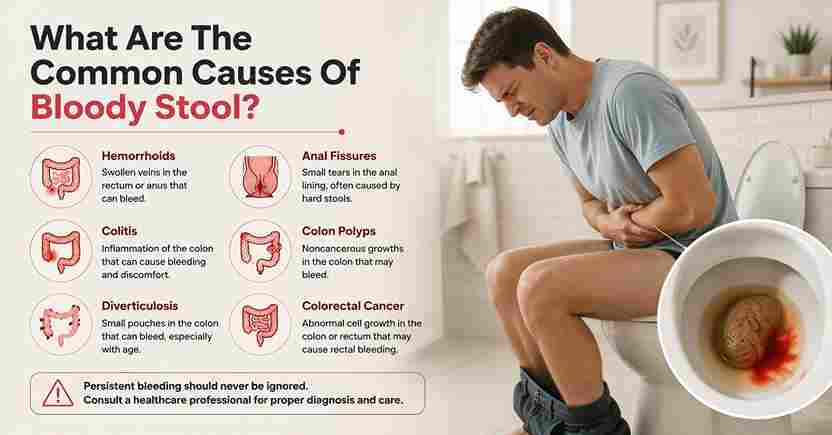
What Are The Common Causes Of Bloody Stool?
Blood in your stool can come from many places in your gut, from the anus and rectum up to the stomach and small intestine. Some causes are mild and short-term, while others signal disease that needs prompt care or long-term follow-up.
- Hemorrhoids
- Anal fissures
- Colorectal polyps and colorectal cancer
- Diverticular disease
- Inflammatory bowel disease (IBD)
- Infectious and ischemic colitis
- Peptic ulcers and upper‑gut bleeding
- Vascular problems (angiodysplasia and others)
- Sexually transmitted infections (STIs)
- Endometriosis involving the bowel
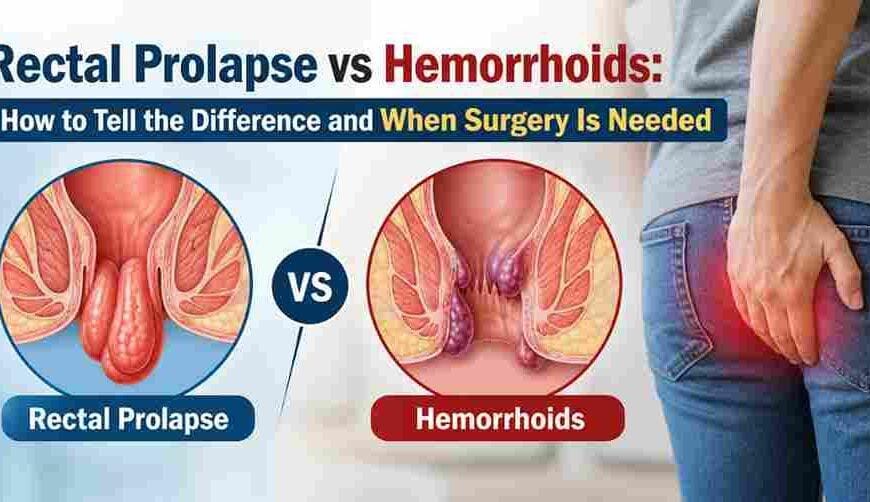
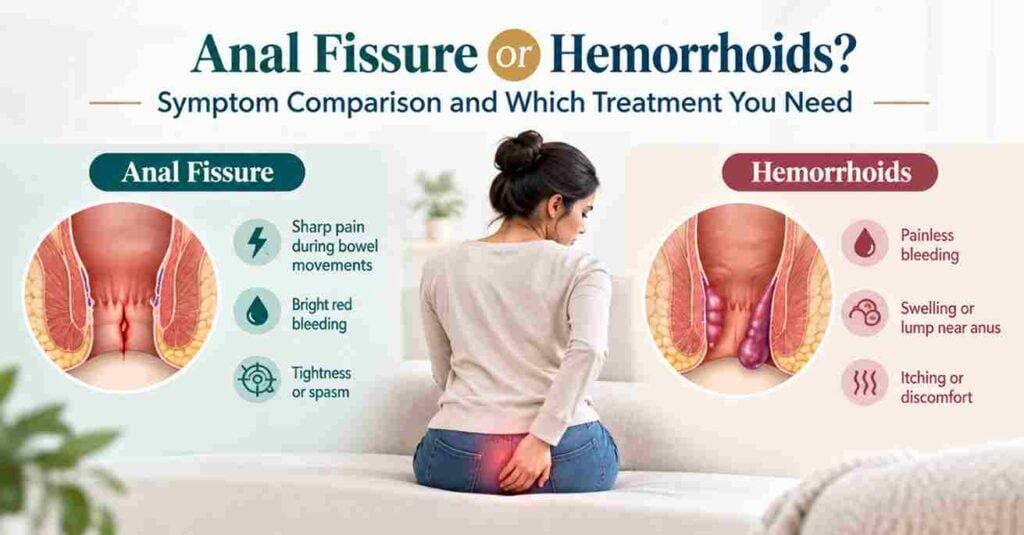
Hemorrhoids are one of the most common reasons you see bright red blood on toilet paper or on the stool surface. You may notice anal itching, swelling, or a lump.
Anal fissures, which are small tears in the anus often from hard stool, cause sharp pain with bowel movements and streaks of blood.
More serious causes are colorectal polyps and colorectal cancer. Polyps bleed a bit at a time, so you may not see any blood. Frequently, tests such as fecal occult blood or colonoscopy detect this initially.
Cancer can produce overt blood, altered stool shape, weight loss, or iron-deficiency anemia, but in its early stages it can be silent.
Inflammatory bowel disease (ulcerative colitis and Crohn’s disease) causes chronic inflammation, resulting in diarrhea, cramping, and mucus or blood in stool.
Colitis from infection or autoimmune disease can produce acute bloody diarrhea, fever, and urgency. Ischemic colitis, typically in senior citizens or patients with cardiovascular disease, can cause sudden bloody diarrhea with severe abdominal pain.
Less common causes are peptic ulcers and other upper-gut sources that present as dark, tar-like stool. Angiodysplasia and other vascular malformations typically induce painless, recurrent bleeding, commonly in adults older than 60 years.
Rectal STIs can cause bleeding, discharge, and pain. Endometriosis in or near the rectum can cause bleeding that coincides with your period.
| Cause | Typical symptoms | Common risk factors |
| Hemorrhoids | Bright red blood on paper, anal discomfort | Constipation, pregnancy, long sitting |
| Anal fissure | Sharp pain, streaks of red blood | Hard stools, straining |
| Polyps / colorectal cancer | Occult or visible blood, anemia, change in bowel habits | Age >50 years, family history, some diets, smoking |
| IBD | Chronic diarrhea, cramps, blood and mucus | Family history, autoimmune tendency |
| Infectious colitis | Sudden bloody diarrhea, fever | Contaminated food or water |
| Peptic ulcer / upper bleed | Dark, tar‑like stool, possible vomiting blood | NSAID use, H. pylori infection, heavy alcohol use |
| Angiodysplasia | Painless, on‑off bleeding | Age >60 years, heart or kidney disease |
| Rectal STIs | Bleeding, pain, discharge | Unprotected anal sex, multiple partners |
| Endometriosis | Rectal bleeding with periods, pelvic pain | Menstruating age, known endometriosis |
How Doctors Investigate Common Causes Of Blood
Doctors apply a systematic protocol to determine why you observe blood in your stool, its severity and how to proceed. These days the path is typically obvious and linear and often begins with basic screening before progressing to more sophisticated testing.
First, your doctor takes a detailed health history. You answer questions about how the blood looks, how often it shows up, and if you see bright red streaks or dark, tar-like stools. The look of the blood gives clues about where it may come from. Bright red blood often points to the lower colon, rectum, or anus, which can link to hemorrhoids or anal fissures.
Darker stool may point higher up, such as the stomach or small bowel, and can be tied to problems like stomach ulcers or angiodysplasia. Your doctor asks about weight loss, change in bowel habits, travel, diet, past colonoscopies, and any family history of colorectal cancer or inflammatory bowel disease. During the physical exam, they check your eyes, skin, and nails for signs of anemia, and they watch for chest pain, shortness of breath, belly pain, fever, nausea, or vomiting, which can signal heavier blood loss or infection.
A rectal exam is common and quick. The doctor uses a gloved, lubed finger to feel for lumps, tenderness, or blood. For minor, one-time streaks of blood with no other symptoms, your doctor may even suggest you watch things for a few days, track your stool, and come back if bleeding keeps going or gets worse.
Next, you could have lab work. A complete blood count verifies anemia, which can result from slow or occult blood loss. If your hemoglobin is low, that can drive your doctor to investigate further. A fecal occult blood test (FOBT) or other stool test checks for invisible blood. This is good because it can detect bleeding higher in the gut, even when stool looks normal.
Other stool tests look for infection — bacteria, parasites, or viruses — that may cause blood, mucus, and diarrhea. If you have severe diarrhea, traveled recently, or had some high-risk foods, these tests will be important to rule out infections as the primary cause. Sometimes, your doctor might request tests that examine your blood’s clotting ability — particularly if you’re on blood thinners — because easy bleeding can impact what type of treatment makes sense for you.
When the history, exam, and labs lead toward bleeding inside the colon or rectum, imaging and scopes follow. Colonoscopy is the go-to test for most adults with blood in stool. It involves a long, bendy tube with a camera inserted to check out the entire colon. You take a bowel prep the day prior so the colon is empty.
This examination assists in locating sources such as polyps, colorectal malignancies, angiodysplasia, ulcers, and manifestations of inflammatory bowel disease. Even if you don’t have any bleeding or other symptoms, many guidelines recommend a screening colonoscopy every ten years once you turn about 45, assuming your results remain normal and you’re in the average risk category.
Sigmoidoscopy is similar but looks only at the last part of the colon and rectum and can be enough if bleeding appears clearly low and light. If your physician believes the bleeding might be coming from a higher source, they may request a CT scan of your abdomen and pelvis. This can reveal tumors, bowel wall thickening, or massive clots.
In uncommon situations of heavy, continuous bleeding in which the source remains elusive, a CT angiography or other form of angiography is performed. They monitor blood flow in your gut and can identify where active bleeding seeps into the bowel, enabling targeted emergent intervention.
On many endoscopic exams, like colonoscopy or sigmoidoscopy, your doctor can obtain tissue samples, which are biopsies. This does not typically cause pain as the bowel lining has few pain sensors. The biopsy samples are sent to a laboratory, where a pathologist examines them under a microscope.
This step assists in distinguishing benign polyps from early-stage or advanced CRC and can demonstrate the patterns of chronic inflammation seen in ulcerative colitis or Crohn’s disease. Biopsy may verify angiodysplasia or exclude other uncommon etiologies. If the results reveal precancerous polyps, your doctor can remove them during the same colonoscopy, reducing your future risk of colorectal cancer.
If the tissue reveals infection or an inflammatory disease, your doctor can tailor therapy to the specific cause instead of treating symptomatically. When bleeding persists or presents with red flags such as weight loss, chronic change in bowel habits, or chronic anemia, this deeper investigation with biopsy helps rule out serious disease and provide you a roadmap moving forward.
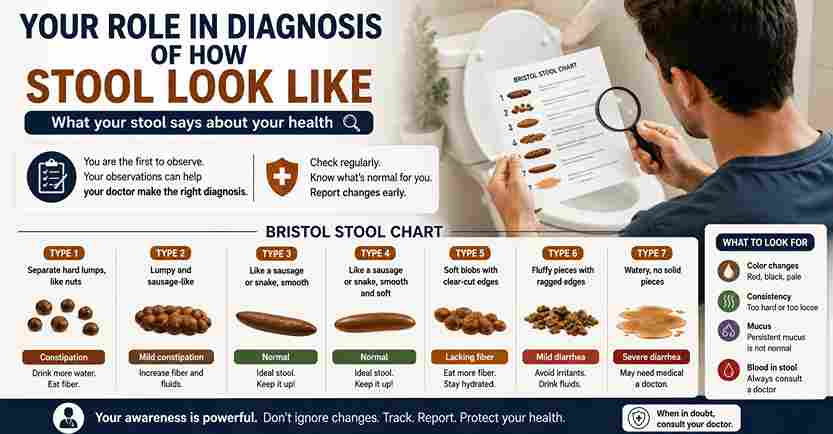
Your Role In Diagnosis Of How Stool Look Like
You have a huge role in helping your doctor diagnose the reason for blood in your stool quickly. Transparent, truthful information from you assists your physician in determining if this is a minor affliction, like hemorrhoids, or something more serious that requires immediate testing, like a rectal exam or colonoscopy.
You assist most by providing an accurate, straightforward history of your symptoms. Note what the blood looks like: bright red on toilet paper, streaks on the stool, or dark, tar-like stool. Bright red blood often comes from the lower gut, but it can be darker if it is coming from higher up.
Take note of the frequency of bleeding, duration, and whether it is light spotting or heavy bleeding that fills the toilet bowl. Add other symptoms such as abdominal pain, fever, weight loss, vomiting, or fatigue. Mention if you have had any previous problems like hemorrhoids, fissures, gastroenteritis, diverticular disease, or inflammatory bowel disease.
Follow and note any modifications in your loo habits, diet, or medications. Notice if your stool is looser, harder, thinner, or more frequent if you’re urgent to go. Talk about new foods, supplements, alcohol, and short-term medications like painkillers and long-term medications like blood thinners.
This assists your doctor in determining whether the bleeding could be related to food, infection, or medication side effects. Be candid regarding your own and your family’s risk factors. Inform your physician if you are a smoker, a heavy drinker, had bowel surgery, had polyps, anemia, or previous gut issues.
Disclose any family history of colorectal cancer or polyps, even if relatives were minimally or asymptomatic. Colorectal cancer is one of the few cancers where a majority of those diagnosed feel fine until the disease is advanced. This is why screening at regular intervals, such as a colonoscopy every 10 years starting at 45, is critical, even if you’re feeling great.
Prior to your appointment, prepare a brief list of questions and concerns. For example: “Could this be from hemorrhoids or something worse?”, “Do I need a rectal exam or colonoscopy now?”, “How soon should I worry about persistent bleeding or pain?”, “When should I go to the emergency room for heavy bleeding?
Inquire about symptoms that indicate you should get help immediately — like bleeding that won’t stop, dizziness, or black, tarry stool. This keeps the convo on point and helps you walk away with a well-defined strategy.
Understanding Your Treatment Options
Treatment depends on what is causing the blood in your stool, how much you are losing, and how stable you are. Your doctor usually starts with a history, exam, and tests like a complete blood count (CBC) to see how severe the bleeding is and to guide the next steps.
For minor bleeding from hemorrhoids or small anal fissures, you may use topical hemorrhoid creams or suppositories to ease pain and swelling, stool softeners to reduce strain, and warm sitz baths to help tissue heal. If an infection is the cause, you may need antibiotics that target specific bacteria or parasites. When colonoscopy finds polyps or early cancers, your doctor may remove polyps during the procedure or plan surgery to take out the affected segment of bowel.
Diet changes do matter for many mild or chronic causes. Extra fiber, such as whole grains, beans, fruits, and vegetables, helps keep stools soft and regular so you don’t push as hard. Drinking sufficient water, typically at least 1.5 to 2 liters per day for most adults, aids this. You might have to reduce alcohol and ultra-processed food that can aggravate the gut.
For example, if you have diverticular disease or irritable bowel syndrome, your physician may customize fiber and fluid targets to match your symptoms. Some cases require advanced hospital-based care. If your hemoglobin is low, you may receive blood transfusions, commonly targeting a level of at least 7 grams per deciliter so the bowel lining is less pallid and petechiae more visible.
Only 3% to 6% of colonoscopies for acute rectal bleeding require therapy during the scope, such as cautery, clipping, or injection treatment. Tools such as the Oakland Score assist physicians in identifying low-risk patients with lower gastrointestinal bleeding. If you are low-risk, not bleeding anymore, and had a recent high-quality colonoscopy that excluded cancer and other major causes, you can often be safely discharged for outpatient follow-up with approximately 95% certainty.
When bleeding is brisk and ongoing (approximately 0.3 mL per minute or greater), or you are too unstable for a colonoscopy, CT angiography (CTA) is frequently the test of choice since it can demonstrate the location of blood quickly. If the source appears to be from the small bowel, then small bowel capsule endoscopy (where you swallow a camera pill) or double-balloon enteroscopy can both locate and occasionally treat difficult lesions.
In rare, stubborn cases where bleeding will not stop, surgery such as partial, subtotal, or total colectomy may be needed. The exact operation depends on where the bleeding starts, how much of your colon has diverticular disease, and your other health problems.
Conclusion
Blood in your stool always deserves respect, even if it pays a single visit. Bright red streaks on TP, dark red clots in the bowl, or black, tar-like stool are all a story about your guts. Some turn serious, such as colorectal cancer. Other causes require immediate attention, such as severe bleeding accompanied by abdominal pain, weight loss, or dizziness and weakness.
You know your body better than anyone. If the blood appears fresh, worsens, or coincides with other unusual symptoms, contact a physician. Make notes, be candid, and pose specific questions. Your gut health counts, and you don’t need to guess solo. Get assistance now.
Frequently Asked Questions
Is blood in your stool always an emergency?
No. Small amounts of bright red blood from hemorrhoids or a small tear can be minor. Any new, repeated, or heavy bleeding requires urgent medical attention, particularly if you experience weakness, dizziness, abdominal pain, or notice dark, tarry stools.
What does the color of blood in stool tell you?
Bright red blood usually comes from the lower bowel or anus. Dark red or maroon blood may come from higher up in the colon. Black, tar-like stool often means bleeding from the stomach or upper intestine. Any of these should be checked by a doctor.
When should you see a doctor about blood in your stool?
Seek immediate medical attention if the bleeding is recent, recurring, or significant, or if you are experiencing weight loss, fatigue, abdominal pain, or changes in bowel habits. Seek emergency care if you feel faint, dizzy, or if your heart is racing.
Can blood in your stool be a sign of cancer?
Yes. Colorectal cancer may cause blood in stool, changes in bowel habits, weight loss, and anemia. There are many other more common causes, but you should never disregard blood in your stool. Early testing can detect cancer or precancerous polyps when they are most treatable.
What tests might your doctor use to find the cause?
Your doctor might order blood tests, stool tests, and imaging. A colonoscopy or sigmoidoscopy allows them to look inside your bowel and remove biopsies if necessary. These tests can pinpoint the location of bleeding so you can receive appropriate treatment.
What information should you track before seeing a doctor?
Note when the bleeding began, how frequently it occurs, the color of the blood, any pain, blood in stool when to worry, the medications you take, and your family history of bowel disease or cancer. This aids your physician in making a quicker, more precise diagnosis.
Can blood in your stool go away on its own?
Sometimes minor causes, such as tiny hemorrhoids, may get better with fiber, fluids, and gentle bowel habits. You should never just assume it is benign. Always discuss with a physician the initial blood finding or if it recurs to exclude serious disease.