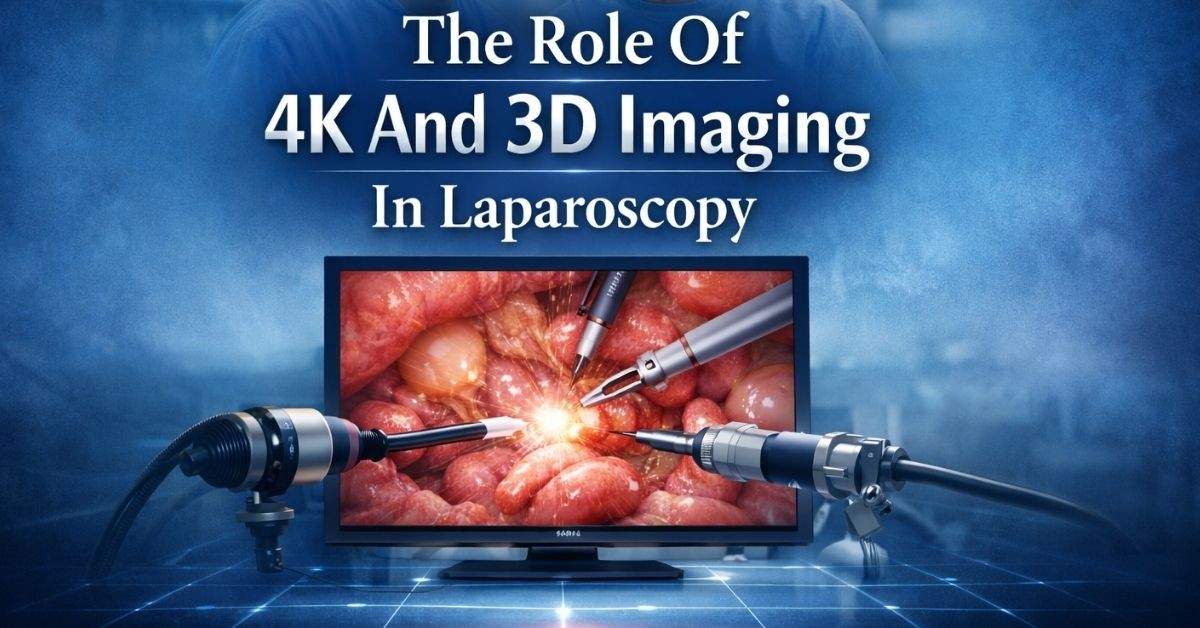
3D laparoscopic surgery benefits you by providing your surgeon with a clearer, more precise view inside your body during minimally invasive procedures. You get more depth detail, sharper images, and superior hand-eye coordination than with conventional 2D laparoscopy.
For many patients, this can translate into smaller incisions, less blood loss, and quicker recovery. To assist you in evaluating your choices, the following sections outline how 3D systems operate, major advantages, and present limitations.
Key Takeaways
- You gain from 3D laparoscopic surgery through enhanced depth perception and accuracy, allowing surgeons to operate more securely around fragile organs and blood vessels. This could translate to reduced complications during and after your surgery.
- You’ll probably have a shorter operation and less time under anesthesia since 3D imaging accelerates many surgical steps. The faster the surgeries tend to be, the quicker you recover and can get out of the hospital.
- You might suffer less pain, have smaller scars, and a decreased risk of infection due to more precise incisions and less tissue trauma. These benefits facilitate a quicker return to your routine life.
- You benefit from less tired, more assured surgeons because 3D systems enhance ergonomics, hand-eye coordination, and concentration. This is critical in extended or complicated surgeries.
- You get specific advantages if you require complex, cancer or women’s health surgery, where 3D laparoscopy can assist in navigating tight spaces and complicated anatomy. In these instances, 3D frequently enhances tumor excision, organ preservation, and aesthetic outcome.
- You’re backed by a technology that’s an investment in safety and quality. Hospitals that utilize 3D laparoscopy have less repeat surgeries and better long-term outcomes. This trajectory indicates that 3D systems are evolving into a new standard of care for numerous laparoscopic surgeries.
The Tangible Benefits Of 3d Laparoscopic Surgery
With 3D laparoscopy, you gain a clearer, more natural view of the inside of the body, making depth, distance, and fine detail easier to judge compared to traditional 2D laparoscopy systems.
1. Enhanced Depth
3D laparoscopy provides you with a stereoscopic, high-definition image, allowing each eye to view a slightly different perspective while your brain constructs natural depth, similar to everyday vision. In contrast, with traditional 2D laparoscopy, you rely on shadow, movement, and estimation for distance. The advantages of 3D laparoscopy become evident as you view layers, edges, and planes as actual three-dimensional structures, which is crucial during surgical procedures like laparoscopic gastrectomy.
The depth perception afforded by 3D imaging systems is particularly beneficial when dissecting tissue planes, freeing up organs, or tracking a vessel in a narrow spot. This enhanced spatial perception enables you to estimate the depth for instrument insertion and gauge your proximity to critical anatomical structures such as the bowel, ureter, or nerves. Binocular vision proves invaluable when tracing vital anatomy during procedures like cholecystectomies or pelvic surgeries.
Moreover, the clarity in observing the spatial relationships of structures facilitates more precise and safer maneuvers in the operating theatre. This improved operative performance is especially noticeable in tasks like knot tying, suturing anastomoses, clipping small vessels, or working in the deep pelvis, where minor adjustments can significantly impact the outcome of the surgery.
Overall, the integration of 3D laparoscopic systems enhances surgical practices, making it a preferred choice for many laparoscopic surgeons. The ability to visualize complex anatomical structures in three dimensions not only improves surgical skills but also leads to better patient outcomes and reduced operative complications.
2. Greater Precision
With 3D laparoscopy, your hand moves more in line with what your eyes see, so you can place ports, make cuts and pass sutures with precise control. You can follow the needle tip, vessel walls and tissue layers in high detail and in depth.
This crisper vision decreases the risk of errant burns, slips or crush injury to adjacent structures since tissue planes and edges pop into clearer relief. It facilitates increased precision dissection of the appropriate planes, which can reduce blood loss and additional hemostasis.
Compared with 2D, instruments placement is less hit and miss. You can line up clips on arteries, center a stapler on bowel, and pass a needle through precise points. This leads to more consistent outcomes and less minor but expensive error.
3. Shorter Procedures
3D laparoscopy frequently reduces your operating time, as you require fewer adjustment maneuvers to locate the appropriate plane or angle. Improved spatial orientation accelerates routine tasks such as adhesiolysis, lymph node dissection, and suturing.
Shorter operations typically imply less anesthesia time, which is safer for patients with heart, lung, or metabolic disease and aids recovery.
| Procedure type | 2D average time | 3D average time |
| Laparoscopic cholecystectomy | 70–90 min | 55–75 min |
| Laparoscopic colectomy | 150–210 min | 130–180 min |
| Laparoscopic prostatectomy | 180–240 min | 150–210 min |
4. Fewer Errors
3D laparoscopy surgery significantly reduces errors by allowing surgeons to view anatomy in a detailed 3D imaging system in real time. This advanced visualization helps detect small vessels, ducts, and nerves that may be overlooked on a traditional 2D laparoscopy setup, thereby minimizing the risk of clipping or cauterizing the wrong structures. The clear view provided by the preferred 3D laparoscopy enhances surgical precision and reduces the likelihood of complications such as bile duct injury and bowel perforation.
Research indicates that 3D laparoscopy advantages include less blood loss and fewer conversions to open surgeries, leading to improved patient outcomes across various surgical procedures, including colorectal, gynecologic, and urologic surgery. This reduction in complications translates to fewer re-operations and shorter hospital stays, often as brief as 1 to 2 days following uncomplicated laparoscopic cases.
Overall, the integration of 3D laparoscopic systems into surgical practices enhances the operative performance of surgeons, particularly in complex procedures. Surgeons utilizing this technology benefit from enhanced spatial perception, which ultimately contributes to more successful surgical outcomes and patient satisfaction.
5. Improved Ergonomics
3D laparoscopy surgery can enhance your work position by allowing your eyes and hands to stay in better sync, reducing the strain needed to estimate depth. This improvement in spatial perception means you can focus less on locating instruments and more on the next steps in complex laparoscopic procedures. Such efficiency is particularly beneficial during lengthy surgical tasks.
With 3D laparoscopic systems, hand-eye coordination improves as the image aligns with your movements, minimizing awkward wrist angles and decreasing the need for micro-adjustments. This reduction in adjustments can lead to less neck strain, eye fatigue, and shoulder tension, which are common during traditional 2D laparoscopy.
Modern 3D systems also feature ergonomic designs, including lightweight glasses and adjustable monitors, which enhance the surgical area experience. These advancements in laparoscopic technology support sustained performance, reduce fatigue, and may shorten the learning curve for novice surgeons tackling complex minimally invasive techniques.
How Patients Benefit Directly
You experience the advantages of 3D laparoscopy firsthand in how you feel and in the speed with which you return to living your life. Smaller incisions, a clearer 3D imaging system of your organs, and more accurate moves from your surgeon all combine. This leads to fewer complications, less healthy tissue damage, and an easier transition from the operating theatre back to day-to-day activities.
Faster Recovery
You tend to be in the hospital less time after 3D laparoscopic surgery, typically going home the same day or within 1 to 2 days, as opposed to days with open surgery. Since the incisions are tiny and muscles aren’t broadly razed away, your body has less to rebuild, so bruising and swelling tend to be reduced.
The 3D high-definition view provides your surgeon an incredibly clear, natural perspective of your organs and miniscule vessels. With improved depth perception, they are able to maneuver instruments with more precision, which can translate into less bleeding, fewer drains, and fewer complications that can delay your recovery.
You typically require less time in bed and can begin walking, eating, and light self-care earlier, which reduces the chance of clots and pneumonia.
Common Operations Where 3d Laparoscopy Often Speeds Recovery Include:
- Gallbladder removal
- Appendix removal
- Hernia repair (inguinal, ventral, incisional)
- Colon and rectal surgery
- Bariatric (weight‑loss) procedures
- Gynecologic surgery (ovarian cysts, fibroids, hysterectomy)
Less Scarring
In 3D laparoscopy, the surgeon typically makes multiple 0.5 to 1.5 cm cuts instead of one 10 to 20 cm cut in open surgery. These tiny incisions create fine, short scars that are typically easy to conceal beneath lingerie or a basic tee. This is important if you’re concerned about how your abdomen appears at the beach or in day-to-day wear.
Smaller scars are about more than appearance. They translate into less stress on the healing wound, so your risk for an incisional hernia or wound dehiscence is decreased. This can cut down on the need for subsequent repair surgery.
When you contrast open to laparoscopic photos for the same operation, the former almost always has one longer, more prominent scar while 3D laparoscopy leaves multiple small, sometimes barely visible scars that generally dissipate with time.
Reduced Pain
You generally experience less pain following 3D laparoscopic surgery as less skin, muscle, and connective tissue is divided. The 3D view gives your surgeon a crystal-clear visual of fragile structures, allowing them to avoid unnecessary pulling or burning of tissue and better safeguard nerves and blood vessels.
With less internal trauma, your body dispatches fewer intense pain messages. While others are able to transition off strong opioids to simple pain pills, such as paracetamol or ibuprofen earlier, or altogether, reducing the risks of nausea, constipation, and grogginess.
That clearer head will help you walk sooner and breathe deeper, which further promotes healing and reduces lung risks. Patients often report clearly lower pain scores with 3D laparoscopy after:
- Gallbladder removal
- Appendix removal
- Anti‑reflux (hiatal hernia) surgery
- Colon or rectal resections
- Bariatric procedures (sleeve, gastric bypass)
- Gynecologic procedures such as endometriosis surgery or hysterectomy

A Surgeon’s Perspective
From your surgeon’s side of the drape, 3D laparoscopy essentially changes what you see and how quickly your hands can believe what your eyes tell them. The stereoscopic view generated by dual lenses seems so much more natural to the eye than the flat, 2-dimensional image you achieve with conventional laparoscopy.
You read depth, distance, and angles more instinctively, so centering a needle, freeing a duct, or following a vessel requires fewer ‘test’ moves and less guesswork.
The Learning Curve
If you’re in training, the abbreviated learning curve is one of the most compelling advantages. With 2D systems, you have to ‘learn’ depth from shadows and motion, which is slow and requires many repetitions.
With 3D, depth and dimension appear in high definition, so fundamental tasks such as knot tying, precise cutting, or clip placement become more immediate hand–eye efforts rather than a visual conundrum.
Basic skills labs find that beginner surgeons attain predefined benchmarks more quickly on 3D simulators and box trainers than on 2D setups. You screw up less, complete drills earlier, and don’t feel as compelled to pause and verify the spatial location of your instruments.
That early confidence then translates when you enter live cases.
Reduced Fatigue
Long laparoscopic lists can suck the life out of you. Vision has a lot to do with that. A bright 3D image reduces eye strain because your brain doesn’t have to translate 2D images to construct a mental 3D model of the anatomy.
Improved depth perception results in less back-and-forth, less over-correction and a smoother dissection which all decrease cognitive overhead. Ergonomically positioned camera angles, stable HD images and less squinting at tiny structures reduce both neck and shoulder strain as well as visual strain.
Many surgeons say they can maintain a higher level of attention farther into long or complex 3D cases than with 2D.
Increased Confidence
When you can visualize precise spatial relationships between organs and vessels and planes, you’re more likely to operate quicker and more controlled. 3D imaging allows you to gauge the proximity of your instrument tips to a critical structure, so your movements seem more confident than tentative.
That confidence typically translates into cleaner tissue handling, safer margins and more reliable hemostasis, all of which contribute to patient safety.
For more advanced procedures, think colorectal resections, upper GI surgery, urologic oncology, or complex gyn cases with dense adhesions. Many veteran surgeons are now opting for 3D systems, especially in tight spaces or re‑operative fields, where millimeters are important.
Where 3d Technology Excels
That’s where the true power of 3D laparoscopy shines, especially when surgical procedures shift from “routine” to intricate and high-stakes. The 3D laparoscopic systems provide better depth and see-through views of anatomical structures, enhancing precision in tight quarters—benefits that you just don’t have with a traditional 2D laparoscopy setup.
Complex Procedures
3D laparoscopy is a perfect fit for any procedure during which you require precise dissection, precise suturing and meticulous reconstruction. Depth perception allows you to gauge proximity to veins, ducts and nerves, so every gesture is just that much more precise.
Across numerous studies, 3D vision enhances task performance on standardized ex-vivo laparoscopic tasks, reduces operating time and reduces error rates even when the surgical technique remains constant. That’s why you see good adoption in colorectal, urological, cardiothoracic, and even some neuro cases.
In colorectal surgery, 3D keeps you in the right plane during total mesorectal excision deep in the pelvis. In urology, it assists with nerve-sparing prostatectomy or partial nephrectomy, where millimeters count. In cardiothoracic work, it provides a clearer and more precise perspective around the heart, great vessels, and lungs, where room is limited and margin for error is minimal.
Surgeons experience less eye strain during long cases because the image is more natural to interpret. 3D is best when anatomy is skewed by prior surgery, obesity, or inflammation. It allows you to track vessels, dissect small branches, and tease apart fused tissues while minimizing blood loss.
For trainees, 3D shaves the learning curve in advanced procedures, as depth cues are explicit, not inferred.
| Complex surgery type | How 3D helps in practice |
| Total mesorectal excision | Keeps dissection in the correct avascular plane |
| Radical prostatectomy | Supports nerve‑sparing and precise urethral suturing |
| Partial nephrectomy | Defines tumor margins and renal vessels more clearly |
| Minimally invasive mitral repair | Clarifies chordae, leaflets, and suture placement |
Women’s Health
In gynecology, 3D laparoscopy is now critical for a number of complex pelvic surgeries. We see this in laparoscopic hysterectomy, myomectomy, endometriosis excision, and ovarian cyst or tumor surgeries where anatomy can be crowded and distorted.
3D imaging provides a clearer image of the uterus, ovaries, tubes, bladder, bowel, and major pelvic vessels all in one field. With clearer depth, you can tease apart organs that are matted together, locate tiny endometriosis implants, and safeguard the ureters with greater confidence.
That usually translates into less bleeding and more precise excision of pathology. For patients, that kind of control can translate to less operative trauma and better cosmetic outcomes. Most gynecologic 3D procedures employ minimal incisions, resulting in shorter scars and often faster recovery compared to open surgery.
Typical women’s health problems treated with 3D laparoscopy are heavy bleeding requiring hysterectomy, fibroids requiring myomectomy, chronic pelvic pain from endometriosis, ovarian cysts, some early gynecologic cancers, and pelvic organ prolapse repairs that require mesh or ligament fixation.
Cancer Surgery
For cancer, 3D laparoscopy is used in colorectal, urological, and gynecologic oncology, where the goal is clear: remove the tumor completely while sparing healthy tissue and key nerves.
Three-dimensional vision and augmented visualization of complex anatomy assist you in visualizing tumor planes, vessels, and lymphatic channels with greater clarity, allowing for more precise dissection and lymphadenectomy. This improved view lowers the risk of residual disease because surgeons can judge margins more accurately.
Reports from high‑volume centers show faster operations, fewer conversions to open surgery, and fewer complications when 3D systems replace 2D in comparable cancer cases. Patients often report higher satisfaction, helped by smaller scars and fewer post‑operative problems.
The Technology And Investment
That’s when you really start to see the value from 3D laparoscopy systems when you understand how the technology works, what it costs, and where the advances in laparoscopic imaging are headed.
System Components
A complete 3D laparoscopy system revolves around a dual-lens 3D telescope, a 3D camera head, a 3D monitor, and special glasses. The dual-lens scope captures two slightly different pictures of the same scene, similar to how your left and right eyes perceive depth. The camera transmits these images to the monitor, displaying them so that each eye sees its own image through the glasses. This technology provides real depth, enhancing the laparoscopic imaging experience beyond a traditional 2D laparoscopy setup.
That provides you real depth, not a two-dimensional image. This 3D visualization system allows you to intuitively visualize the relationship between organs, vessels, and tissue planes in three dimensions. In tight spaces, such as the pelvis during a prostatectomy or hysterectomy, that added depth assists you in gauging distance for secure clipping, cutting, and stitching.
Surgeons still utilize many of their standard laparoscopic instruments, eliminating the need to completely redesign the operating theatre. Most modern 3D towers integrate seamlessly with existing OR video and lighting systems. An intuitive interface is essential, enabling surgical teams to toggle between 2D and 3D views, control lighting, and take snapshots without losing focus.
If the setup is straightforward and controls are user-friendly, surgeons will be more inclined to adopt 3D laparoscopy for routine cases rather than reserving it solely for complex surgical procedures.
Cost Versus Benefit
The up‑front cost of a 3D stack is higher than a simple 2D tower, and a robotic system adds on even more. The clinical return on investment is linked to fewer complications, cleaner dissections, and more precise suturing in difficult cases like lung resections or Nissen fundoplications done with robotic laparoscopy.
Better depth can help you avoid bleeding, leaks, and organ injury, which then reduces the requirement for blood products, intensive monitoring, or additional imaging. A shorter hospital stay and faster return to everyday life has obvious financial implications.
When patients discharge earlier and require fewer subsequent visits for issues, you liberate beds and staff hours and reduce the overall cost per case. Over a few years, this can help absorb much of the upfront spend, particularly in high-volume centers.
You might experience wins in your calendar and your label. With 3D and robotic‑assisted programs in place, you can confidently push the envelope to take on more minimally invasive cases that would otherwise require open surgery.
That can increase surgical volume and establish a reputation as a center providing cutting-edge but safe alternatives.
| Source of savings | How 3D/robotic use helps |
| Fewer re‑interventions | Lower leak, bleed, and injury rates |
| Shorter hospital stay | Smaller wounds, less pain, fewer complications |
| Faster patient recovery | Earlier return to work and daily activities |
| Lower resource use per case | Less ICU time, fewer tests, fewer readmissions |
Future Innovations
3D imaging is racing towards closer integration with robotics and augmented reality. Robotic laparoscopic surgery already allows you to sit at a console, use 3D vision and direct robotic arms that rotate 360 degrees, which streamlines delicate suturing in cramped spaces.
Future platforms will combine 3D video with overlays of critical structures, like the bile duct or ureter, in real time. Better image quality, lighter cameras, and smaller towers that comfortably fit into even the busiest operating rooms can be anticipated.
The interfaces will probably become more natural, with voice or gesture control to switch views while you keep your hands on the controls. Training is an area of rapid change. High-fidelity 3D simulators and virtual reality models already assist residents and veteran surgeons in rehearsing challenging steps before they enter the OR.
As these tools become more realistic, they can reduce learning curves and help enable safer deployment of new procedures. Next-generation 3D platforms will even enable remote surgery and telemedicine.
With higher bandwidth connections, a specialist could see a live 3D stream, direct a procedure from another location, or in certain environments, even operate robotic arms remotely, expanding access to cutting-edge minimally invasive treatment.
Long-Term Surgical Outcomes
3D laparoscopy doesn’t just alter what occurs in the operating theatre; it significantly impacts post-surgical months and years. Cross-specialty evidence reveals reduced complications, faster recovery, and improved function when surgeons utilize 3D laparoscopic systems instead of traditional 2D laparoscopy imaging.
Lower Re-Intervention
You are less likely to require a second surgery when your initial procedure is performed with 3D laparoscopy. 3D depth perception and clearer anatomy guide your surgeon along natural planes, identify small vessels, and find hidden disease, so more of the problem gets treated the first time.
Lower re-intervention rates are associated with reduced technical errors and more comprehensive excision of the disease. When your surgeon has better distance and angle judgement, they suture more precisely, seal vessels more safely, and avoid stray energy burns.
This leads to fewer leaks, strictures, or missed lesions that may send you back in the OR. This reduces long-term costs for you and for the health system. A reduced need for additional surgeries translates into fewer hospitalizations, less time lost from work, and less additional testing and medication in the long run.
Procedures With Documented Drops In Re-Intervention After 3d Laparoscopy Include:
- Colorectal resections for cancer and inflammatory bowel disease
- Radical prostatectomy and partial nephrectomy
- Hysterectomy and myomectomy for fibroids
- Surgery for endometriosis and recurrent ovarian cysts
Some of these show lower long-term recurrence, especially for endometriosis and complex cysts. More data is yet needed, studies indicate.
Better Quality Of Life
Most patients have improved long-term quality of life with 3D lap surgery. Long-term surgical outcomes over time manifest as less chronic pain, fewer daily symptoms, and more confidence when moving and exercising.
Improved outcomes come from several linked factors: less tissue trauma, more precise dissection, and shorter operative times. With cleaner planes and less trauma, there are fewer adhesions, fewer bowel injuries, and less risk of surgical site infection, all of which impact how you feel months or years later.
They observe quicker healing and return to regular diet, ambulation, and work. Function tends to hold up better in more delicate surgeries. For instance, post-3D radical prostatectomy continence and sexual function rates sometimes appear marginally higher than in 2D cases, as your surgeon can spare nerves and vessels more consistently.
Across these operations, patients report smaller scars, an earlier return to sports or physical labor, and reduced use of chronic pain medications. Long-term studies still need to expand, but existing data suggests incremental improvements in your day-to-day life, not just a more graceful hospital visit.

Conclusion
3D laparoscopic surgery will provide you with tangible, actual benefits. That means less time in the hospital, less pain, fewer scars, and a faster return to daily life. Surgeons observe depth, fine detail, and small movements with greater simplicity. This translates to safer maneuvering in tricky areas, such as pelvic or upper abdominal surgeries.
The technology continues to evolve, and not every hospital has it yet. The trend remains robust. Other centers trial it, monitor outcomes, and apply it to difficult cases initially.
If you confront surgery, be an ‘in your face’ patient. If applicable, ask if 3D is an option. Inquire how it can transform your hospital stay, your pain, and your recovery. Your body, your decision, your right to straightforward information.
FAQ
What is 3D laparoscopic surgery, and how is it different from standard laparoscopy?
3D laparoscopic surgery utilizes a specialized camera and monitor to grant your surgeon depth perception, unlike traditional 2D laparoscopy systems. This advancement enhances precision during surgical procedures, including cutting and suturing, leading to potentially safer and more exact patient outcomes.
How can I benefit directly from 3D laparoscopic surgery as a patient?
Numerous patients experience less discomfort, quicker recuperation, and fewer days in the hospital thanks to 3d laparoscopy advantages. Improved visualization may decrease complications and enhance overall surgical results.
Is 3D laparoscopic surgery safer than traditional laparoscopy?
3D laparoscopy surgery can make it safer in expert hands. The improved spatial perception allows your laparoscopic surgeon to steer clear of critical structures and execute delicate maneuvers with greater precision, ultimately reducing the risk of complications and conversions to open surgeries.
For which types of procedures does 3D laparoscopy work best?
3D laparoscopy is particularly useful for intricate procedures such as fine suturing and precise dissection, especially in gastrointestinal, colorectal, and gynecological surgeries. The 3D laparoscopic systems enhance spatial perception, making it most beneficial for surgeries involving confined spaces and fragile anatomy.
Does 3D laparoscopic surgery affect long-term results?
Greater accuracy in 3d laparoscopy surgery can lead to better outcomes for you down the road, resulting in fewer complications, lower hernia or leak rates, less scarring, and more durable repairs. Long-term benefits vary by your condition and your laparoscopic surgeon.
Should I specifically ask my surgeon for 3D laparoscopic surgery?
Okay, you go ahead and ask about the availability of 3D laparoscopy systems for your procedure. Don’t forget to inquire about your surgeon’s experience with these advanced laparoscopic methods. An experienced laparoscopic surgeon makes all the difference, even more than the technology. 3D is a great bonus.