An inguinal hernia is characterized by the protrusion of internal organs, often part of the intestine, through a weak spot or opening in the abdominal wall, specifically in the inguinal (groin) region. This can cause a noticeable bulge in the groin area, as well as pain or discomfort, particularly when lifting heavy objects or straining. It occurs when tissue, such as fat or a part of the intestine, bulges through the inguinal canal, a passage in the lower abdominal wall.
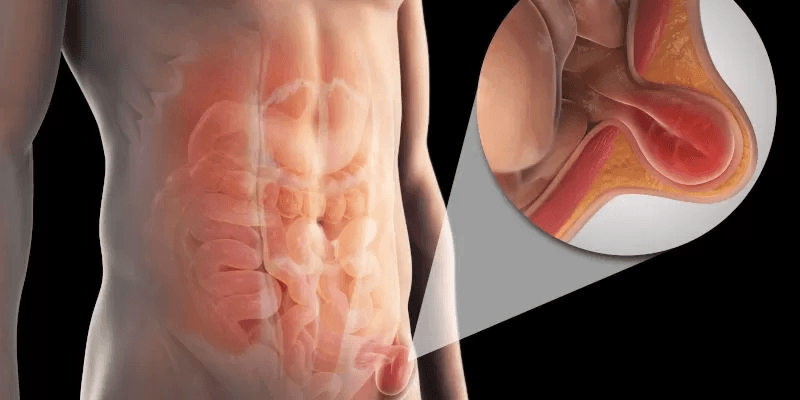
Causes Of Inguinal Hernia-
Factors Contributing to Hernia Development Increased abdominal pressure is the main driver behind hernia formation, influenced by several key factors:
1. Weak Abdominal Wall: A pre-existing weakness can easily lead to complications.
2. Physical Strain: Activities like heavy lifting or childbirth put significant stress on the abdomen.
3. Chronic Constipation: Ongoing straining in toilet, increases intra abdominal pressure aggravating hernia formation at weaker part of the abdominal wall.
4. Obesity: central or truncal obesity increases intra-abdominal pressure and risk.
5. COPD: Persistent coughing creates added abdominal strain.
6. Enlarged Prostate: Straining during urination increases abdominal pressure and can lead to hernia in men.
7. Medications: cancer patients with chemotherapy can weaken tissues.
8. Surgical Complications: Infections at the operation site can compromise abdominal integrity.
9. Repetitive Vomiting: Frequent episodes of vomiting increase intra-abdominal pressure and can generate excessive pressure.
10. Pregnancy: Carrying a child increases intra-abdominal pressure significantly.
Signs and Symptoms of Inguinal Hernia
– A noticeable bulge or protrusion in the abdominal wall or groin area that worsens during physical activity and softens or disappears when lying down.
– A dull ache or pain in the protruded area, which may intensify with physical activities.
– Symptoms such as vomiting and constipation can also occur in cases of obstructed hernia.
Progression of Inguinal Hernia Over Time:
An inguinal hernia typically worsens over time. Initially, the defect may be small, but as it enlarges, it becomes easier for the intestines to protrude, even without force. Consequently, a noticeable bulge appears when standing or walking but can retract when lying down. If the hernia is not surgically repaired, it can continue to enlarge, leading to the intestines remaining outside the abdominal wall at all times. In severe cases, the bulge may extend down to the bottom of the scrotum (the pouch that holds the testes). As the hernia increases in size, pain and discomfort often intensify.
However, it’s common for individuals with very large hernias to experience little or no discomfort. This is often due to their acceptance of the discomfort and the resulting restriction of activities, which can stem from a subconscious desire to postpone surgery as long as possible. It is essential to understand that surgical repair becomes technically more challenging, and the outcomes are generally less favourable when the hernia is significantly large. Therefore, unless the patient is a very elderly individual with a limited life expectancy, it is advisable to have the surgery sooner rather than later, ideally when the hernia is still small, to ensure the best possible results.
Types of Inguinal Hernia-
Direct Inguinal Hernia
Indirect Inguinal Hernia
Diagnosis
The primary method for diagnosing a hernia is through clinical examination. The bulge typically becomes more prominent when coughing. Approximately 90% of hernias can be diagnosed via physical examination.
Imaging Tests
Ultrasound, MRI, or CT scans can confirm the size of the hernia defect and any hidden hernia and help determine the nature of its contents.
Treatment of Inguinal Hernia
All hernias should be repaired; however, if the hernia is small and asymptomatic, it may sometimes be monitored instead of immediately treated. Nonetheless, it is always a good idea to consult an expert hernia surgeon if you have been diagnosed with an inguinal hernia. A hernia surgeon can examine and determine the specific characteristics of the hernia that may put you at a higher risk of developing complications, such as incarceration or strangulation.
There is no medical management available for hernias; once a defect occurs, surgery is the only effective treatment option.
Delaying inguinal hernia surgery can lead to an increase in the size of the defect. A laparoscopic hernia repair of an inguinal hernia can cure and also prevent future complications like incarceration or strangulation.
In some cases, delaying hernia surgery can become life-threatening and may necessitate emergency surgery, particularly in cases of strangulated inguinal hernias.
Types of Inguinal Hernia surgery-
Open Inguinal Hernia surgery
Laparoscopic Inguinal Hernia Surgery
Open inguinal hernia repair-
Open surgery is the conventional approach involving an incision of approximately 8-10 centimetres in the groin area. When performed expertly, it yields highly favourable outcomes. This procedure can be conducted under general, spinal, or local anaesthesia. Open inguinal hernia repair is a common practice among surgeons, known for its safety and accessibility.
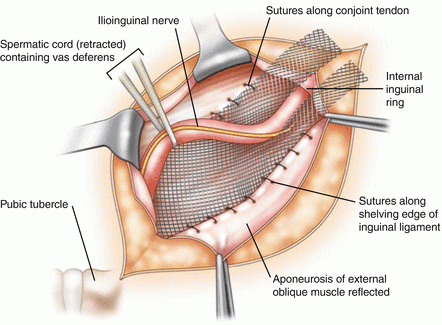
Let’s briefly explore some of the pros and cons of this surgical method.
Advantages:
– The option of performing the surgery under regional or local anaesthesia minimizes the risks associated with general anaesthesia, making it a safer choice for certain patients. For those at high risk, such as individuals who have undergone cardiac bypass surgery or organ transplants, local anaesthesia is often preferred.
– It is generally considered technically simpler, especially when addressing larger hernias.
Disadvantages:
– The likelihood of experiencing long-term pain following surgery is higher in open procedures compared to laparoscopic techniques.
– There tends to be an increased risk of wound-related complications relative to laparoscopic surgery.
– Recovery to a completely pain-free state generally takes a longer duration.
– In cases where hernias are present on both sides, incisions of 8-10 centimetres on each side are required, resulting in greater discomfort and a more protracted recovery period when both surgeries are performed simultaneously.
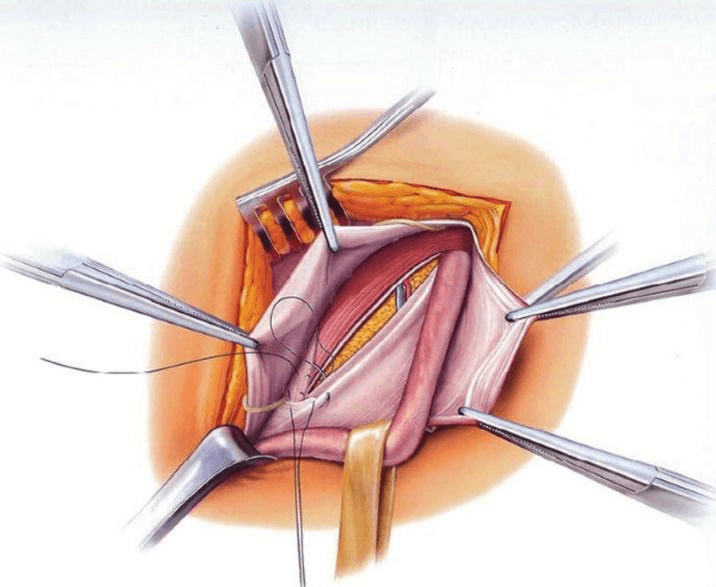
laparoscopic inguinal hernia repair-
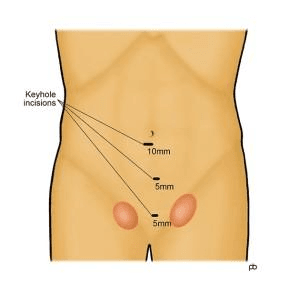
Laparoscopic Inguinal Hernia surgery is done through tiny keyhole incisions. Usually, there are three in number, one of which is 1 cm and the other 0.5 cm in size. The surgery is technically very demanding. Patient recovery is speedy and smooth. Because of technical difficulty laparoscopic surgery is not as widely available as open surgery.
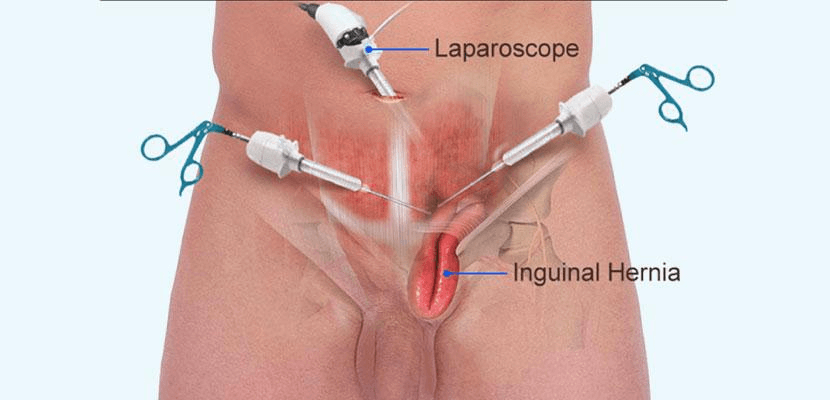
It is superior to open surgery in terms of strength of the repair and post-surgery pain-free activity. However, proper surgical expertise and skills are needed, or it may lead to poorer outcomes. One should get operated on by an expert laparoscopic hernia surgeon for better results.
Advantages
– Quick return to everyday activities: Many patients are often discharged on the same day of the procedure, can return to work within a couple of days, resume sexual activity shortly after, and typically regain complete normalcy, including returning to sports, within a couple of weeks.
– The procedure is performed through just three incisions, allowing treatment of both sides simultaneously.
– Performing both sides simultaneously does not lead to increased pain or a more extended recovery period.
– A larger mesh is utilized, providing broader support for the muscle defect, which enhances the strength of the repair.
Disadvantages
– General anaesthesia is required; the procedure cannot be performed under local anaesthesia.
– It can be technically challenging for very large hernias and should only be attempted by surgeons with exceptional skills.
– This procedure cannot be performed in emergencies, such as bowel obstructions.
Factors that are important to decide: Which type of Inguinal hernia surgery
When making decisions about the type of surgery for an inguinal hernia, several key factors come into play that can impact the choice between laparoscopic and open surgery.
Patient-Related Considerations
Individual patient characteristics can significantly influence the surgical approach. While laparoscopic surgery is often seen as the superior method for hernia repair, its benefits may not outweigh the risks associated with general anaesthesia for certain patients. For instance, open surgery may be a safer option for older individuals (typically over 70-75 years) or those with overall health issues.
Factors related to the patient’s health include:
– Advanced age and weakened health status.
– Significant medical conditions, such as liver cirrhosis, renal failure, or notable cardiac disorders.
– History of previous abdominal surgeries, which might complicate laparoscopic techniques.
– The patient’s personal preferences regarding anaesthesia type—whether they wish to avoid local or general anaesthesia.
Hernia Characteristics
Apart from patient-related factors, various hernia characteristics also play a crucial role in determining the appropriate surgical method. Some factors favour open surgery, while others lend themselves to laparoscopic repair.
Considerations include:
– The presence of hernias on one versus both sides; laparoscopic surgery tends to be more advantageous for bilateral hernias.
– The size of the hernia—larger hernias might necessitate open surgery based on size and the surgeon’s expertise.
– For recurrent hernias, the approach may depend on the type of the previous surgery; laparoscopic repair is often favoured if the first operation was open, whereas if it was performed laparoscopically, open surgery might be deemed technically more straightforward and safer.
In summary
Laparoscopic inguinal hernia surgery is undoubtedly a better option compared to open surgery. It has clear advantages in less pain, faster recovery and early return to normal activities. This advantage is more significant in younger patients and when the hernia is on both sides.
A small subset of patients may be more suited for open surgery. These include patients having high-risk factors for general anaesthesia like major heart, lung, liver or kidney problems. Open surgery under local anaesthesia is much safer for all such patients. Also, those having a huge hernia and a recurrent hernia after a previous laparoscopic surgery may be more suited for open surgery.