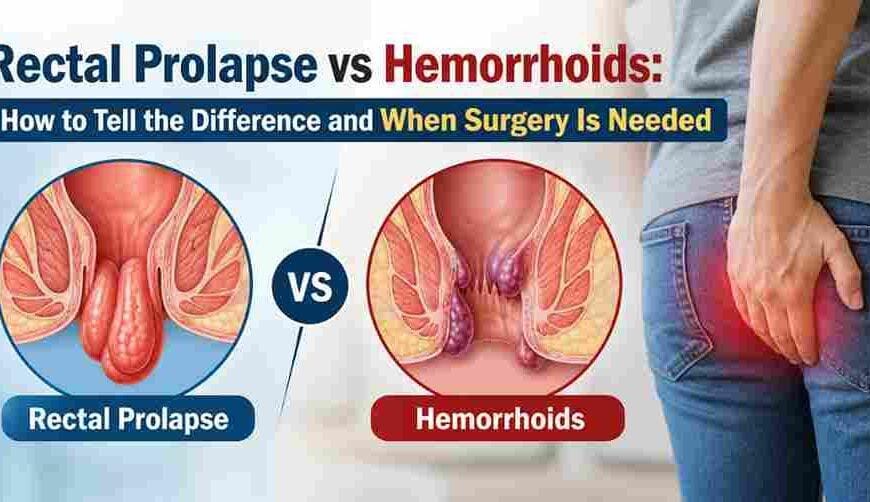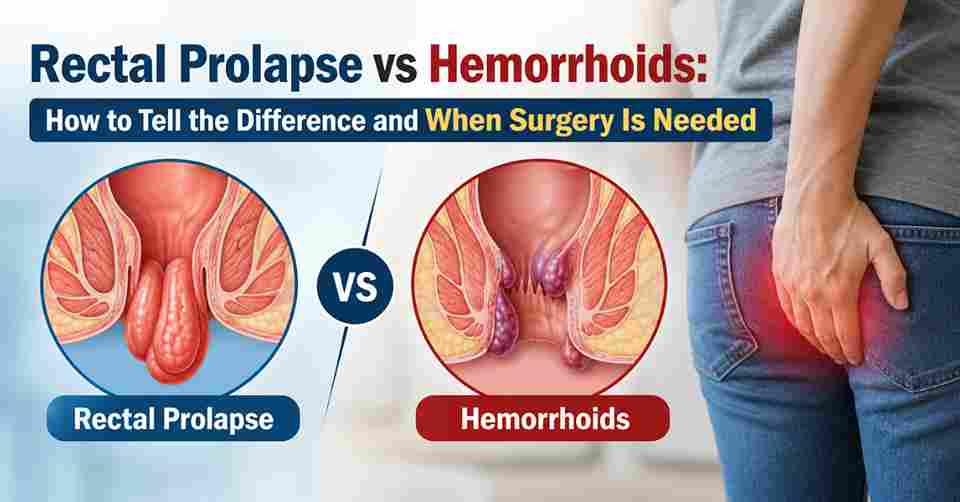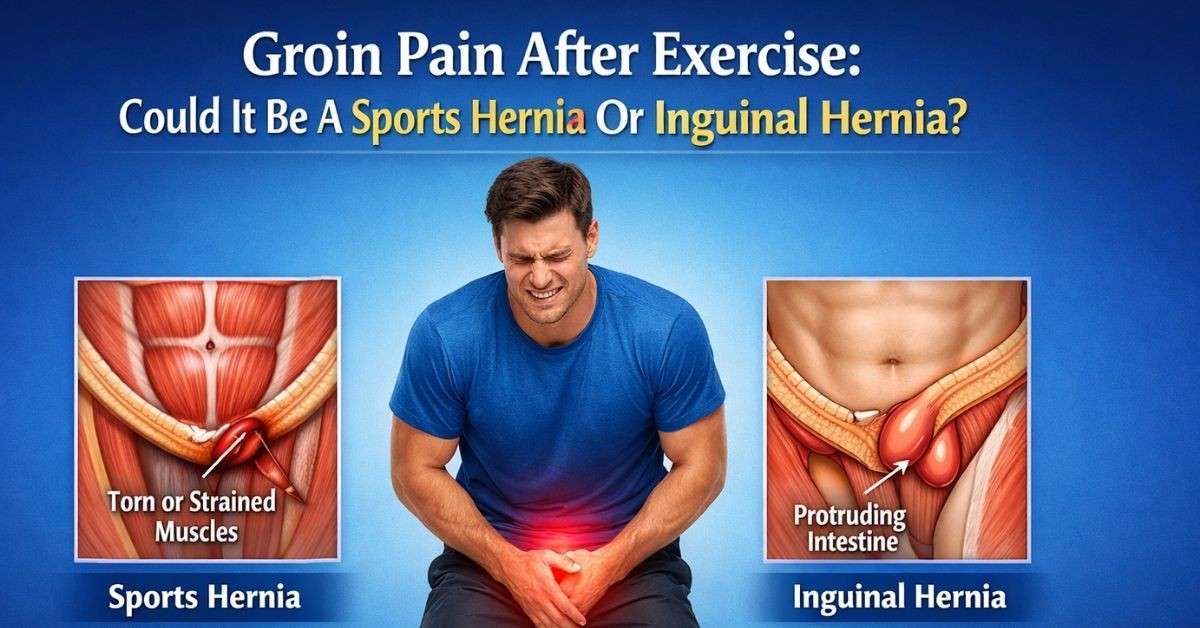
Groin pain, sports hernia vs inguinal hernia comes down to how your groin injury starts, what tissues get hurt, and how your symptoms behave with sport and daily life.
You can experience sharp pain with sprinting, twisting, or kicking, or a deep ache that occurs even with walking or standing.
You want clear signs, easy tests, and smart next steps, which the rest of this guide walks you through.
Key Takeaways
- Both a sports hernia and an inguinal hernia can cause groin pain. A sports hernia typically entails soft tissue damage without a lump, whereas an inguinal hernia will commonly present with a visible or palpable bulge. If you experience a new groin bulge or persistent groin pain, get evaluated rather than self-diagnosing.
- You’re more prone to encounter a sports hernia from sudden twisting, sprinting or kicking motions and an inguinal hernia from prolonged strain like heavy lifting, persistent coughing, or overall abdominal wall frailty. You can reduce your risk by controlling training loads, using proper lifting techniques, and addressing chronic cough or constipation early.
- You want to listen to how your pain feels and when it occurs because sharp pain with activity is indicative of a sports hernia. A dull ache associated with heaviness and the presence of a lump is more suggestive of an inguinal hernia. Ongoing or intensifying groin pain, particularly with athletic activity, warrants a visit to the physician even if you don’t notice a protrusion.
- You can expect your doctor to use a thorough physical exam and imaging tests like an ultrasound or an MRI to distinguish a sports hernia from an inguinal hernia and other groin injuries. You can prepare by noting when your pain started, what movements exacerbate it, and if you’ve noticed any groin changes.
- You typically begin with conservative treatment, which includes rest, ice, anti-inflammatory medicines, and guided physical therapy emphasizing core strength and flexibility, especially for a sports hernia or muscle strain. You need to know that a diagnosed inguinal hernia or pain that isn’t getting better may require surgery to mend the defect and avoid complications.
- You can return to your regular activities more safely and reduce the risk of recurrence by following a stepwise rehabilitation plan that restores strength, flexibility, and sport-specific skills, and by continuing core training and warm-up routines even after you feel better. You help avoid future problems by nipping training-intensity spikes in the bud and by consulting a doctor early if you experience new groin discomfort.
Sports Hernia Vs Inguinal Hernia
Sports hernias and inguinal hernias both cause athlete’s groin pain, but they require different treatment plans if you want a definitive sports hernia diagnosis and a stable, long-term fix.
1. The Anatomy
Your groin is a bustling intersection with abdominal wall muscles, tendons and ligaments, nerves and blood vessels all converging around the pubic bone. The inguinal canal passes through this region and acts like a small tunnel in the lower abdomen.
A sports hernia (commonly referred to as athletic pubalgia) refers to an injury to soft tissues around the pubic bone, typically the lower abdominal muscles and the tendons that connect your inner-thigh muscles to the pelvis. The tissue is torn or strained, but there is no real “hole” for organs to push through.
An inguinal hernia occurs when there is a weakness or tear in the inguinal wall such that abdominal contents push toward or through the inguinal canal. In males, this canal transports the spermatic cord; in females, the round ligament that supports the uterus.
In both conditions, nearby nerves and small blood vessels can get irritated or pinched, which contributes to burning, sharp, or aching pain and can restrict how well you flow, cut, sprint, or even walk.
2. The Cause
You typically encounter sports hernias in athletes who cut, twist, or sprint aggressively, such as football, hockey, tennis, or soccer players. The core and groin muscles pull against each other at high speed, so the muscle tendon units near the pubic bone snap under strain.
One bad pivot, slide, or kick can start the injury, and repeated strain keeps it alive.
Inguinal hernias tend to build over time. They connect more to increased pressure in your abdomen and a weak spot in the abdominal wall. Heavy lifting at work or in the gym, a chronic cough, long-term constipation with straining, or even pregnancy can push that weak area over the edge.
For sports hernia, the headline is acute overload of strong but stressed tissue. For inguinal hernia, the narrative is grunt wear and tear or a normal weak spot that eventually succumbs.
Risk increases for both if you play change-of-direction sports, have a history of old groin or core injuries, rush your rehab, smoke, or have immediate family members with hernias. Genetics can influence the robustness of your connective tissue.
3. The Symptoms
A sports hernia typically causes sharp, unilateral athlete groin pain that strikes when you sprint, twist, kick, or sit up from lying down. You will experience tenderness directly over the pubic bone or the junction of the inner thigh muscles and lower abdomen. Rest can mitigate it, but it typically resurfaces as soon as you return to full exertion in your sports activities.
With inguinal hernia, you’ll be more prone to experiencing a dull ache, heaviness, or burning in the groin area. Coughing, sneezing, lifting, or straining on the toilet can aggravate the condition and lead to severe groin pain.
The classic sign is a lump or bulge in the groin or scrotum that you can sometimes see or feel. This lump may become larger when you stand or strain and smaller when you lie down, often leading to a definitive sports hernia diagnosis.
Both conditions can develop into chronic athlete groin pain that restricts sport, work, and day-to-day activities. The main distinction is that inguinal hernias typically present with a discernible lump, whereas the hallmark of a sports hernia is pain without a bulge.
One in three men and around one in ten women will develop an inguinal hernia at some point, so it’s very common. It can be easily confused for a sports-type problem if you only look at pain location, emphasizing the importance of the right diagnosis for effective treatment.
Understanding the differences between these conditions is crucial for athletes, as it helps in preventing further injuries and ensures proper recovery through targeted sports hernia therapy.
4. The Bulge
A visible or clearly palpable bulge is a hallmark sign of an inguinal hernia and is not expected with a sports hernia. The bulge is from abdominal contents, typically fat or a bowel loop, pushing through that weak inguinal wall and into or toward the canal.
This is why the lump typically presents when you stand, strain, or cough and then appears to diminish when you lie down and relax the abdominal muscles.
With a sports hernia, the torn tissue is in the abdominal wall and around the pubic bone, so you may feel some local swelling or thickening, but there is no true “outpouching” and no organ slipping through a defect.
A Clear Comparison Helps You Sort This Out:
| Feature | Sports hernia | Inguinal hernia |
| Visible/palpable bulge | No true hernia bulge | Common, often obvious on standing or straining |
| What creates the bulge | Soft‑tissue strain, no organ protrusion | Abdominal contents push through the weak inguinal wall |
| Pain pattern | Sharp, one‑sided, activity‑linked | Dull ache or burning, heaviness, worse with strain |
| Typical exam finding | Tenderness near the pubic bone only | A lump you can see or feel in the groin or scrotum |
Unpacking The Groin Pain
Groin pain is a symptom, not a diagnosis. You have to know what structure hurts—muscle, tendon, ligament, nerve, or a true hernia in the abdominal wall—because treatment and timelines are very different.
Common Sources Of Groin Pain Include:
- Muscle strain (especially adductor longus and other inner‑thigh muscles)
- Tendon or ligament injury around the pubic bone
- Nerve irritation from repeated twisting or cutting
- Sports hernia (core muscle injury)
- Inguinal hernia (true defect in the abdominal wall)
Any abrupt twist, cut or change of direction can overstretch or tear groin muscles or tendons, and thus you feel a sharp pull at the upper inner thigh or near the pubic bone. Other times, you just feel a slow, dull ache, a sense of burning, or heaviness in your groin when you stand or walk a lot.
In older patients, an actual hernia is a very common cause of this type of pain, so persistent symptoms require medical evaluation, not speculation. Getting the diagnosis right matters, as many muscle and tendon based problems do get better after 4 to 6 weeks of focused physical therapy, whereas a real hernia often requires surgery.
The vast majority of athletes return to sport 6 to 12 weeks post surgical repair, and contemporary mesh repairs maintain hernia recurrence at 1 to 3 percent versus approximately 5 to 8 percent without mesh.
Sports Hernia Pain
With a sports hernia, or as it’s now commonly referred to, a core muscle injury, you generally experience sharp, burning, or stabbing pain deep in the lower abdomen or groin when you sprint, kick, or twist hard. Quick cuts, a heavy football shot or a serve in tennis tend to induce that first genuine “grab” of pain.
The pain can radiate into your inner thigh, lower abdomen, or in males, towards the testicular region, which makes it so commonly confused with an inguinal hernia. You’d swear that slow jogging or everyday walking feels alright, but any explosive move, such as acceleration, change of direction, or hard cough, fires the region back up.
Rest usually does the trick initially. You can take a week or two off and feel near normal, only to have that same pain return the instant you push off, pivot, or load up your core at full velocity. This ‘fine at rest, terrible with sport’ is a classic pattern.
That’s why chronic groin pain is so common in high-level athletes in sports with constant cutting and kicking, and why a clear exam plus imaging is important before you commit to more rest or to surgery.
Inguinal Hernia Pain
Inguinal hernia pain feels different. You feel a dull ache or pressure or heaviness on one side of your groin, often with a soft lump that appears when you stand, strain, or cough. That bulge is coming from an organ or fatty tissue protruding through an opening or weakened area in the abdominal wall.
The pain tends to intensify with prolonged standing, lifting, coughing, or straining on the toilet and frequently improves when you lay down and the lump slips back in. Pain can radiate into the scrotum in men or into the upper thigh or lower abdomen in both sexes, which can muddy the waters if you have tight adductors or hip problems.
One important red flag is sudden, severe pain in the groin or lower belly with a firm, tender lump that won’t go back in, particularly if this is accompanied by nausea, vomiting, or bloating. Those can indicate an incarcerated or strangulated hernia, where tissue is trapped and losing its blood supply. That is a surgical emergency, not something you watch at home.
How Doctors Diagnose Groin Pain
Doctors sort out groin pain by putting the pieces together: your story, a hands-on exam, and imaging when needed. The objective is to distinguish muscle strain, sports hernia, and inguinal hernia since each requires a different strategy.
Anticipate your doctor inquiring about when the pain began, what activities you were engaged in, and how the discomfort varies throughout the day. Aching pain that’s worse in the morning and evening, or pain that intensifies as the day progresses, could indicate overuse or a sports hernia. Sharp pain following a sudden twist, sprint, or change of direction usually makes for a straightforward diagnosis of a groin strain.
In older adults, physicians remain vigilant for inguinal hernias, as these are more common with age and can cause severe pain, nausea, or vomiting. History and exam direct what comes next, but imaging often fills in the blanks. Ultrasound and MRI assist in cementing the diagnosis, eliminating other causes like hip joint problems and planning treatment, from physical therapy and cortisone shots to, if necessary, minimally invasive surgery like adductor tendon release.
Physical Examination
On exam, your doctor looks first, then glides. They inspect for any outward bulge in the groin, swelling, skin changes, or asymmetrical muscle contour. They palpate along the groin, pubic bone, and inner thigh to locate the precise tender area and palpate for a traditional hernia bulge.
They might have you cough, bear down or stand and lift one leg. These moves can bring out an inguinal hernia that remains hidden when you lie still. For suspected sports hernia, your doctor might test resisted sit-ups, side planks, or squeezing a ball between your knees as these load the core and adductor tendons.
Sports hernias frequently present with no bulge whatsoever, so a cursory glance is insufficient. Your doc compares both sides of your groin, tests strength and flexibility, and observes your movement. This side-to-side comparison helps catch the subtle yet critical imbalance that indicates athletic pubalgia rather than a standard strain.
Imaging Tests
When the picture remains unclear, imaging intervenes. Doctors usually begin with ultrasound because it’s fast, safe, and can be performed while you move or cough. In young athletes, ultrasound is commonly employed to search for sports hernias, small inguinal hernias, fluid around tendons, or soft tissue tears in real time.
MRI adds more detail when symptoms are stubborn, the diagnosis is mixed or surgery is on the table. It provides crisp images of muscles, tendons, ligaments and bone surrounding the pubic area, which can help make or exclude a diagnosis of athletic pubalgia and other deep injuries.
Your doctor will consider your history, exam, and imaging collectively to tailor a plan, often beginning with physical therapy, sometimes including cortisone injections, and if necessary, progressing to targeted procedures such as adductor tendon release via needle.
| Feature / Use | Ultrasound | MRI |
| Main role | First-line for bulges, real-time assessment | Detailed mapping of soft tissues and bone |
| Hernia detection | Shows an inguinal hernia bulge with strain/cough | Confirms complex or unclear hernias |
| Sports hernia / athletic pubalgia | May show tendon strain, fluid, and small tears | Best for seeing muscle, tendon, and pubic bone changes |
| During exam | Dynamic; done while you move | Static; done lying still in the scanner |
The Misdiagnosis Minefield
Groin pain is a symptom, not a diagnosis. The crossover between sports hernias, inguinal hernias, and garden variety strains can lead to mislabeling something and treating it incorrectly. When that occurs, your pain tends to linger or intensify, despite rest, ice, or simple rehab.
Because groin pain may arise from muscle, tendon, joint, or nerve issues, you’ve got to have every potential etiology on the table, including core muscle injuries and nerve entrapment, not just ‘a pulled groin’ or ‘just a small hernia.’
Common Misdiagnoses And How They Differ:
- Adductor strain results in inner thigh pain that worsens with side movement and there is no true hernia bulge.
- Hip labral tear causes deep groin pain and catching or clicking in the hip joint.
- Inguinal hernia: groin bulge, pain with cough or strain, canal defect.
- Sports hernia (athletic pubalgia) — sharp pain with cutting, twisting, sprinting and no apparent bulge.
- Nerve entrapment causes burning or electric pain and is frequently accompanied by numb patches.
- Osteitis pubis is characterized by pain right at the pubic bone, often midline and aching.
A thorough physical exam is typically the initial step. For most, conservative care — rest, guided rehab, and activity changes — works fine. However, if you treat a sports hernia like a simple strain or a real inguinal hernia like a muscle pull, you end up chasing your tail and losing time.
Seniors are in greater peril here, as they tend to minimize symptoms, live with a little lump, and wind up with an “undiagnosed” hernia that only presents itself when pain is persistent. Hernia repair is so common, roughly 800,000 surgeries annually in the U.S., that nailing the type makes a difference for you.
Overlapping Symptoms
Both sports and groin injuries can deliver you sharp or dull groin pain, a sense of weakness, and a sensation that cutting, sprinting, or even standing up from a chair requires additional force. You could feel worse when you cough, sneeze, lift something heavy, or move from lying to standing, which complicates day-to-day life and sports activities.
Swelling, local tenderness and pain with hip flexion or twisting are common to all. That’s why groin strains and hernias often appear identical at a cursory level and why so many individuals get the ‘you just pulled a muscle’ diagnosis when it’s more insidious.
In hard twist and cut sports like football or ice hockey, a sports hernia can strike without any single dramatic incident. While the presence of bulges is an important piece of information, it is not definitive. Inguinal hernias often present with a soft lump that can enlarge when you bear down, but smaller hernias can be difficult to visualize in patients with more abdominal fat.
Typically, a sports hernia has no visible bulge. There are athletes with mild, reducible bulges and a core muscle injury, indicating that it’s not always a clear-cut diagnosis. A basic symptom overlap chart can assist you and your clinician in sorting through patterns quickly: columns for “bulge,” “pain with cough,” “pain with twisting,” and “nerve-like burning,” then rows for sports hernia, inguinal hernia, muscle strain, and hip joint problems.
This straightforward map can help prevent you from pursuing the wrong diagnosis for months, ensuring you receive the right diagnosis and appropriate treatment for your condition.
The Core Muscle Connection
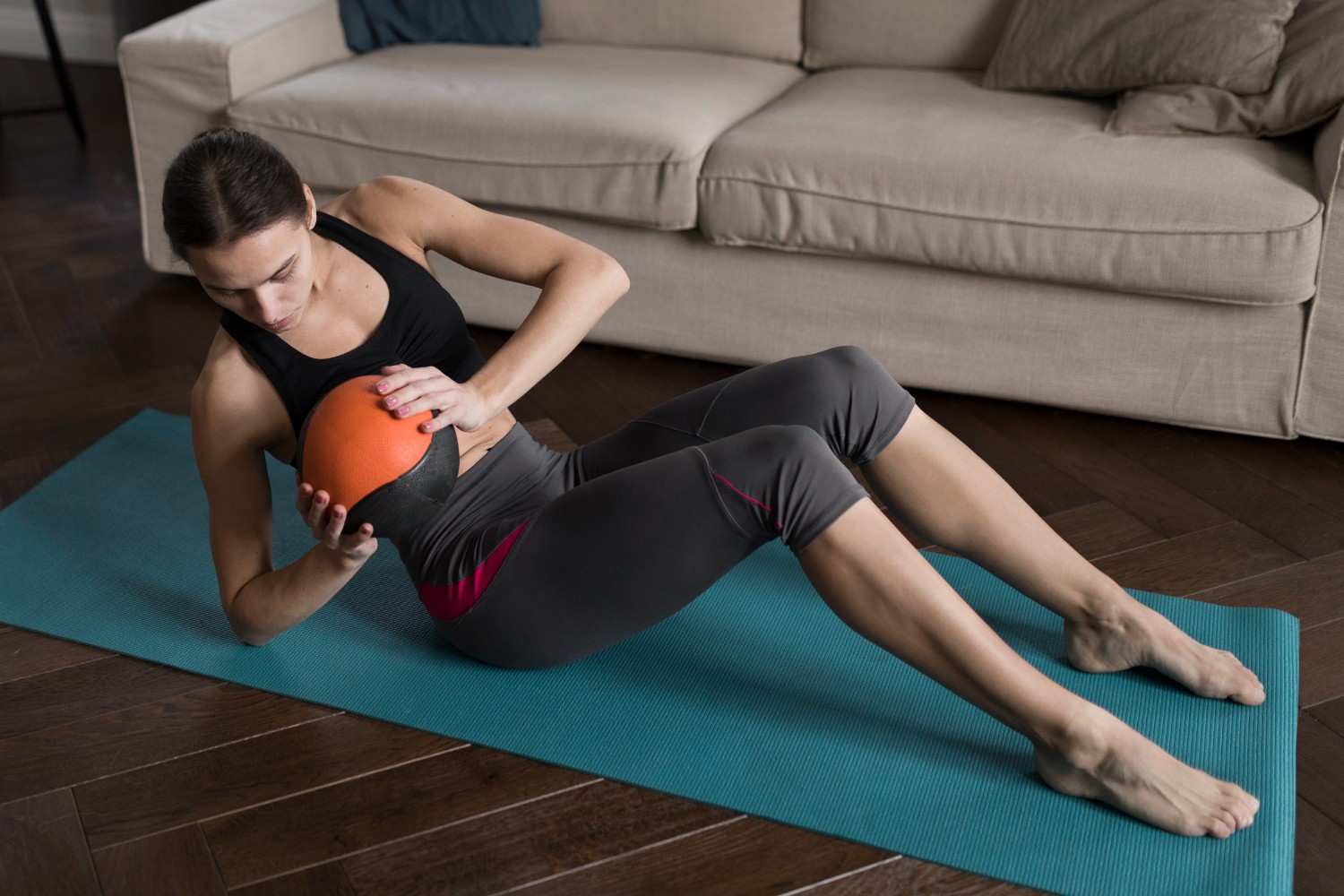
It’s primarily a core muscle injury, where the lower abdominal wall, tendons, and nearby ligaments connect to the pubic bone. No longer a hole in your tissue, you now have tears or fraying in the connective structures that anchor your core to your pelvis. This is why twisting, cutting, and sprinting hurt so much, and straight-line walking can feel nearly normal initially.
An inguinal hernia is another story. It’s due to a defect or weak spot in the inguinal canal in your lower abdomen, where tissue or part of the intestine can protrude. You might have no muscle tear whatsoever, but the visible bulge and pressure cause pain and that pulling sensation, often leading to severe groin pain.
Misdiagnosis can be a minefield for athletes. If your deep core and hip stabilizers fatigue quickly, the groin area and abdominal attachments assume additional load every time you pivot or kick. Over time, that can stress the inguinal region or lead to micro-tears that develop into sports hernia symptoms.
In countless athletes with chronic athlete groin pain, imaging demonstrates a collision of core muscle injury and a diminutive hernia, sitting right next to one another. Good core strength and flexibility provide you with a cushion against these injuries.
When you train the deep abdominals, hip flexors, and glutes while maintaining your hip and hamstring range of motion at a respectable level, you distribute forces across more tissue instead of dumping them into one sore location. This is where smart rehab shines, as conservative work on core control can often reduce symptoms and help you avoid or postpone surgical sports hernia treatment.
Why A Specialist Matters
When groin pain will not settle, an orthopedic specialist, a sports medicine specialist, or a general surgeon with a focus on hernias usually interprets the image better than a generalist. They have seen patterns from hundreds of cases just like yours, know how sports hernias actually present in real athletes, and can weave your story, exam, and imaging into a single plan instead of a laundry list of guesses.
GPs do important first line care, but they’ll miss subtle clues of sports hernia or misinterpret scans that appear “normal” on the surface. Sports hernias do not appear on normal ultrasound or even standard MRI unless proper protocol is followed.
Small inguinal hernias can be missed if you are not specifically looking for them during a standing and straining exam. An expert opinion provides a guidance plan that could mean high-level rehab and load modifications when your issue is primarily muscular or approaching hernia surgery more quickly when you have an obvious defect that isn’t going to heal.
Good specialists have a tendency to identify add-ons such as nerve entrapment, hip joint problems, or pelvic floor issues that mimic hernia pain. This way, you’re not trapped in a loop of repeating the same treatment that never actually succeeds.
The specialist key benefit for you, though, is more accurate diagnosis with a full physical exam and imaging tailored to groin problems. You’ll receive earlier separation of muscle strain versus true hernia, a realistic talk about options like conservative care versus surgery, and a rehab plan that gets you back to daily life or sport with less trial and error.
For the tricky cases, this type of targeted assistance is frequently what interrupts a years-long pattern of rest, relapse, and additional bewilderment.
Charting Your Treatment Course
Your treatment options depend on the kind of hernia you have, the severity of pain and what you want to return to — elite sport or easy day-to-day activity. Your physician will first question how the pain began, what activities trigger it, and whether you observe a protrusion. Then, they will tailor a treatment plan to your objectives and timeline for resuming play or work.
You can sketch a simple pathway diagram for yourself: “suspected sports hernia versus inguinal hernia leads to mild versus severe leads to try conservative care leads to reassess leads to consider surgery,” so you see each step before you take it.
Non-Surgical Options
For a mild sports hernia or groin strain, first-line care is simple: In the first 7 to 10 days, rest, ice, and anti-inflammatory drugs like ibuprofen help calm pain and swelling while you avoid cutting, sprinting, and heavy lifts.
If symptoms abate, you’ll generally begin physical therapy by the two-week point, emphasizing light range of motion and then core and hip strength as pain permits. Yours might start with planks, side planks, adductor squeezes, and hip rotations, with gradual advancement from simple drills to sport-specific moves.
After 4 to 6 weeks of consistent therapy, most patients experience their pain subside and resume sport, first with low-intensity training, then full play if asymptomatic. A belt or abdominal binder might provide temporary support in an inguinal hernia, such as while you’re waiting for operative repair or if you are inoperable, but it does not repair the defect.
If pain remains elevated, a bulge expands, or you continue requiring pain pills to get around, your care team will typically move the course toward surgical repair instead of pushing conservative care for months.
Surgical Intervention
Surgery enters the picture when you’ve actually got an inguinal hernia with a distinct bulge, or pain not settling with good rehab, or red-flag risks like bowel obstruction or strangulation. Then, sometimes, waiting can be more dangerous than an early repair.
Inguinal hernia surgery closes the gap in the abdominal wall, typically with mesh to reinforce weak tissue. Mesh repair recurs in approximately 1 to 3 percent of cases, compared with 5 to 8 percent if mesh is not used. This is why it is commonly selected for adults seeking a long-lasting solution and reduced likelihood of further surgery.
Sports hernia repair is different. The surgeon reinforces or reattaches weakened tendons or ligaments in the lower abdomen or groin, often using small cuts or an endoscope, aiming to balance stability with the flexibility you need for cutting moves, pivots, or kicks.
Recovery from either surgery typically requires only a few days to two weeks for basic daily activities. Return to full sport is much more gradual and intentional.
While most athletes can gradually back into sport between 6 and 12 weeks post-op with a rehab schedule that redevelops core strength, hip control, and confidence in high speed moves. When you pair an actual trial of non-surgical care with surgery when necessary, more than 90% of patients return to sports. This is why so many treatment algorithms are structured as “rehab first, then selective surgery” not “surgery only.
Recovery And Future Prevention
Recovery after a sports hernia (athletic pubalgia) or inguinal hernia varies depending on the severity of your injury and the treatment you select, including possible sports hernia surgery. You can follow the timelines below as rough guidelines, but your own body and care team should take the lead in managing athlete groin pain.
The Rehabilitation Journey
During the initial 7 to 10 days, you work on rest, ice, and pain management. You reduce or cease sport, steer clear of heavy lifting, and use short, gentle walks to promote circulation.
After inguinal hernia surgery, the majority of everyday activities will feel better within a few days to 2 weeks, but you’re still steering clear of any strain on your core.
Next, gentle movement and simple strength. For most, four to six weeks of concentrated physical therapy is enough to quiet pain and return basic function. You do low-load core work, hip mobility, light stretching, and occasional yoga, all of which can assist with both recovery and future prevention of groin stress.
Then you move into progressive strengthening: deeper core and pelvic muscles, glutes, and adductors. Your therapist might supplement with planks, resisted side steps, and controlled twisting drills. For a sports hernia, this phase is critical because weak or unbalanced core muscles frequently lay the groundwork for the initial issue.
Sport-specific work and return to play generally begin once you’re able to jog, cut, and twist without pain or apprehension. Most athletes return to sport 6 to 12 weeks after surgery, and more than 90% who undergo nonsurgical care and then eventually surgery do return to sport.
You’re not considered cleared until you pass strength and movement tests, have no sharp pain, and have no new swelling or bruising. Be alert for red flags like pain that increases with lighter loads, numbness, or bulges and tell us about them early.
Reducing Future Risk
A long-term plan is important because hernias and groin strains can return. The recurrence rate is between 1 and 3 percent after mesh repair while with no mesh repair it is 5 to 8 percent.
You reduce your vulnerability when you maintain your deep core, hips, and adductors strong, stay limber, and warm up well before you request sprints, cuts, or kicks from your body. Simple strategies like a brief dynamic warm-up, along with consistent stretching or yoga on rest days, can offload your groin in the long term.
Avoid giant leaps in training load, such as doubling your weekly distance or throwing in hard drills after a vacation. Use incremental gains instead, with one major alteration at a time.
If your sport contains a lot of twisting, kicking or quick cuts, request a periodic check of your running gait, cutting form or swing mechanics, so minor problems do not accumulate into recurrent groin strain.
Quick Checklist: Recovery And Prevention
- First 7 to 10 days: Rest, ice, light walking, protect the groin.
- 2–6 weeks: Physical therapy, core and hip work, flexibility, yoga
- 6–12 weeks: Progress to sport drills when pain-free and strong.
- Long term: Warm up, avoid sudden load spikes, train core and hips.
- Look for a quick review if pain, bulge, or function deteriorates.
Conclusion
Groin pain can rock your day, your sport and your schedule. You see that sports hernia and an inguinal hernia aren’t the same thing. You know that guesswork can prolong suffering and postpone actual assistance.
True transformation begins with cold hard data and one sincere evaluation. A good doctor will examine your hip, core, and groin, interpret your scans, and explain to you obvious next steps. That route could foreshadow rehab, rest, or surgery, but you remain in the loop.
You don’t have to ‘tough it out’ groin pain. Apply what you’ve learned today, consult with an experienced sports or hernia specialist, and do what it takes to safeguard your body and your game.
FAQ
How can you tell if your groin pain is from a sports hernia or an inguinal hernia?
Sports hernia pain is typically sharp and deep, often aggravated by intense twisting movements, sprinting, or kicking. Inguinal hernia usually results in a noticeable bulge that may become more pronounced during physical activity, especially when you cough or lift. Only a sports medicine physician can provide the right diagnosis through a physical exam and imaging.
Can a sports hernia turn into an inguinal hernia?
Not the same issues, though they can happen together. A sports hernia involves soft tissue injuries and muscles, while a true inguinal hernia is a hole in the abdominal wall. Letting athlete groin pain go unchecked can allow both problems to worsen, so early evaluation and the right diagnosis are key.
When should you see a doctor for groin pain from sports or exercise?
Consult a sports medicine physician if athlete groin pain persists for more than 1 to 2 weeks, interferes with sports activities or daily routines, causes night pain, or shows symptoms like a noticeable bulge, numbness, or testicular pain. Seek urgent care for fever, severe swelling, or sudden intense pain.
What tests do doctors use to diagnose a sports hernia vs an inguinal hernia?
Physicians begin with a history and physical exam, often assessing for athlete groin pain. They can order ultrasound to check for an inguinal hernia and MRI for core muscle injuries, which aids in differentiating sports hernia symptoms from other causes of groin pain.
Do all sports hernias and inguinal hernias need surgery?
No. Many mild sports hernias, including those causing athlete groin pain, respond positively to rest, physical therapy, and a supervised return to sports activity. Small, asymptomatic inguinal hernias can often be observed, while sports hernia treatments may be suggested if pain persists.
How long is recovery after surgery for a sports hernia or inguinal hernia?
Recovery from groin injuries varies among individuals. Most athletes ambulate the same day and can return to light activity within one to two weeks. Full return to sports activities typically occurs in six to twelve weeks, with structured rehabilitation tailored to the athlete’s objectives.
How can you prevent groin pain and hernias in sports?
Strengthening your core and hip muscles is essential to prevent athlete groin pain; always stretch and warm up before training. Avoid rapid spikes in training volume, and utilize proper technique in your lifts and sports activities. If you experience early groin injuries, seek the right diagnosis immediately.