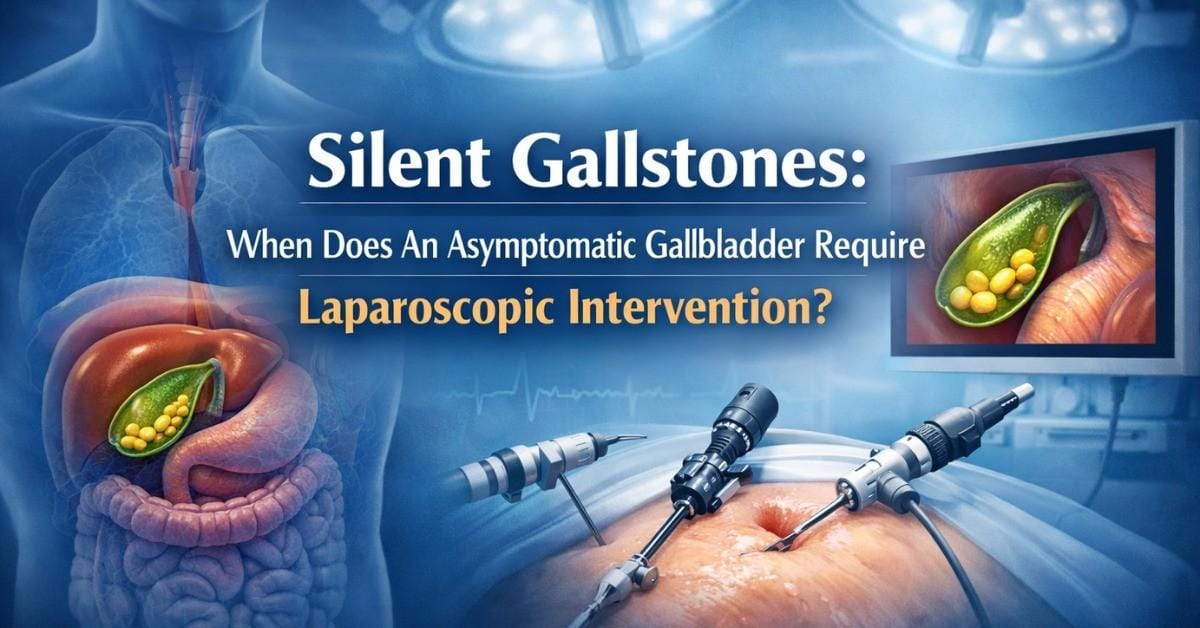
Treatment for asymptomatic gallstones typically implies no urgent operation, as the majority of you remain symptom-free for years. You can elect for watchful waiting with checkups and ultrasound as necessary.
You reduce your risk by maintaining a stable weight, eating more fiber, and exercising.
Surgery, specifically laparoscopic cholecystectomy, suits high-risk cases such as large stones larger than 2 cm, a calcified gallbladder, or if you have an impending major surgery.
When you consider risks and benefits, you want straightforward facts and next steps.
Key Takeaways
- You can safely treat most asymptomatic gallstones with watchful waiting since the annual risk of symptoms or complications is around 1 to 2 percent. Arrange regular follow-up and ultrasound, and educate about warning signs such as sudden right upper abdominal pain, fever, or jaundice.
- Differentiate symptoms that need treatment, as symptomatic gallstones usually require it. Silent stones do not. Report any biliary colic, nausea, or pain under your right ribs to your clinician immediately.
- You require prophylactic surgery if you are at high risk, including very large stones greater than 2 centimeters, porcelain gallbladder, gallbladder polyps, hemolytic disorders, or planned bariatric or organ transplant surgery. Talk about your personal risks, stone characteristics, and health status to direct the decision.
- You can consider three pathways: watchful waiting for most people, medical dissolution with ursodeoxycholic acid for select small non-calcified cholesterol stones, and laparoscopic cholecystectomy for symptoms or specific high-risk cases. Consider benefits, risks, and the probability of stone recurrence.
- You should consider costs, lifestyle, and access to care when deciding on surgery. Consider hospital fees, missed work, possible digestive changes, and the very low initial risk of complications with watchful waiting.
- You can do better than watchful waiting with a well-designed monitoring plan based on your risk. Maintain logs of preferences and worries to aid shared decision-making with your care team.

The Silent Stone Dilemma
Asymptomatic gallstone disease refers to stones in your gallbladder that don’t cause gallstone pain. Most carriers of asymptomatic gallstones will never need intervention, but a minority face risks for complications later. The real challenge lies in determining when to act versus watch, which starts with distinguishing silent gallbladder disease from symptomatic cholelithiasis to ensure your plan aligns with potential risks.
Symptomatic Vs Asymptomatic
Symptomatic gallstones cause clear problems: steady right upper abdomen pain (biliary colic), nausea or vomiting, pain after fatty meals, fever with tenderness, or jaundice in more serious cases. Asymptomatic stones do not produce any of these symptoms.
If you’re symptomatic, surgery is usually recommended. If you’re asymptomatic, most teams employ watchful waiting with warning sign education. This path is common because 94% of patients are asymptomatic at diagnosis, and only 10 to 25 percent will progress in 5 to 15 years.
Risk is not zero. Annual serious complications, like cholecystitis or pancreatitis, occur in about 1 to 2 percent. Lifetime conversion risk can differ by sex: about 6.15 percent for males and 22.1 percent for females.
Some features may tilt you toward surgery now: life expectancy over 20 years, stones larger than 3 cm, or a non-functioning gallbladder. Early cholecystectomy reduces later biliary colic, common duct stones, and total biliary events compared to conservative management.
The Discovery
You come across silent stones incidentally on an abdominal ultrasound performed for heartburn, liver studies, or a health screen. Most discover them incidentally on pre-op workups for other abdominal surgery.
Ultrasound is first-line to confirm diagnosis. CT or magnetic resonance cholangiography can assist if the ducts require a closer inspection or if the ultrasound window is restricted.
Most individuals feel okay when it’s found. Yet the odds of biliary colic rise over time, about 11.9% at two years and 25.8% at ten years.
Prevalence differs by region, with a 122-fold gap observed between Uganda (21.92%) and Australia (0.18%), displaying wide geographic variation to consider in population risk.
When To Consider Treatment For Asymptomatic Gallstones
Most gallstones, including asymptomatic gallstone disease, are discovered incidentally on imaging and remain asymptomatic. Your baseline risk of symptoms or complications is low, somewhere around 10 to 25 percent over 5 to 15 years. Specifically, around 25 percent develop symptoms within 10 years, and around 20 percent experience clinically significant events. Don’t perform routine cholecystectomy for all, but rather balance your risk profile, stone characteristics, and preferences.
1. High-Risk Groups
You may be a candidate for prophylactic cholecystectomy if you have sickle cell disease or other hemolytic syndromes, a porcelain gallbladder, are a liver transplant candidate, or will undergo bariatric surgery. Individuals with large stones greater than 2 cm, gallbladder polyps, particularly those measuring 10 mm or more, or a family history of gallbladder cancer are at increased risk.
Certain areas with high rates of gallbladder carcinoma might prefer earlier surgery. It’s tailored, not canned, medicine that fits your situation and objectives.
2. Stone Characteristics
Stone size, number, and type (cholesterol, pigment, mixed) influence risk. Large or multiple stones increase the risk of symptoms or cancer relative to a single small stone. Stones in the common bile duct (choledocholithiasis) require urgent removal with endoscopic treatment, usually with subsequent cholecystectomy to prevent recurrence.
If you have proven cholesterol stones, ursodeoxycholic acid can be used to dissolve some, but there is a tendency to relapse.
Risk Guide By Features:
- Large Size (>2 cm): higher cancer and symptom risk
- Multiple Stones: higher symptom risk than a single stone
- Pigment Stones: linked to hemolysis, infection, and ducts
- Duct Stones: urgent management required
3. Patient Preference
You may opt for surgery in order to prevent future attacks, missed work, or travel dangers. A frank discussion of risks, benefits, and alternatives underpins shared decision making. Your work requirements, caretaking obligations, and availability of emergency care are important.
Record your preferences on the chart.
4. Coexisting Conditions
Cirrhosis (particularly Child–Pugh B/C), diabetes, and immunosuppression can increase complication risk and influence timing. Polyps or cancer suspected shift toward surgery. Chronic hemolysis and previous abdominal surgery require customized planning.
Bring your conditions and medicines listed during consults.
5. Prophylactic Surgery
That translates into prophylactic cholecystectomy for vulnerable, silent stones. It is not typical for most people with asymptomatic stones. The adult prevalence is 10 to 15 percent in the US, and long-term studies, including Gracie and Ransohoff’s cohort, demonstrate low progression.
Examples include porcelain gallbladder, organ transplant in the future, some hemolytic states, and large polyps. Weigh operative risk against your ASGE risk tier, which is low if less than 10 percent, intermediate if between 10 and 50 percent, and high if greater than 50 percent.

Navigating Your Treatment Options
Your choices come down to three routes. The decision is contingent on your risk, stone composition, and size, particularly in cases of asymptomatic gallstone disease, and what you prioritize. Asymptomatic gallstone patients generally do well with observation.
- Watchful waiting involves monitoring with planned follow-up and acting only if symptoms arise.
- Medical dissolution: Use oral bile acids to slowly dissolve select stones.
- Surgical removal involves taking out the gallbladder, usually with minimally invasive tools.
Watchful Waiting
Watchful waiting means no immediate procedure as you monitor your health with your care team. It fits most people due to the low risk of progression from asymptomatic to biliary colic, which is somewhere between 10 and 25 percent in 5 to 15 years.
Around 25 percent of patients become symptomatic within a decade. Schedule annual follow-up. This should encompass a physical exam and abdominal ultrasonography, with lab tests or other studies as warranted.
Ultrasound may screen for stones of the common bile duct, although sensitivity is approximately 75 percent with dilated ducts and 50 percent with nondilated ducts. Be aware of red flags and get care quickly if you experience right upper belly pain lasting hours, fever with chills, jaundice, dark urine, pale stools, or persistent vomiting.
Medical Dissolution
Medical dissolution involves the use of ursodeoxycholic acid to dissolve cholesterol stones. It is only effective for tiny, non-calcified cholesterol stones in a working gallbladder, and you have to take it for months.
Typical dose: 8–10 mg/kg/day by mouth, split twice or three times daily. Stones shrink slowly; some never clear. Once you do stop, stones tend to return. Because of modest success and more powerful options, this is infrequently utilized.
Surgical Removal
Laparoscopic cholecystectomy is the norm if surgery is selected. Open cholecystectomy might be required for complicated anatomy, intense inflammation, or high-risk patients.
Surgery is usually for symptoms or select high-risk asymptomatic groups. These include porcelain (calcified) gallbladder due to a possible 25% carcinoma risk, cirrhosis or portal hypertension, children, transplant candidates, and diabetes with minor symptoms.
There are risks such as bile duct injury, bleeding, infection, bile leak, and venous clots. About 5 to 10 percent suffer from chronic diarrhea afterwards.
The Natural History Of Silent Stones
Most incidental gallstones remain silent. Seventy to eighty-five percent of you will never have pain or problems. The risk of transitioning from asymptomatic to biliary colic remains low every year, and the majority do great without intervention.
Allowance is consistent over an extended follow-up. A classic study by Gracie and Ransohoff (1982) discovered a 2% per year rate of new biliary pain for the first 15 years, with no early drop-off. Other long-term data show a similar arc but with some taper: over 20 years, only 18% developed biliary pain.
The mean yearly chance was about 2% for years 1 to 5, 1% for years 6 to 10, 0.5% for years 11 to 15, and 0.1% for years 16 to 20. In other words, at 5, 10, and 15 years, approximately 10%, 15%, and 18% became symptomatic. Among cohorts, the lifetime transition from silent to symptomatic ranges from 10% to 25% over 5 to 15 years.
Complications are unusual, and they nearly always follow pain initially. You might hear about acute cholecystitis, pancreatitis, or stones in the bile duct (choledocholithiasis). The annual risk of any symptom or complication is approximately 1 to 2 percent.
Among a screened cohort of 123 Michigan University faculty with silent stones, only 0.3 percent had a biliary complication over 15 years, and each was preceded by biliary colic. This sequence matters for triage: first pain, then risk.
Death from gallstones is unusual. A large population study found an overall rate of 0.17%, 0.03% in those under 65 years, and 0.5% in those over 65 years. These low rates, combined with the slow progression, are why watchful waiting is standard when you have no symptoms.
This instinctual process assists you in structuring decisions. If you’re feeling fine, you can watch for warning signs such as persistent RUQ pain, fever, and jaundice, and get care quickly if they appear.
If you are at higher risk because of age, diabetes, or limited access to urgent care, you may consider prophylactic surgery differently.

The Cost-Benefit Analysis Of The Intervention
You balance a minor possibility of future difficulty with actual, immediate danger and expenses related to asymptomatic gallstone disease. Most people with asymptomatic gallstones never need surgery, so routine cholecystectomy can add unnecessary morbidity, hospital days, and expense. Targeted intervention driven by obvious risk factors is generally more cost-effective than taking out every silent gallbladder.
Financial Costs
Direct costs cover the operation fee, anesthesia, single-day or overnight hospital stay, and postoperative care. Laparoscopic cholecystectomy frequently falls in the lower cost band compared to open surgery because of shorter stays.
You face indirect costs: time off work (often 3 to 14 days), travel to clinic and hospital, caregiver time, and any follow-up imaging or consults. Once a complication arises, costs escalate quickly.
Watchful waiting is much less expensive. You might pay for occasional visits and an ultrasound when symptomatic, but there’s no surgical bill. Support for cost‑effectiveness is mixed but in support of selective care.
In one analysis, a new strategy had mean costs of €3610 (95% confidence interval: 3487–3722) versus €3622 (95% confidence interval: 3536–3706) for usual care, a mean cost difference of −€12 (95% confidence interval: −134–105) and a mean effectiveness gain of 4.0 (95% confidence interval: 0.2–8.0), with future benefits discounted at 3.5%. Over 10 years, sensitivity analysis had small shifts in outcomes and ongoing management costs, but comparable total costs.
Lifestyle Impact
Once excised, bile dumps directly into your intestine. You might experience looser stools or bloating following greasy foods. Most adapt by initially consuming lighter, low-fat meals.
Most return to light work within days after laparoscopy. Hard work might have to wait a little. A subset report of postcholecystectomy problems.
A systematic review identified as many as 33% with persistent abdominal pain. A few have diarrhea or upper-abdomen pain that can mess with your daily schedule. Factor this into your decision if your work or travel restricts bathroom access or your diet is difficult to modify.
Psychological Burden
Knowing you have stones can ignite concern about colic, pancreatitis, or ER visits. Pragmatic, compassionate direction reduces that burden and establishes reasonable hope for the low occurrence rate of silent illness.
Some rejoice at relief post-surgery, some rue an operation for symptoms that never arrived. The base-case likelihood of perioperative complications is around 10%, which is significant if you were pain-free.
Provide balanced resources: explain red-flag symptoms; outline watchful waiting steps; share study signals. A 14-year randomized trial in uncomplicated disease favored operation.
Yet another program demonstrated a 4% higher rate of pain-free patients at comparable cost, supporting targeted, not blanket, surgery.
- Your Risk Profile: age, diabetes, hemolysis, stones larger than 2 cm, polyps, and calcified wall.
- Symptom Likelihood: current silence versus subtle biliary pain.
- Surgical Risk: fitness, 10% peri‑op complication base case.
- Costs: direct and indirect, and your insurance context.
- Quality of Life: job demands, travel, diet, bathroom access.
- Evidence and Time: Discounted future benefits of 3.5 percent and a 10-year sensitivity to small shifts in outcomes.
- Personal Values: tolerance for risk, regret, and uncertainty.
The Role Of Ongoing Monitoring
You don’t need surgery when gallstones cause no symptoms, but you do need a plan. Watchful waiting works because most people remain well, with only 2–6% per year developing symptoms or complications. Still, they advance approximately 10–25% over 5–15 years, and approximately 25% have symptoms by 10 years. Ongoing monitoring allows you to detect that shift early and take action at the opportune moment.
Yearly follow-up is a good foundation. At every visit, you receive a targeted history and exam, along with abdominal ultrasonography to monitor stone size, quantity, and gallbladder wall. If you experience new pain, fever, jaundice, or lab changes, your clinician might supplement with liver tests, a complete blood count, or other imaging.
If biliary pain begins, you transition from “asymptomatic” to “symptomatic,” and laparoscopic cholecystectomy is the norm after a repeat ultrasound confirms stones and screens for acute cholecystitis, choledocholithiasis, or bile duct dilation.
Learning Is In The Mix. Know The Red Flags That Need Prompt Care:
- Persistent pain in the right upper or upper middle abdomen frequently occurs after meals and lasts for thirty to one hundred eighty minutes or more.
- Nausea or vomiting with that pain
- Fever or chills
- Yellowing of eyes or skin, dark urine, pale stools
- Severe, unrelenting pain or pain with shortness of breath
Monitoring is not generic. Don’t just lump all asymptomatic patients together—have your staff screen for high-risk characteristics. You may require closer follow-up if you have diabetes with poor control, rapid weight loss, hemolytic disease, bariatric surgery, large stones that are three centimeters or larger, a calcified (porcelain) gallbladder, polyps that are ten millimeters or larger, or a strong family history.
Yearly ultrasound is reasonable for lower-risk profiles. For higher risk, establish shorter intervals, for example, every six to twelve months, and lower thresholds for labs or referral.
Construct a written schedule that specifies visit timing, tests to utilize, triggers for immediate evaluation, and when to consider surgery.

Conclusion
You encounter a well-defined decision. Silent stones tend to remain silent for years. Most people do fine with watchful care. You monitor symptoms, keep checkups, and move quickly if pain develops. That plan reduces risk and saves money.
Certain cases require attention immediately. If there is a high risk of complications, schedule surgery with a defined date and course. Laparoscopic removal offers great outcomes and minimal downtime. Goals count. There is less suffering. There is a lower risk of bile duct complications. There are fewer ER trips.
Daily life still matters. Regular meals, additional fiber, and stable weight are easy actions to support your stomach and your sanity.
To obtain the next step that suits your risk and your life, schedule a conversation with your clinician. Bring your scan, your meds list, and your questions.
FAQ
What are asymptomatic gallstones?
Asymptomatic gallstone disease is common, with the majority of patients never experiencing gallstone pain or complications. These “silent stones” are often discovered incidentally during testing for other abdominal conditions.
Should you treat asymptomatic gallstones?
Observation is generally safe for the vast majority of individuals with asymptomatic gallstone disease. However, treatment may be necessary if you are at high risk, such as having large gallstones or a calcified gallbladder, so discuss your specific risks with your physician.
When do silent stones become a problem?
They count if you experience gallstone pain in the upper right abdomen, fever, jaundice, vomiting, or pancreatitis. These are warning signs of potential gallstone complications. Go to the ER if you develop symptoms, as early intervention reduces complications and hospital stays.
What are your treatment options?
Choices for managing asymptomatic gallstone disease include watchful waiting, prophylactic gallbladder removal (cholecystectomy) in high-risk situations, or endoscopic treatment if bile ducts become obstructed. Stones often recur after oral bile acid medication, which rarely proves effective. Your physician customizes the strategy to your risks.
What are the risks of surgery if you feel fine?
Laparoscopic cholecystectomy is a low-risk procedure for treating gallstone disease, but it is not without risks. Potential complications such as bile duct injury and infection should be balanced against your individual risk of future gallstone attacks.
How often should you be monitored?
If you opt for observation of asymptomatic gallstone disease, have routine check-ins. Of course, report any new symptoms immediately, as gallstone complications can arise. Imaging isn’t necessary unless the risks evolve, but your doctor may repeat an ultrasound if you have high-risk features or new concerns.
Do lifestyle changes help prevent symptoms?
Yes. Stay fit, keep your weight down, and eat a healthy, balanced diet with fiber and good fats to help manage asymptomatic gallstone disease. Don’t lose weight too fast. Treat diabetes and blood lipids to reduce the risk of gallstone complications.

 Aline4174 says:
 Landon2975 says: