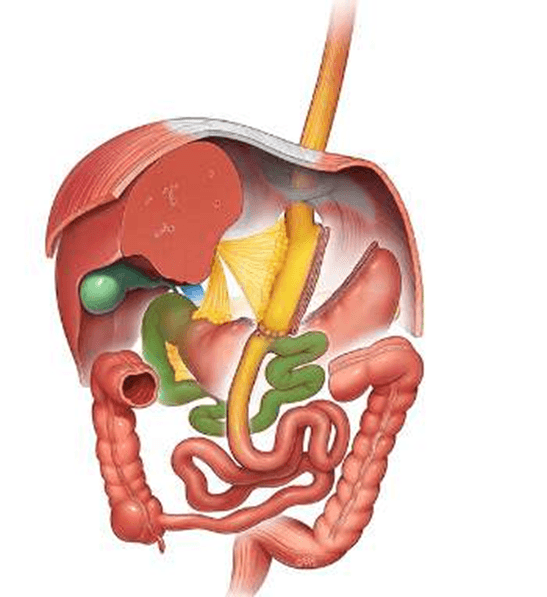
The Single Anastomosis Gastric bypass, or Omega Loop Gastric Bypass, Mini-gastric Bypass, and Single-Anastomosis Bypass, has become a popular procedure worldwide over the past few years, especially in Europe and Asia. There are many studies that suggest this bariatric procedure, which is quick and effective, is a safe means of achieving weight loss goals. The procedure includes a long, narrow gastric pouch next to the lesser curvature of the stomach part of the procedure, along with a 200 cm jejunal limb and a 1 ante colic GJ anastomosis. One of the reasons for effective malabsorption of fats.
Short Overview of Single Anastomosis Gastric Bypass Procedure:
Gastric Pouch Formation:
At first, the lesser curvature of the stomach is usually divided at or slightly past the craw’s foot. Continue into the lesser sac; using a stapler divide the stomach halfway, ensuring that the cut is perpendicular to the lesser curvature. A 36 Fr bougie is inserted by the anaesthesiologist, and the stapler is then used to continue division upwards along the length of the lesser curvature, creating a narrow elongated gastric pouch. The fundus is purposefully not included in this pouch. Its elongated pouch design minimizes the stretch risk, as there’s no stoma or pylorus causing outlet narrowing.
200-cm Malabsorptive Jejunal Bypass Creation
Then the omentum is lacerated to allow the Duodeno-Jejunal junction (ligament of Treitz) to be seen from left to right. The small intestine is traced 200 cm distal to this ligament and then is anastomosed in an antecolic end-to-side or side-to-side fashion to the created gastric pouch.
Some surgeons go on to change the length of the bypassed small intestine depending on the patient’s BMI, bypassing longer segments in those with higher levels of obesity. It is also important to keep at least 300 centimetres of the small intestine in the digestive tract to prevent malabsorption problems. Others put more suture between the afferent biliopancreatic limb and the gastric pouch to help reduce the chance of bile reflux. Clinical bile reflux seems uncommon (< 10%) and in most cases treatable through a conversion to a Roux-en-Y gastric bypass or an entero-enterostomy. Until long-term results are available, we cannot confirm or deny the association of a higher risk of gastric or oesophageal cancer development after Single Anastomosis Gastric Bypass.
The expected weight loss with Single Anastomosis Gastric Bypass is often similar to or better than that of Roux en Y Gastric Bypass, averaging 30-40% of body weight loss. So do related health issues, especially type II diabetes. Yet, patients who have undergone this surgery will need similar micronutrient supplementation to those following RYGB surgery. It also increases the risk of iron deficiency, and the deficiency of fat-soluble vitamins. Fat malabsorption can rarely interfere with the quality of life, particularly after high-fat meal ingestion, with distension and steatorrhea as relevant symptoms.
Single-Anastomosis Gastric Bypass is quickly overwhelming in popularity around the world. One such surgical option is well known for its technical ease, safety and efficacy with maintenance of weight loss. It can be modified easily by changing the anastomosis and can be reversed if necessary.
Mini Gastric Bypass: Benefits of the Surgery
It is often easier to perform than the traditional Roux-en-Y gastric bypass.
It typically delivers a greater degree of weight loss, with around 75% of Excess Body Weight Loss, as opposed to 70% with Roux-en-Y.
This procedure can effectively cure numerous health problems associated with obesity, including Type 2 diabetes, obstructive sleep apnea, hypertension, and wear & tear in joints.
The patients often lose weight, so they have less pressure on their knees.
In general, it assists you with everyday life roles, making them achievable.